
Nasal Discharge in Horses: Causes and When to Call the Vet

Updated: Sep 14
Nasal discharge in horses can range from a small amount of clear moisture to thick mucus, blood, or even feed material coming from the nose. Owners often describe it simply as a runny or snotty nose, but the color is only one part of the picture. Which nostril is affected, how long the discharge has been present, whether it has an odor, how the horse is breathing, and what other signs are present can all help a veterinarian determine where the material is coming from and what may be causing it.
The inside of a horse's respiratory tract is normally lined with a thin layer of mucus. This mucus traps dust, microorganisms, and debris. Microscopic cilia then move it toward the throat, where it is swallowed. This cleaning system is called the mucociliary escalator. A small amount of clear moisture can therefore be normal, especially after exercise or exposure to cold air. Discharge becomes more concerning when there is a noticeable change in amount, color, smell, duration, or distribution.
This guide explains what deserves prompt veterinary attention, which observations are worth recording, and some of the common causes of nasal discharge. For a broader introduction to the airways and lungs, see Introduction to Major Respiratory Diseases in Horses. Students who want to review where the nasal passages, skull, throat, and other structures sit can also use the Interactive Horse Anatomy Learning Tool.
Call your veterinarian promptly if your horse has difficult or noisy breathing, appears seriously unwell, has more than a trace of blood coming from the nose, or has feed, saliva, or water coming from the nostrils. Feed material from the nose can occur with choke, which in horses is an obstruction of the esophagus and requires veterinary attention. Do not force food or fluids into the horse while waiting for veterinary instructions. Learn more about esophageal obstruction from the Merck Veterinary Manual.
If choke is suspected, remove access to both feed and water while you obtain veterinary instructions.
When should you call the vet about nasal discharge?
A small amount of clear nasal moisture by itself does not always mean a horse is sick. The more useful question is what else is happening at the same time. A brief clear discharge after exercise is very different from thick, foul-smelling material that has drained from one nostril for several weeks.
Signs that need an immediate call
Contact your veterinarian promptly if nasal discharge occurs with:
Difficult, labored, or unusually noisy breathing
Marked nostril flare or obvious abdominal effort at rest
The head and neck held out as the horse tries to breathe
Feed material, water, or large amounts of saliva coming from the nose
Moderate, heavy, repeated, or unexplained nasal bleeding
Frothy fluid at the nostrils
Blue, purple, gray, very dark, or unusually pale gums
Severe weakness, distress, collapse, or rapidly worsening illness
Difficulty swallowing, repeated gagging motions, or coughing while eating
High fever, significant depression, or refusal to eat and drink
Similar fever and respiratory signs appearing in several horses
Do not delay an urgent call so that you can complete a full examination yourself. If it is safe to do so, useful observations can be collected while you speak with the veterinarian.
Breathing effort matters as much as breathing rate. Upper-airway obstruction often makes breathing in more difficult and may produce a high-pitched noise called stridor. Lower-airway obstruction, including severe equine asthma, more often produces a prolonged, forceful expiration. Rapid, shallow breathing can occur when pneumonia, chest pain, or fluid around the lungs makes a deep breath difficult.
Did You Know? Horses are obligate nasal breathers under normal conditions. They cannot simply switch to breathing comfortably through the mouth when the nasal passages, pharynx, or larynx become severely narrowed. This is why noisy or difficult breathing with nasal discharge deserves immediate attention.
Persistent discharge and other reasons to arrange an examination
Veterinary advice is also appropriate when discharge:
Continues longer than expected or repeatedly returns
Remains limited to one nostril
Becomes thick, yellow, green, bloody, or unusually abundant
Develops a strong, rotten, or otherwise foul odor
Occurs with coughing, fever, reduced appetite, lethargy, weight loss, or poor performance
Occurs with facial swelling, reduced airflow through one nostril, tearing from one eye, or discomfort around the face
Appears after long-distance transport, choke, anesthesia, or a recent respiratory infection
Develops in a foal, especially if the foal is not nursing normally
If you can safely take your horse's temperature, record the actual measurement rather than simply saying the horse feels warm. Our Horse First Aid and Vitals guide explains how to check temperature, pulse, breathing, gums, and other useful baseline information. The Fever in Horses guide explains temperature changes and red flags in more detail.
There is no universal rule telling every owner to wait a fixed number of days before seeking advice. Duration matters, but it must be considered with the discharge's appearance, the horse's condition, exposure history, and accompanying signs. Canadian equine-health guidance similarly emphasizes evaluating nasal discharge alongside the full clinical picture rather than in isolation. See the Canadian Animal Health Surveillance System guidance on nasal discharge in horses.
Nasal discharge from one nostril versus both
One of the first details worth noticing is whether discharge is coming from one nostril or both. This provides a useful clue about location, but it does not identify the cause by itself.
Material from the lower respiratory tract usually reaches the back of the throat and may appear at both nostrils. A problem confined to one nasal passage, sinus, tooth root, or guttural pouch is more likely to create one-sided discharge. There are exceptions. A large lesion can cross the nasal septum, material can shift within the pharynx, and extensive disease can involve both sides.
Discharge from one nostril
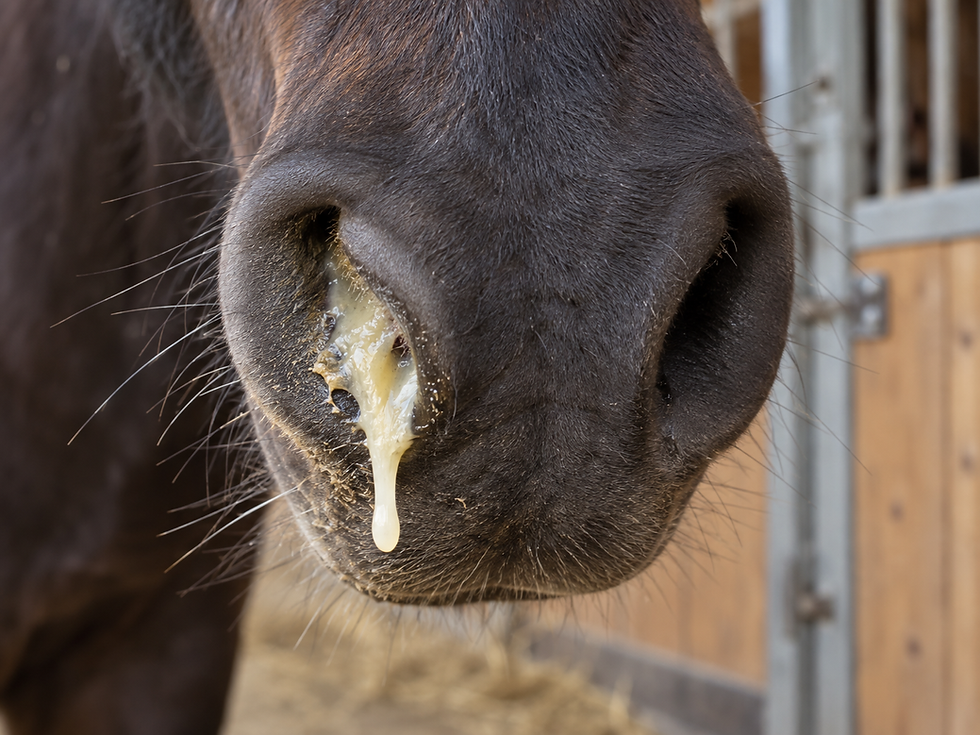
Persistent discharge from one nostril directs attention toward structures on that side of the head. Possibilities include:
Sinusitis
Infection involving an upper cheek tooth and its root
A nasal foreign body or traumatic injury
A cyst, polyp, or other mass
Progressive ethmoidal hematoma
Local fungal or parasitic disease
Guttural pouch empyema or another unilateral guttural pouch disorder
The discharge may be clear, thick, purulent, blood-tinged, or frankly bloody depending on the problem. Reduced airflow through the affected nostril, snoring, facial swelling, tearing from one eye, or an unpleasant odor makes a localized problem more concerning.
Odor is useful information because chronic sinus or dental disease can trap infected material. Anaerobic bacteria, which grow well where oxygen is limited, are often associated with a fetid smell. That does not mean one-sided, foul-smelling discharge automatically proves that a bad tooth is responsible. The veterinarian still needs to identify the affected structure and determine why drainage has failed.
Discharge from both nostrils

Bilateral discharge is more common with conditions affecting a larger portion of the respiratory tract. Possibilities include:
Viral respiratory infections such as equine influenza or equine herpesvirus
Strangles and other widespread upper-airway infections
Lower-airway inflammation with mucus moving toward the throat
Pneumonia or pleuropneumonia
Equine asthma
Swallowing dysfunction that allows feed, saliva, or water to enter the nasopharynx
Extensive sinus or nasal disease involving both sides
Tell your veterinarian if bilateral discharge occurs with cough, fever, abnormal breathing, reduced appetite, swollen lymph nodes, poor performance, recent travel, or contact with unfamiliar horses. A cluster of affected horses makes contagious disease more likely than a single localized sinus or dental problem.
Neither one-sided nor two-sided discharge can establish whether a condition is contagious. Roaring Fork Equine Medical Center provides a useful veterinary overview of nasal discharge patterns.
Did You Know? A horse with a one-sided problem can occasionally develop discharge from both nostrils. A large ethmoidal hematoma, extensive sinus disease, or material entering the shared pharyngeal space can blur the usual pattern. One nostril versus two is a clue, not a diagnosis.
What does the color and consistency of the discharge mean?
Owners naturally pay attention to color. It is useful information, but color alone is not a diagnosis. Clear discharge is not automatically harmless, and green discharge does not automatically prove a bacterial infection.
Describe the discharge using several features:
One nostril or both
Small, moderate, or large amount
Clear, cloudy, white, yellow, green, brown, blood-tinged, or bloody
Thin and watery, stringy, foamy, or thick
Odorless or foul-smelling
Continuous, intermittent, or associated with eating or exercise
Present for minutes, days, weeks, or longer
What you notice | What else to record | What it cannot establish on its own |
Clear or watery discharge | One or both nostrils, amount, cough, breathing changes, exercise, cold air, dust exposure, and duration | That the discharge is harmless or simply an allergy |
White or mucus-like discharge | Thickness, duration, odor, cough, temperature, appetite, and exercise tolerance | The exact cause or whether infection is present |
Yellow, green, or thick discharge | Odor, one or both nostrils, fever, cough, appetite, facial changes, and behavior | That the horse definitely has a bacterial infection or automatically needs antibiotics |
Blood or blood-tinged discharge | Amount, one or both nostrils, recent exercise, trauma, breathing, recurrence, and whether bleeding continues | Where the bleeding started or how serious the cause is |
Feed material, saliva, or water | Whether the horse was eating, swallowing attempts, coughing, distress, and recent choke | An ordinary runny nose; this pattern requires prompt veterinary attention |
Frothy fluid | Color, amount, breathing effort, heart rate, recent exercise, and speed of onset | A minor irritation; froth with distress can accompany severe lung or vascular disease |
Serous discharge is thin and watery. It may occur with irritation, early viral infection, or brief exposure to cold air. Mucoid discharge contains more mucus and is usually thicker or stringier. Mucopurulent discharge contains mucus mixed with inflammatory cells and cellular debris. It often looks white, yellow, or green. Serosanguineous discharge is watery fluid mixed with blood.
Yellow or green material is particularly easy to overinterpret. The color can result from inflammatory cells and enzymes within mucus. It does not identify which organism is present, prove that bacteria are the primary cause, or determine which treatment is appropriate. Antibiotic decisions should follow a veterinary examination and diagnosis rather than mucus color alone. The Canadian Animal Health Surveillance System guidance explains this distinction.

What causes nasal discharge in horses?
Nasal discharge is a sign, not a disease. Material may originate in the nasal passages, sinuses, guttural pouches, pharynx, trachea, lungs, esophagus, or mouth. Several very different conditions can therefore create a similar-looking discharge.
Respiratory infections
Viral and bacterial respiratory diseases commonly cause nasal discharge along with cough, fever, reduced appetite, lethargy, or swollen lymph nodes. The horse's age, recent travel, vaccination history, contact with new horses, and the number of horses affected all help define the level of concern.
Equine influenza usually begins quickly after exposure. It often causes sudden fever, depression, poor appetite, and a frequent harsh cough. Nasal discharge commonly begins clear and may become thicker as the airway lining becomes inflamed or a secondary bacterial infection develops. Influenza damages the ciliated cells that normally move mucus out of the airways, so a horse may look brighter before its respiratory defenses have completely recovered. Read more in Equine Influenza: Who Is at Risk and How Prevention Is Planned.
Equine herpesvirus, especially EHV-1 and EHV-4, can cause fever, watery nasal discharge, enlarged lymph nodes, reduced appetite, and occasional cough. EHV-1 can also cause abortion, neonatal disease, or neurologic disease. Because herpesviruses can remain latent and reactivate during stress, an outbreak may involve horses with different exposure histories. See Understanding Equine Herpesvirus.
Strangles is caused by Streptococcus equi subspecies equi. Early discharge may be clear before becoming thick and purulent. Fever, painful swelling under the jaw or behind the throat, reluctance to eat, difficulty swallowing, and abscess formation are important clues. Some recovered horses retain infected material in the guttural pouches and become silent carriers. Our complete Strangles in Horses guide covers signs, isolation, carriers, and barn biosecurity.
Equine rhinitis viruses and other less common infections can produce similar combinations of fever, cough, pharyngeal inflammation, lymph-node enlargement, and serous or seromucous discharge. Appearance alone cannot reliably distinguish these diseases. Depending on the circumstances, the veterinarian may recommend testing and immediate precautions to reduce exposure to other horses.
Bacterial pneumonia affects the lower respiratory tract. In adult horses it often develops when normal airway defenses have been weakened rather than spreading as a simple contagious disease. Risk factors include a recent viral infection, long-distance transport with the head held up, aspiration during choke or swallowing difficulty, general anesthesia, and serious illness. Signs can include fever, depression, poor appetite, cough, rapid or labored breathing, and bilateral mucopurulent discharge. If inflammation and infection extend to the space around the lungs, called pleuropneumonia, breathing may become shallow and painful. Some horses stand with their elbows held away from the chest. Pneumonia and pleuropneumonia require prompt veterinary care.
The Horse Cough guide can help owners interpret nasal discharge when coughing is also present. The Horse Vaccination Center and 5-Way Vaccine Planner can support a veterinarian-led preventive discussion before the next period of travel or increased exposure.
Sinus and dental problems
Horses have an extensive system of paired air-filled spaces within the skull. Six paired sinus groups are commonly described when the conchal sinuses are counted separately. These spaces communicate with the nasal passages through narrow drainage pathways. Swelling, thick material, dental disease, a cyst, or a mass can interfere with drainage and allow infection to persist.
The roots of the third through sixth upper cheek teeth are closely related to the maxillary sinus region. Infection involving a tooth root or the tissues around it can therefore extend into a sinus.
Common signs of sinus or dental-related disease include:
Persistent discharge, usually from one nostril
Thick mucopurulent or blood-tinged material
A foul odor from the nostril or mouth
Reduced airflow on the affected side
Facial swelling, asymmetry, or tenderness
Tearing from one eye
Displacement or prominence of the eye in advanced cases
Respiratory noise or difficulty if a mass narrows the nasal passage
Antibiotics may temporarily reduce bacterial activity, but they cannot remove a diseased tooth, clear thick, dried material, or correct a cyst or mass. Long-term success depends on identifying the primary problem and restoring drainage. Dental-related sinusitis can require removal of the affected tooth, while accumulated sinus material may require flushing, drainage, or surgical removal.
Progressive ethmoidal hematoma is an expanding mass containing blood and fibrous tissue that develops near the ethmoid region deep within the nasal cavity. It occurs mainly in mature or older horses. The classic sign is intermittent, low-volume, blood-tinged discharge from one nostril. Larger or bilateral masses can cause bilateral discharge, facial distortion, foul breath, cough, reduced airflow, or breathing difficulty. These masses commonly recur after treatment, which makes long-term follow-up important.
Did You Know? The word “hematoma” suggests a simple collection of blood, but progressive ethmoidal hematoma behaves like a slowly expanding mass. It can occupy the nasal passage or extend into the sinuses even though it is not considered a typical metastatic cancer.
Dust irritation and equine asthma
The horse's environment can increase mucus production even when no contagious infection is present. Dust from hay, bedding, dry arenas, sweeping, and barn traffic contains a mixture of fine plant particles, fungal spores, bacteria, and endotoxins. Ammonia from urine can further irritate the respiratory lining. The smallest particles may remain suspended in the air and travel into the lower airways even when the barn does not look visibly dusty.
Horses with mild-to-moderate equine asthma may have occasional cough, subtle exercise intolerance, and increased airway mucus while appearing normal at rest. Horses with severe equine asthma, historically called heaves or recurrent airway obstruction, may develop chronic cough, serous to mucoid discharge, obvious abdominal effort, nostril flare, and prolonged expiration during a flare.
Environmental history is particularly useful. Tell your veterinarian about:
Hay type, storage, visible mold, and whether hay is fed overhead or from a round bale
Bedding type and how stalls are cleaned
Ventilation at the horse's breathing level
Indoor arena conditions
Time spent stalled compared with turnout
Seasonal changes and whether signs improve in a different environment
Exposure to smoke, wildfire ash, or agricultural chemicals
Clear discharge should not automatically be dismissed as harmless, just as coughing should not automatically be called an allergy. Persistent or recurring signs deserve evaluation. The Introduction to Major Respiratory Diseases in Horses explains the difference between mild-to-moderate and severe asthma and places these conditions alongside other causes of cough and discharge.
Guttural pouch disease and other local problems
Horses have paired air-filled structures called guttural pouches located behind the throat. Each pouch lies beside major arteries and several cranial nerves involved in swallowing and laryngeal function. This unusual anatomy explains why guttural pouch disease can cause a combination of nasal discharge, bleeding, abnormal voice or breathing noise, facial changes, and difficulty eating.
Guttural pouch empyema is an accumulation of pus, commonly following strangles. The horse may have chronic or intermittent nasal discharge, swelling around the parotid or throatlatch region, enlarged lymph nodes, or increased respiratory noise. Thick material can dry into firm masses called chondroids. Chondroids matter because they can retain S. equi and allow a horse that appears healthy to shed bacteria later.
Guttural pouch mycosis is a fungal disease and a true emergency. A fungal plaque usually forms over a major artery, most often the internal carotid artery. As it erodes the vessel, the horse may have repeated episodes of epistaxis before a catastrophic hemorrhage. Damage to nearby nerves can produce difficulty swallowing, feed and saliva from the nostrils, an altered voice, facial weakness, or laryngeal paralysis. Unexplained or recurrent nosebleeds should never be assumed to be harmless.
Other localized causes include nasal trauma, foreign bodies, cysts, polyps, tumors, and less common fungal or parasitic inflammation. Fungal organisms such as Aspergillus, Conidiobolus, and Cryptococcus can affect nasal or sinus tissues. Parasites are uncommon causes in many managed horse populations, but migrating parasites or nasal myiasis remain possible in the right geographic and management setting. Contact with donkeys or mules is also worth reporting because they can carry equine lungworm. The Equine Deworming Schedule Planner can help owners organize a risk-based parasite discussion with their veterinarian, but it cannot diagnose the cause of discharge.
Rare tumors may also cause chronic discharge, epistaxis, weight loss, cough, or reduced airflow. Primary lung tumors are uncommon, and metastatic tumors are more common than tumors originating in the lungs. Neoplasia becomes a greater concern when signs persist, the horse loses weight, or an apparent infection or asthma problem does not respond as expected.
Exercise-induced pulmonary hemorrhage (EIPH) is bleeding from small blood vessels in the lungs during strenuous exercise. It is best known in racehorses but can occur in other high-performance horses. Only a small proportion of affected horses show blood at the nostrils because much of the blood remains deeper in the airways. Blood noticed after hard work may come from EIPH, but timing alone does not prove the source. Nasal injury, sinus disease, progressive ethmoidal hematoma, and guttural pouch mycosis can also cause epistaxis, so visible or repeated bleeding deserves veterinary assessment.
Did You Know? Most horses with exercise-induced pulmonary hemorrhage do not have visible blood at the nostrils. When blood is visible, it is important to determine where it came from rather than assuming exercise is the explanation.
Choke and swallowing problems
In horses, choke refers to an obstruction of the esophagus rather than the airway. A horse may still be able to breathe, but feed material, saliva, and water can appear at the nostrils because swallowed material cannot pass normally into the stomach.
Common signs include repeated attempts to swallow, coughing or gagging motions, anxiety, stretching the neck, drooling, and feed-stained material draining from one or both nostrils. This pattern is different from ordinary respiratory mucus.
Choke and other swallowing problems are dangerous because material can be inhaled into the trachea and lungs. The resulting aspiration pneumonia may cause fever, depression, cough, rapid or labored breathing, and mucopurulent nasal discharge hours or days later.
Swallowing dysfunction caused by guttural pouch nerve damage, pharyngeal disease, severe weakness, or neurologic disease carries the same risk.
If you suspect choke, remove access to both feed and water and contact your veterinarian immediately. Do not force fluids, pass a hose or tube, or attempt to flush the obstruction yourself. Follow your veterinarian’s instructions about transport and when feeding and drinking can resume. The Merck Veterinary Manual's guidance on esophageal obstruction provides further information.
Did You Know? Feed from the nostrils does not always mean the material came back from the esophagus. Damage to nerves that coordinate swallowing can allow feed and saliva to enter the nasal passages and airway even when the esophagus is open.
What can you safely do while waiting for veterinary advice?
Once you have contacted your veterinarian, a few simple observations can help them understand what is happening. The goal is not to diagnose the problem yourself. It is to provide clear information, protect the horse from added stress, and limit exposure to other horses when infection is possible.
Record what you are seeing
If it is safe to do so, make a quick note of:
When you first noticed the discharge
Whether it is coming from one nostril or both
Its color, thickness, amount, and odor
Whether it is continuous or intermittent
Whether it appears after eating, exercise, travel, or a change in environment
Whether your horse is coughing and when the cough occurs
Whether breathing is quiet, noisy, fast, shallow, or labored
Whether your horse is eating, drinking, and passing manure normally
Your horse's measured temperature, pulse, and resting respiratory rate, if these can be taken safely
Any swelling under the jaw, behind the throat, or across the face
Any tearing from one eye or unequal airflow from the nostrils
Recent travel, shows, sales, new arrivals, or contact with unfamiliar horses
Any recent choke, dental trouble, anesthesia, or difficulty swallowing
Whether other horses are showing fever, cough, or nasal discharge
A short video can document respiratory noise or effort, while a photograph can record the amount and appearance of discharge. Note the time because appearance may change before the veterinarian arrives. Do not delay an emergency call to collect a perfect set of records.
If you need a refresher, use the Horse First Aid and Vitals guide and review How to Tell If Your Horse Is Sick. The Horse Health Log explains what to record, while Horse Tracker can keep temperatures, respiratory signs, travel dates, vaccinations, veterinary notes, and changes over time together.
Reduce contact with other horses when infection is suspected
Not every runny nose is contagious. Dust irritation, equine asthma, trauma, and masses can cause discharge without spreading between horses. Dental-related sinus infections are also generally not contagious. However, some guttural pouch infections are associated with strangles, so discharge from that area should not automatically be considered noncontagious. Fever, cough, recent travel, new arrivals, swollen lymph nodes, or similar signs in barnmates increase concern for a contagious respiratory disease.
Until your veterinarian advises otherwise:
Keep the affected horse apart from unaffected horses
Stop unnecessary movement on and off the property
Avoid nose-to-nose contact across fences or stall fronts
Use separate water buckets, feed tubs, tack, grooming equipment, thermometers, and stall tools
Assign one handler when possible
Handle healthy horses first, exposed horses next, and the sick horse last
Wash hands and clean footwear between groups
Remove organic material before applying an appropriate disinfectant
Keep written records of temperatures, signs, and horse movements
There is no single isolation period that applies to every horse with nasal discharge. Influenza, EHV, and strangles behave differently, and strangles carriers can remain outwardly normal. The veterinarian should set the testing and release plan. The Infectious Disease Isolation Assistant provides a practical way to organize the first separation and biosecurity steps while professional guidance is arranged.
Avoid medications and procedures without veterinary direction
There is no single medication for a horse’s runny nose. The appropriate treatment depends on what is causing the discharge.
An antibiotic will not treat equine influenza, EHV, asthma, a sinus cyst, an ethmoidal hematoma, choke, or exercise-induced pulmonary hemorrhage. A drug that lowers fever or temporarily makes the horse look more comfortable may also hide an important change without correcting the cause.
Avoid giving leftover antibiotics, human cold products, or another horse's prescription. Do not attempt nasal flushing, pass a tube, probe a nostril, or try to clear an obstruction unless your veterinarian specifically directs you. Treatment must follow the location and cause of the problem.
Feed, saliva, or water coming from the nostrils: Remove access to both feed and water and contact your veterinarian immediately. Do not force fluids or attempt to clear an obstruction. Choke and swallowing problems can allow material to enter the lungs.
How do veterinarians diagnose and treat nasal discharge?
The physical examination may include temperature, pulse, respiratory rate and effort, gum color, airflow from each nostril, facial symmetry, lymph nodes, oral and dental structures, throatlatch, trachea, and lungs. The phase of breathing that is difficult can help localize obstruction. Inspiratory difficulty points more strongly toward the upper airway, while prolonged expiration suggests lower-airway obstruction.
An endoscope is a flexible camera that allows direct inspection of the nasal passages, pharynx, larynx, guttural pouch openings, and trachea. It may reveal mucus, pus, blood, swelling, a foreign body, a mass, or evidence that material is coming from a sinus or guttural pouch.
When one-sided sinus or dental disease is suspected, the veterinarian may examine the teeth and mouth and use skull radiographs or computed tomography. CT is particularly useful because tooth roots, sinus compartments, and other skull structures overlap on ordinary radiographs. Sinus examination or sampling may be needed when thick material, a mass, or unusual infection is suspected.
When contagious disease is possible, nasal or nasopharyngeal samples may be used for PCR or culture. Timing and sample location matter, and no single negative result excludes every disease. Cough, fever, abnormal lung sounds, or increased breathing effort may lead to further evaluation of the lower respiratory tract.

Not every horse needs every test. A horse with fever, harsh cough, and recent exposure to sick horses requires a different investigation from a horse with six weeks of foul-smelling unilateral discharge and facial swelling. Steinbeck Peninsula Equine's overview describes several findings veterinarians consider.
Treatment depends on the cause
Treatment can look completely different from one horse to another:
A viral infection may require rest, supportive care, monitoring, and biosecurity.
Strangles may require nursing care, management of abscesses, and a plan for detecting persistent carriers.
Bacterial pneumonia requires prompt treatment directed at the lower-airway infection and any complications.
Equine asthma requires meaningful reduction of dust, mold, endotoxin, and other triggers, with medication selected when appropriate.
Dental sinusitis requires treatment of the diseased tooth as well as the sinus.
Retained material within a sinus or guttural pouch may need to be drained, flushed, or removed.
Progressive ethmoidal hematoma may require local treatment, laser therapy, or surgical removal and long-term monitoring for recurrence.
Guttural pouch mycosis generally requires urgent control of the threatened blood vessel.
Choke requires relief of the esophageal obstruction and monitoring for aspiration pneumonia.
This is why treating discharge solely according to whether it looks clear, white, yellow, or green is unreliable. Roaring Fork Equine Medical Center's veterinary overview offers additional discussion of how underlying causes are investigated and managed.
Recovery, isolation, and returning to exercise
How quickly a horse can return to normal work depends on why the discharge occurred and how much tissue was affected.
A horse recovering from influenza may appear bright before the damaged ciliated airway lining has healed. Returning to strenuous work too early can prolong cough and increase the risk of secondary pneumonia. A horse with strangles must meet the veterinarian's isolation and carrier-clearance requirements. A horse treated for a dental problem may be able to resume activity on a different schedule, while a horse recovering from pneumonia may need a much longer period of rest and gradual conditioning.
Ask your veterinarian specifically about:
Continued temperature and respiratory monitoring
Isolation and biosecurity precautions
Follow-up examinations or testing
Returning to turnout with other horses
When hand-walking or light exercise may begin
How quickly workload can increase
Signs that should trigger another call
Avoid universal rules such as “one week off” or “ride when the mucus turns clear.” The diagnosis, fever history, breathing, cough, appetite, energy, tissue recovery, and planned workload should guide the decision.
Questions about runny noses in horses
1. Can a horse have nasal discharge without a fever?
Yes. Sinus disease, dental problems, equine asthma, progressive ethmoidal hematoma, guttural pouch disease, irritation, tumors, and some mild or early infections can cause discharge without a measured fever. Temperature is useful, but it is only one part of the picture. Duration, odor, breathing, coughing, appetite, behavior, and whether one or both nostrils are affected also matter.
2. Does green snot mean my horse needs antibiotics?
No. Yellow or green discharge contains mucus, inflammatory cells, enzymes, and cellular debris, but color does not identify the cause. Viral infection, sinus disease, retained material, and secondary bacterial involvement can look similar. Antibiotic decisions should be made by a veterinarian after the horse and the likely source of the discharge have been assessed.
3. Why does discharge keep coming from one nostril?
Persistent one-sided discharge commonly directs attention toward a localized problem involving a nasal passage, sinus, upper cheek tooth, guttural pouch, foreign body, cyst, or mass. A foul odor, facial swelling, tearing from one eye, or reduced airflow on that side provides additional reason for examination. The pattern helps localize the problem but does not identify the exact cause.
4. Is clear nasal discharge normal in a horse?
A small amount of clear discharge can occur briefly after exercise, in cold air, or following mild irritation. Heavy, persistent, recurring, or one-sided clear discharge is not something to dismiss, especially if it occurs with cough, abnormal breathing, fever, poor performance, or behavior changes.
5. Can I ride a horse with a runny nose?
That depends on the cause and the horse's other signs. Do not exercise a horse that is feverish, coughing repeatedly, lethargic, breathing abnormally, or potentially contagious. A horse recovering from a respiratory infection may need additional rest after the fever and visible discharge improve because the airway lining takes time to heal. Ask your veterinarian when work can safely resume.
6. Is a horse's runny nose contagious?
Sometimes. Influenza, EHV, and strangles can spread between horses. Other causes, including dust irritation, asthma, trauma, and dental-related sinus disease, generally do not. The discharge’s appearance alone cannot establish whether it is contagious. If infection is suspected, separate the horse and use dedicated equipment while your veterinarian advises on testing and precautions.
7. What can I give my horse for a runny nose?
There is no universal treatment because nasal discharge is a sign rather than a diagnosis. Giving leftover antibiotics, human cold products, or another horse's medication can delay correct treatment or create additional problems. Record what you see, contact your veterinarian when indicated, and treat the actual cause.
8. What does blood from a horse's nose mean?
Blood can come from a minor nasal injury, sinus disease, progressive ethmoidal hematoma, a guttural pouch blood vessel, a tumor, or the lungs after strenuous exercise. Visible blood after intense work may be associated with exercise-induced pulmonary hemorrhage, but serious upper-airway causes must still be considered. Repeated, unexplained, moderate, or heavy bleeding requires urgent veterinary attention.
9. Why is feed or water coming from the nostrils?
This can occur when the esophagus is obstructed during choke or when the nerves and muscles coordinating swallowing do not work normally. In either situation, material can enter the trachea and cause aspiration pneumonia. Remove access to both feed and water and contact your veterinarian immediately. Do not force fluids or attempt to pass a tube yourself.
10. Can dust or mold cause nasal discharge even when the horse is not infected?
Yes. Dust, mold spores, endotoxins, ammonia, pollen, smoke, and other inhaled irritants can increase mucus and contribute to equine asthma. Environmental improvement is an important part of management, but recurring discharge or cough should still be evaluated because infection and other diseases can produce similar signs.
The most useful thing you can do is notice changes early
A runny nose in a horse is not a diagnosis. A small amount of temporary clear moisture may have a simple explanation, while persistent one-sided discharge, respiratory infection, dental or sinus disease, guttural pouch disease, choke, asthma, pneumonia, bleeding, or a mass requires a very different response.
Pay attention to what is different from normal for your horse: which nostril is affected, what the material looks and smells like, when it occurs, how the horse is breathing, whether there is coughing or fever, how the horse is eating and behaving, and whether other horses have developed similar signs. Clear, time-stamped observations give the veterinarian far more useful information than a guess based on color alone.
You can explore other horse symptoms and review urgent care resources in the Horse Health Hub. For a broader explanation of the diseases discussed here, continue to Introduction to Major Respiratory Diseases in Horses.
Keep important health observations organized
Tracking changes over time makes it easier to remember what happened and when, especially when several people care for the horse or when more than one horse is being monitored. The Horse Health Log for Owners provides a practical recording framework, and Horse Tracker can keep temperatures, symptoms, travel, vaccinations, appointments, and veterinary notes organized.
Students who want to build stronger background knowledge can browse Equine Study Resources, individual study materials, and the Equine Anatomy Study Kit.
References
American Association of Equine Practitioners. Equine Influenza Virus Disease Guidelines.
American Association of Equine Practitioners. Infectious Disease Guidelines: Strangles.
Canadian Animal Health Surveillance System. Snotty Noses in Horses and Antimicrobial Use.
Merck Veterinary Manual. Esophageal Obstruction in Large Animals.
Merck Veterinary Manual. Guttural Pouch Disease in Horses.
Merck Veterinary Manual. Pleuropneumonia in Horses.
Merck Veterinary Manual. Disorders of the Paranasal Sinuses in Horses.
Roaring Fork Equine Medical Center. My Horse Has a Snotty Nose. What Now?.
Steinbeck Peninsula Equine Clinics. Tissue Please: Basic Types of Nasal Discharge.


Comments