
Horse Vaccination Schedule: Core Vaccines, Timing, and Risk-Based Boosters

Updated: Aug 24
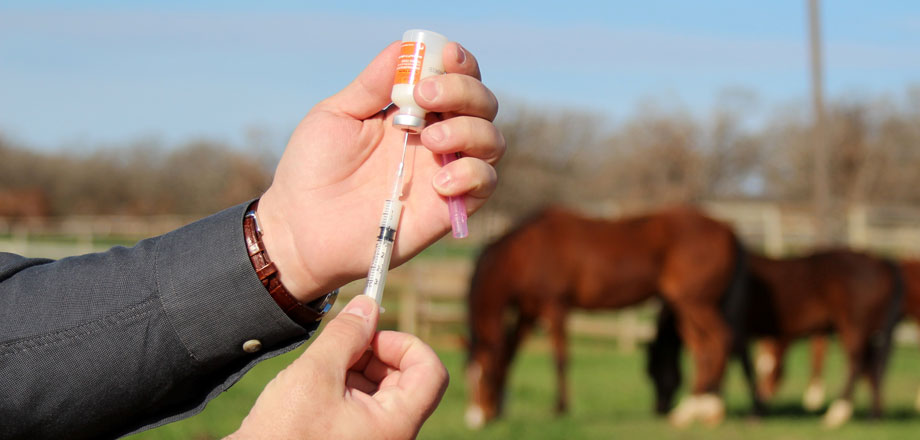
A horse vaccination schedule is really a risk plan. The right timing depends on what your horse is exposed to this year, not what your neighbour does. Boarding barns, training facilities, travel, mosquito season, and outbreak pressure can all change what matters. Use the guide and chart to build a sensible baseline, then have your veterinarian confirm the exact products and timing for your region and your horse.
TLDR
Start with core protection most horses rely on, then add risk-based vaccines when exposure is real.
Core: tetanus and rabies, plus a respiratory baseline for horses that board, train, or share airspace with new arrivals.
Risk-based: West Nile when mosquitoes are a factor, strangles when barn traffic and outbreaks make it relevant, and travel-focused choices when your horse ships and mixes with unfamiliar horses.The schedule should change when your horse’s lifestyle changes, especially before mosquito season and before heavy travel months.
Disclaimer: This article provides general education about horse vaccines and common vaccination schedules. It is not veterinary advice and is not a substitute for diagnosis or a veterinarian–client–patient relationship. Always work with your veterinarian to choose vaccines, timing, and boosters based on your horse’s age, health, location, travel plans, and current disease risk in your area.
Core vaccines for most horses (what they protect against)
Below are the “core” building blocks many veterinarians start with. Your exact horse vaccination schedule may differ slightly by region and by your horse’s day-to-day exposure.
Tetanus

What it is and why it’s considered core
Tetanus is caused by bacteria commonly found in soil. Horses can be exposed through puncture wounds, surgical sites, foaling injuries, or even small cuts you never noticed. Because the disease is severe and prevention is reliable, tetanus is widely treated as a must-have.
Typical timing and booster logic (common vet approach)
Many veterinarians aim to keep tetanus protection current year-round. If a horse has a high-risk wound and their last tetanus shot is not recent, vets commonly recommend a booster as part of wound management. For horses starting from scratch (unknown or no history), vets commonly use a primary series followed by routine boosters.
Common owner misconceptions
“My horse lives in a clean stall, so tetanus risk is low.” Clean barns still have soil on boots, tools, and turnout areas.
“Only deep punctures matter.” Any wound can create the right conditions.
“The 5-way is all I need forever.” Combo vaccines are useful, but protection still depends on staying current on boosters.

Why it’s core in many regions
Rabies is almost always fatal once symptoms begin, and it’s also a human health risk. Horses can be exposed through wildlife interactions (even if you never see the bite). For that reason, many regions and veterinarians treat rabies as a core vaccine.
Special notes for barns with wildlife exposure
If your property has regular wildlife activity (think nocturnal visitors near hay storage, water sources, or feed rooms), your vet may be especially firm about staying current. This includes rural properties, wooded edges, and barns where small wildlife can enter.
Common owner misconceptions
“Rabies is a dog vaccine, not a horse vaccine.” Horses can be exposed and can develop rabies.
“I’d notice if my horse got bitten.” You might not: bites can be small or hidden.
Core respiratory baseline
What “core respiratory” usually means
In many real-world barns, a practical baseline includes influenza and equine herpesvirus (EHV) coverage, especially where horses share airspace, ship in trailers, attend clinics, or have new horses coming and going. Some veterinarians treat these as “core” for boarded/training horses and more “risk-based” for truly isolated backyard horses.
Timing logic
Respiratory protection is often planned around exposure peaks, like:
the start of a training or show season
periods of frequent hauling or clinics
times when new horses enter the barn
If your barn requires proof of vaccination, your schedule often needs to match barn policy realities, not just what feels convenient.
Common owner misconceptions
“My horse doesn’t travel, so respiratory vaccines don’t matter.” If other horses travel in and out of the barn, your horse is still exposed.
“One shot covers the whole year no matter what.” Protection and risk both change with time and exposure patterns.
“Coughing is normal barn life.” It’s common, but it’s also a sign that your herd has respiratory pressure—your vet may adjust timing or priorities accordingly.
Risk-based vaccines
Risk-based does not mean “optional because it is not important.” It means the benefit depends on your exposure level. The right question is: How likely is contact with the disease in your environment this year?

When it rises to the top (risk factors)
Mosquito exposure is the driver. Risk increases when:
Your horse is turned out at dawn or dusk
You live near standing water, wetlands, or irrigated fields
Your region has a strong mosquito season
The horse is older, immunocompromised, or lives outside most of the time
Timing and booster considerations (common vet approach)
Many veterinarians time WNV protection so your horse is well covered before mosquito season ramps up, with boosters depending on local risk and the horse’s history. If you vaccinate after mosquitoes are already heavy, you may be protected later than you think. Your vet will align timing to your region and weather pattern.
Practical example
If you board at a facility with evening turnout and there is standing water nearby, WNV is often treated like a “seasonal priority,” not an afterthought.

When it is considered
Strangles risk climbs fast in:
High-traffic barns (training barns, lesson programs, sale barns)
Facilities with frequent new arrivals
Barns that travel to shows or clinics
Areas with recent strangles activity
Why strangles vaccination is not automatic for everyone
Strangles is a management decision, not a default checkbox. In low-traffic, closed herds with strong quarantine and minimal shipping, some veterinarians prioritize biosecurity and monitoring over routine vaccination. In a busy barn with constant movement, vaccination may become more attractive.
Practical example
A boarding barn that takes in new horses weekly and has shared water sources is a very different risk profile than a private property with two horses and no visitors.
Pair vaccination decisions with strict barn practices: Strangles in horses: symptoms, isolation, biosecurity, vaccination.
If your barn is dealing with new arrivals or an active exposure risk, keep a clear isolation and traffic-flow plan on hand: Strangles Outbreak Protocol (barn-ready isolation + biosecurity checklist).
EHV and other travel-related risk vaccines

Show and travel risk logic
Travel compresses horses from many places into shared airspace. Risk increases with:
Regular hauling
Overnight stabling at shows
Clinics, schooling shows, sales, or events with many barns represented
Facilities with frequent horse movement in and out
Outbreak awareness and barn policy realities
Some barns or show venues set requirements based on current regional pressure. A smart approach is to treat EHV planning like you treat weather planning: you adjust to what is happening, not what happened last year.
If you want the deeper owner-friendly overview: Understanding equine herpesvirus: risks, symptoms, prevention, and management
Vaccination schedule chart
This horse vaccination chart is a practical starting point. It reflects common schedules used by veterinarians, but your vet may shift timing based on local disease pressure, your horse’s age, and your barn’s movement patterns.
Vaccine | Who should get it (most vs risk-based) | Best time of year | Booster notes (general) | Extra notes for boarding and travel |
Tetanus | Most horses (core) | Any time (injury risk is year-round) | Often kept current with routine boosters; wound boosters may be advised if not recent | Many barns expect it current because injuries happen in group settings |
Most horses (core in many regions) | Any time | Often kept current with routine boosters | Important where wildlife exposure is common; also a human health risk | |
Most boarded/training horses; risk-based for isolated horses | Before show season, clinics, or high-movement periods | Often boosted based on exposure level and barn policies | Busy barns and frequent hauling usually push this higher priority | |
Risk-based (often recommended where mosquitoes are meaningful) | Before mosquito season | Boosters depend on region, season length, and horse factors | Outdoor turnout and mosquito-heavy properties raise risk quickly | |
Risk-based | Before high-risk periods if chosen | Vet-guided; depends heavily on barn traffic and outbreak history | Should be paired with quarantine, hygiene, and new-horse protocols | |
Other travel risk vaccines | Risk-based | Before travel-heavy months | Vet-guided based on local pressure and event requirements | Use barn policies and regional outbreak updates to guide timing |
If you want one place to keep your timing consistent and not miss boosters, use: 5-Way vaccine planner
Foals, broodmares, and new-to-you horses (the schedules that change everything)
These three situations are where a “standard” horse vaccine schedule often breaks. The goal is not to cram in shots. The goal is to build protection at the right time, for the right risks, with clean record keeping.
Foal series basics
Foals usually need a series because early protection is complicated by maternal antibodies and because their immune system is learning. Timing is not one-size-fits-all.
Why foals need a series
A single vaccine dose rarely creates durable protection in a young immune system. Vets commonly use a primary series to build a stronger, more reliable response.
Maternal antibodies and timing nuance
If a foal receives antibodies through colostrum, those antibodies can reduce how strongly the foal responds to early vaccination. That does not mean “do not vaccinate.” It means your veterinarian times the series to avoid wasting doses while still keeping the foal protected.
Practical exampleTwo foals of the same age may need different timing if:
one got good colostrum intake and the other did not
one lives in a high-traffic barn and the other is on a closed farm
one is expected to travel early and the other is not
For a veterinarian-built starting point, see the AAEP Foal Vaccination Chart and use it to guide a records-based plan with your own vet.
Broodmares
Broodmares are different because the plan often serves two purposes: protecting the mare and supporting early foal protection through passive immunity. Timing is coordinated and should be vet-led.
Why timing is coordinated
Vaccinating at the wrong time can mean you miss the window that matters for the newborn’s early protection plan, or you fail to align with your farm’s foaling timeline and risk periods.
Practical tip
Have one place where you track:
breeding date
expected foaling date
vaccines given and dates
any reactions or previous issues
If you are planning around foaling dates, this tool helps keep your calendar clean: Horse gestation calculator
New horse coming into the barn
New arrivals are when disease risk spikes, even in “quiet” barns. Your first move is not a needle. Your first move is information and separation.
Do this first
Ask for written vaccine records (dates, products if available)
Clarify what the horse has actually received vs “I think they are up to date”
If records are missing, assume unknown status until your vet advises a plan
Quarantine and risk decisions
A new horse should not share airspace, water, or grooming tools immediately in many barn situations. Your vaccination decisions are much safer and more effective when paired with basic quarantine and barn hygiene.
Use the hub to stay consistent
When you want a simple place to reference common vaccines and owner guidance: Health vaccines hub
Reactions and what to monitor after vaccination
Most horses do fine. Mild, short-lived reactions can happen. The owner job is to notice what is normal, what is not, and to have a simple “what I saw” report ready for the vet.
What can be normal
A short period of:
mild soreness at the injection site
small, localized swelling
slightly low energy for a day
a mild decrease in appetite for a short period
Practical tip: After vaccination day, plan lighter work and avoid introducing multiple new stressors (hard training, long hauling, major feed changes) at the same time if you can help it.
What is not normal (call your vet)
Contact your veterinarian promptly if you see:
facial swelling, hives, or widespread itching
trouble breathing, repeated coughing, or collapse
a high fever, severe lethargy, or refusal to eat that does not improve
significant swelling, heat, or pain at the injection site that worsens
abnormal neurologic signs (stumbling, weakness, unusual behavior)
If you want a simple, structured “what to do and what to record” plan when something suddenly looks wrong, use the Colic Emergency Kit (first 2 hours response guide + monitoring log).
Take vitals once so you have real numbers
If you do not already know your horse’s baseline, vaccination day is a good reminder to learn it. Having a normal baseline makes it easier to spot “this is off.”
Use this as your quick reference: The horse’s vital signs
Vaccine mistakes that quietly increase risk
Most problems are not caused by “missing everything.” They happen when the plan does not match the horse’s real life.
“Set it and forget it” schedules despite travel changes
A horse that used to stay home may suddenly start:
going to lessons off property
hauling to clinics
moving barns
sharing a facility with frequent new arrivals
That is a different exposure profile. If the schedule does not change with the lifestyle change, the risk climbs quietly.
Example: A previously low-risk horse starts weekly hauling to an indoor arena. Respiratory risk often becomes the first thing your vet re-evaluates.
Skipping boosters going into mosquito season
Owners often remember spring shots when flies show up, but WNV protection planning usually needs to happen before mosquitoes are heavy in your area.
Tip: Put “mosquito season starts here” on your calendar and schedule your vet call a few weeks ahead of that date, not after the first bad swarm.
Not aligning timing with show season or barn requirements
Even a well-intended horse vaccination schedule fails if it does not meet:
boarding facility requirements
show or event rules
training barn policies during outbreaks
Example: Vaccinating too close to a show can leave you with paperwork but not enough time for the horse to build strong protection.
Mixing vaccine decisions with poor biosecurity practices
Vaccines reduce risk. They do not replace:
quarantine for new arrivals
separate water buckets
not sharing bits or grooming tools
hand hygiene between horses
If biosecurity is weak, the disease pressure stays high and owners start blaming vaccines for what is really a management gap.
For a simple reference point when you are planning your questions and records, bookmark the hub: Health vaccines hub
How to build your horse’s vaccine plan in 5 minutes
This is a quick owner workflow that makes your vet conversation faster and your calendar cleaner.
Step 1: Choose your horse profile
Write one sentence:
Age (foal, adult, senior)
Use (pleasure, lesson, competition)
Housing (private, boarding, training barn)
Travel (never, occasional, frequent)
Example: “11-year-old boarded gelding, weekly lessons off property, occasional clinics.”
Step 2: Select core vs risk-based
Start with core:
Tetanus
Rabies
Respiratory baseline (often influenza and EHV in boarded or training settings)
Then add risk-based based on your profile:
West Nile if mosquito exposure is meaningful
Strangles if barn traffic and outbreak pressure justify it
Travel-focused choices if the horse ships and mixes with many barns
If you want to understand what common combo vaccines cover so you choose smarter, use: 5-Way equine vaccine: what it covers and why it matters
Step 3: Schedule around seasons and events
Pick the real-world anchors:
mosquito season start in your region
show or clinic months
known travel windows
barn intake cycles (when new horses arrive most often)
Then place vaccines so protection is strongest before the high-risk window, not during it.
Step 4: Confirm with your veterinarian
Bring your profile sentence and your event calendar. Ask:
Which vaccines are truly core for my horse here?
Which risk-based vaccines matter most this year?
What timing should I follow given travel and mosquito season?
Step 5: Put it on a simple planner so you stay consistent
Use our planner to map your timing and stay consistent: 5-Way vaccine planner. If you prefer a printable, barn-ready calendar with space to track boosters and reactions, use our Complete Annual Vaccination Planner (12-month schedule + adverse reaction log).
Conclusion
The best vaccination schedule is the one that stays current and matches your horse’s actual life. Keep a simple record of dates, plan ahead for mosquito season and travel, and avoid last-minute decisions that leave gaps in protection. If anything changes—new barn, new show goals, new horses coming and going—treat that as a cue to revisit the plan with your veterinarian and adjust before risk spikes.
FAQs: Horse Vaccination Schedule
What vaccines do horses need every year
Many horses stay current with a yearly plan that includes core vaccines like tetanus and rabies, plus a respiratory baseline when they are boarded, in training, or regularly exposed to other horses. Risk-based vaccines like West Nile or strangles are added when the horse’s exposure makes them worthwhile.
If you want the “big picture” list in one place, this hub is the fastest reference: Health vaccines hub
Is rabies vaccine required for horses
Requirements depend on your region, your boarding facility, and local public health guidance. Even when it is not legally required, many veterinarians still recommend rabies because it is severe, fatal once clinical signs appear, and linked to wildlife exposure risk.
When should I give tetanus vaccine to my horse
Most veterinarians keep tetanus protection current year-round, because injuries can happen in any season. If your horse has a puncture wound or laceration and their vaccination status is not recent or is unknown, your vet may recommend a booster as part of wound management. If you are unsure, call your veterinarian and share the date of the last tetanus vaccine.
Do all horses need West Nile vaccine
Not all, but many horses benefit in mosquito-prone regions. West Nile risk is driven by mosquito exposure, turnout patterns, and geography. Horses living outdoors, near standing water, or in areas with a strong mosquito season are often higher priority.
If you want the risk factors and prevention picture in plain language: West Nile virus in horses: symptoms, treatment, vaccination, and prevention
Should I vaccinate for strangles
Strangles vaccination is usually a risk-based decision. It is commonly considered in high-traffic barns, during outbreaks, with frequent new arrivals, or for horses that travel often. In low-traffic, closed herds, strong biosecurity and quarantine practices may be the bigger win.
For the practical “when it matters and how to manage it” guide: Strangles in horses: symptoms, isolation, biosecurity, vaccination
What is a 5-way horse vaccine and is it enough
A “5-way” is a combo vaccine that covers multiple diseases in one product. It is helpful for simplifying logistics, but it is not automatically a complete plan for every horse. Horses may still need additional vaccines (for example rabies, West Nile, strangles, or travel-related coverage) based on exposure and region.
For a clear breakdown of what it typically covers and what it does not: 5-Way equine vaccine: what it covers and why it matters
Can I vaccinate right before travel or a show
It is usually better to vaccinate ahead of time so the horse can build protection and so you are not stacking vaccine stress on top of hauling, new stabling, and intense work. For busy schedules, ask your vet what lead time they prefer for your horse and your event calendar.
Travel barns should also manage risk beyond vaccines. If you want the broader travel-risk context: Understanding equine herpesvirus: risks, symptoms, prevention, and management
What if I missed a booster
Do not guess. Check your dates and call your veterinarian. The right next step depends on:
which vaccine it is
how long it has been
whether the horse is about to enter a high-risk window (travel, mosquito season, outbreak pressure)
whether the horse has a known series history or unknown records
Practical tip: Write the exact dates down before you call. If you are also monitoring your horse after catching up vaccines, having baseline vitals helps: The horse’s vital signs



Comments