
Is Your Young Horse Ready for Work?
- Horse Education Online

- Apr 22
- 6 min read
Updated: Apr 23
If you own a young horse, you may be facing this very question right now: are they ready to be put to work? There is no single birthday when a horse suddenly becomes “ready.” Development does not work that way. Some horses mature quickly, others take more time, and most fall somewhere in between.
What really matters is not age, but the combination of skeletal maturity, physical condition, mental development, and the type of work you are asking for.
Understanding how these pieces fit together helps you make decisions that support your horse now and protect them long term.
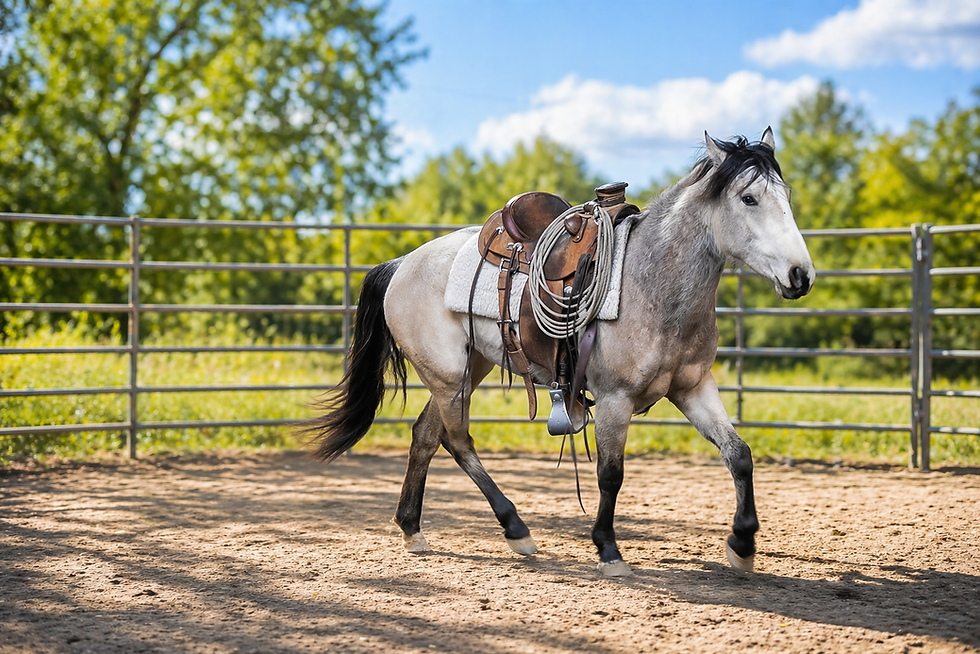
Understanding Skeletal Maturity
Young horses grow through areas called growth plates, also known as epiphyseal plates. These are regions of cartilage near the ends of bones that allow them to lengthen as the horse grows. Because cartilage is softer than bone, these areas are more sensitive to stress.
Research gives us a general idea of how different parts of the skeleton mature:
Growth plates in the lower limbs close relatively early
The cannon bone typically matures around 12 to 18 months
The radius and tibia finish developing closer to 2 years
The spine, including the back and neck, may not fully mature until 4 to 6 years
This is where many owners get caught off guard. A horse may look fully grown on the outside, but the structures that support a rider are often still developing.

What this means in real life
Early handling and groundwork are not only appropriate, they are beneficial
Ridden work should consider the development of the back, not just the legs
Repetitive or high-impact work carries more risk in younger horses
These timelines are well supported by research, but every horse is still an individual.

Recommended study tools: Interactive Horse Skeleton
Looking at the Horse in Front of You
Rather than focusing on age, it helps to step back and evaluate your horse as a whole.
Ask yourself:
Is your horse maintaining a healthy body condition without being pushed with extra feed?
Do the limbs look straight and balanced?
Is there any swelling around joints or growth plate areas?
Does your horse move freely, without stiffness or hesitation?
Small issues often show up here first. If something feels off at rest or in basic movement, adding more work will usually make it more obvious.
Mental Readiness Matters More Than You Think
Physical maturity gets most of the attention, but mental maturity is just as important.
A young horse needs to be able to:
Focus, even if only for short periods
Stay reasonably calm when introduced to something new
Recover from stress without escalating
A horse that is not mentally ready may appear resistant, distracted, or reactive. In many cases, this is not a training problem. It is simply a horse that has been asked to do more than it can comfortably handle.
If you want a deeper understanding of why this happens, the article on human and horse brain differences connects behavior to how horses process pressure and information.
Matching the Work to the Horse
Bone is constantly adapting. It becomes stronger when exposed to the right amount of stress, but too much, too soon can cause problems.
The goal is not to avoid work altogether. It is to introduce it gradually and thoughtfully.
A general progression might look like this:
Foals and weanlings
Plenty of turnout and natural movement
Basic handling and routine care
Yearlings
In-hand work
Light groundwork
Exposure to new places and experiences
Two-year-olds
Careful introduction to backing, depending on the individual
Very short, low-intensity sessions
Three to four years
Gradual conditioning
Increasing duration and complexity of work
This is not a strict formula. Think of it as a guideline that should bend to fit the horse, not the other way around.
Signs You May Be Asking Too Much
Horses are very good at giving feedback, but it is easy to miss if you are not looking for it.
Watch for:
Stiffness that lingers after light work
Swelling near growth plates, often called physitis
Sensitivity through the back
Resistance that feels different from normal behavior
Fatigue that does not improve with rest
These are not inconveniences. They are early warning signs that something needs to change.
Clearing Up Common Misunderstandings
“If they are tall, they are ready.”Height is not a reliable indicator of maturity. Internal structures, especially the spine, take longer to develop.
“Starting early always causes damage.”Moderate, well-managed work can actually support healthy bone development. The issue is not early work, it is excessive or poorly managed work.
“If I wait longer, I avoid all risk.”Waiting helps in some ways, but it does not eliminate risk. How you manage the horse matters far more than the exact starting age.

What We Still Do Not Know
Even with good research, there are limits:
There is no perfect starting age for every breed or individual
There is no exact line between helpful and harmful workload
Genetics play a role, but not one we can fully predict
This is why observation and flexibility are so important. Your horse will tell you far more than a calendar ever will.
A Simple Checklist Before You Progress
Before asking for more work, take a moment to check in:
Has a veterinarian assessed your horse’s development?
Is growth steady rather than rapid?
Is the diet balanced and appropriate?
Are you increasing work gradually?
Is your horse recovering well between sessions?
If something does not feel right, it is worth pausing and adjusting.
Why “ready for work” is really a whole horse question
It helps to think about readiness as more than age or height. A young horse may look mature on the outside while the spine, joints, and supporting structures are still developing, which is why visual tools like the Interactive Horse Skeleton and your broader Interactive Horse Anatomy can make this topic much easier to understand in practical terms.
Readiness also depends on behavior, not just bones. A horse that struggles to focus, escalates quickly, or seems reactive under pressure may not be “bad” or behind in training. It may simply be mentally overloaded. That is where articles like Horse Brain vs Human Brain: The Foundation of Communication and The Equine Nervous System: Part 2 add useful context for owners trying to match expectations to actual development.
Finally, progression only works when you track the horse in front of you. Subtle stiffness, uneven recovery, or changes in body condition matter far more than a calendar date, which is why it helps to pair this article with the Horse Weight and Body Condition Estimator, the Equine Lameness Guide, and Horse Tracker if you want to monitor changes over time instead of guessing.
Key Takeaways
Readiness is individual, not based on age alone
Growth plates close in stages, with the spine maturing last
Gradual, consistent work supports healthy development
Too much intensity too early increases risk
Professional guidance is always a valuable part of the process
Bringing a young horse along is not about hitting milestones as quickly as possible. It is about building a foundation that will last for years. Taking your time now almost always pays off later.
FAQ
When is a young horse ready for work?
A young horse is ready for work when skeletal maturity, physical condition, mental development, and the type of work being asked all line up. There is no single age that applies to every horse.
Why is age alone not enough to judge readiness?
A horse can look mature on the outside while important supporting structures are still developing. That is especially true for the back and neck, which may not fully mature until around 4 to 6 years.
What are growth plates in horses?
Growth plates, also called epiphyseal plates, are areas of cartilage near the ends of bones that allow the bones to lengthen as the horse grows. Because cartilage is softer than bone, these areas are more sensitive to stress.
At what age do different parts of the horse skeleton mature?
The lower limbs mature earlier than the spine. The cannon bone typically matures around 12 to 18 months, the radius and tibia closer to 2 years, and the spine, including the back and neck, may not fully mature until 4 to 6 years.
Is groundwork good for young horses?
Yes. Early handling and groundwork are described as appropriate and beneficial. They help prepare the young horse without placing the same demands on the back as ridden work.
Why does mental readiness matter in a young horse?
A young horse needs to be able to focus, stay reasonably calm with new experiences, and recover from stress without escalating. A horse that is not mentally ready may look resistant or reactive when it is actually overwhelmed.
What signs can suggest a young horse is not ready for more work?
Warning signs include poor body condition without extra feed, limb imbalance, swelling around joints or growth plate areas, stiffness, hesitation, and movement that does not look free and comfortable.


Comments