
Mustangs in the United States: Their History, Domestic Ancestry, and Why Feral Horses Are Still Called Mustangs

Updated: Jul 7
Introduction
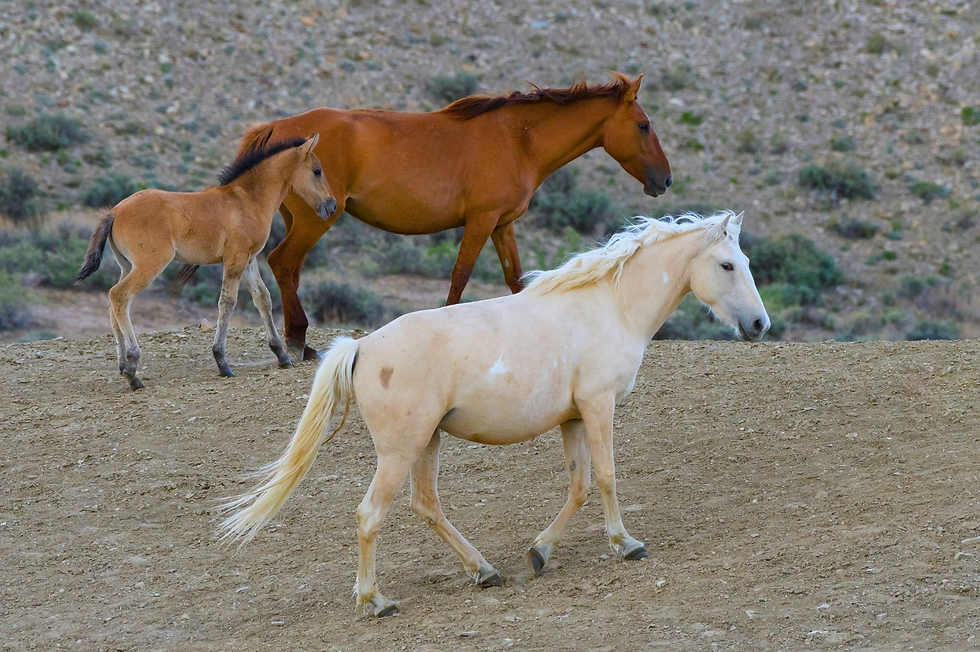
The American mustang is one of the most recognizable symbols of the American West. For many people, the word “mustang” brings to mind a powerful image: horses running across open desert, moving through rugged mountains, or standing against a wide western sky. These horses have become closely tied to ideas of freedom, endurance, survival, and frontier history.
However, the true story of the mustang is more complex than the romantic image suggests.
Modern mustangs are not a separate species of wild horse native to North America in the same way that elk, bison, or pronghorn are native wildlife. Instead, mustangs are free-roaming horses descended from domesticated horses brought to the Americas by Europeans, especially Spanish explorers and colonists beginning in the late 15th and early 16th centuries.

Over time, some of these horses escaped, were traded, were released, or were abandoned. They formed free-ranging populations across parts of the western United States. These horses also mixed repeatedly with domestic horses from ranches, farms, Indigenous-managed herds, military groups, settlers, and later American breeding programs.
Because of this long history of mixing, the mustang is not one single breed. It is better understood as a group of feral horse populations with varied ancestry. Some herds retain stronger Spanish colonial influence, while others show influence from Quarter Horses, Thoroughbreds, draft horses, ranch horses, Arabians, Saddlebreds, and other domestic breeds.

Mustang herds can carry traces of many domestic horse types, which is why their body type, movement, and temperament can vary so much from one herd to another. To compare them with established breeds, see our guides to the Arabian horse, the Andalusian horse, and our broader guide to horse breeds and discipline suitability.
Still, even though the word “feral” is scientifically more accurate, “mustang” remains the common cultural term. To understand why, we need to look at where these horses came from, how they spread, how they mixed with domestic horses, and why they continue to hold such a powerful place in American identity.
What Is a Mustang?
A mustang is commonly described as a free-roaming horse of the American West. In everyday language, people often call mustangs “wild horses.” In a strict biological sense, however, most modern mustangs are considered feral horses.
A feral animal is a domesticated animal, or the descendant of domesticated animals, that lives independently of direct human control. For example, a feral cat may live outdoors and survive without an owner, but it still descends from domesticated cats. The same idea applies to mustangs. They live freely, reproduce on the range, and are not handled daily by humans, but their ancestors were domestic horses.
This distinction matters because the word “wild” has different meanings depending on how it is used. In casual language, “wild” may simply mean free-roaming or unmanaged. In science, “wild” usually refers to an animal that has not been domesticated as a species.
Mustangs are therefore culturally wild but biologically feral. That does not make them less important. It simply gives us a more accurate way to understand their history.
Did You Know? Horses originally evolved in North America millions of years ago, but the horses living in North America today descend from domesticated horses brought back by humans after prehistoric North American horses disappeared thousands of years earlier.

Horses Return to North America
The horse family has deep evolutionary roots in North America. Ancient horse relatives lived on the continent long before modern human history. However, these early horses disappeared from North America thousands of years ago, likely due to a combination of environmental change and human hunting pressure.
Modern horses returned to the Americas with European colonization. Christopher Columbus brought horses to the Caribbean on his second voyage in 1493, and later Spanish explorers, settlers, missionaries, and ranchers brought horses to mainland North America.
These early Spanish horses were especially important in shaping the first free-ranging horse populations. Many were hardy, compact, agile, and well adapted to demanding travel. They carried Iberian, Barb, Andalusian, and other related influences. These horses were useful for transportation, warfare, ranching, and exploration.
Not every horse remained under human control. Some escaped from expeditions, settlements, ranches, and missions. Others were lost during conflict or travel. Some were intentionally released when they were no longer useful or when people could not care for them.
Once free, horses did what horses do well: they formed groups, reproduced, traveled, and adapted.
The Spread of Horses Across the West
By the 1600s and 1700s, horses had spread across large areas of the American Southwest and Great Plains. Their movement was not simply the result of escaped Spanish horses wandering on their own. Indigenous trade networks, intertribal exchange, warfare, raiding, diplomacy, and skilled horsemanship all played important roles in the spread of horses.
Many Indigenous peoples rapidly incorporated horses into daily life. Horses transformed transportation, hunting, warfare, trade, migration, and social organization for many groups. Among Plains tribes, horses became especially important for hunting bison and traveling across long distances.
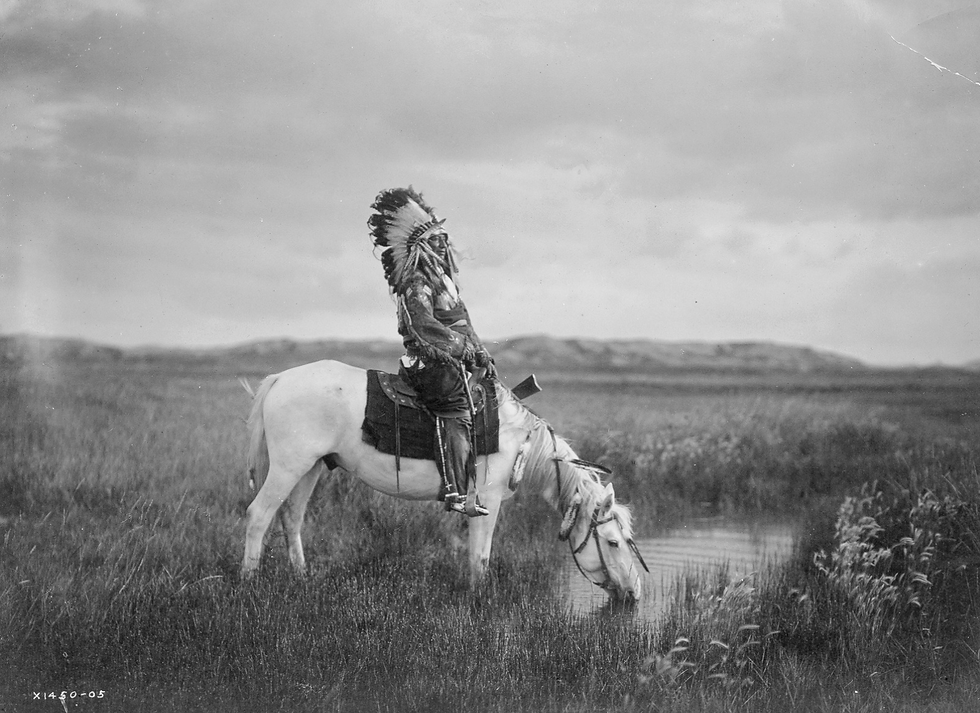
Tribes such as the Comanche, Lakota, Cheyenne, Crow, and Blackfoot became known for exceptional horsemanship. The Comanche in particular became famous as skilled horse breeders, riders, and traders.
As horses moved through Indigenous, Spanish, Mexican, and later American networks, they did not remain genetically isolated. Horses from different sources mixed with one another. Spanish horses bred with ranch horses, Indigenous-managed horses, military horses, settler horses, and animals that had escaped or been released.
This mixing became one of the most important features of mustang history.
Mustang Herds Were Shaped by Survival
Once horses began living independently across open landscapes, natural selection played an important role. Horses that could survive drought, harsh winters, rugged terrain, predators, limited forage, and long travel were more likely to reproduce.
Over generations, free-roaming herds developed traits that helped them persist in difficult environments. These traits often included:
• Sound feet
• Efficient movement
• Strong herd instincts
• Good fertility
• Adaptability
• Hardiness
• Ability to use sparse forage
• Alert behavior
This does not mean every mustang looked the same. In fact, one of the defining features of mustangs is their diversity. Some are small and compact. Others are taller, heavier, or more refined. Coat colors vary widely. Conformation varies from herd to herd and even within the same herd. Their appearance often reflects the domestic horses that contributed to each population.

Did You Know? Mustangs are not a breed in the same sense as Arabians, Morgans, Quarter Horses, or Thoroughbreds. The word “mustang” describes free-roaming feral horses, not one uniform breed with a closed registry.
Domestic Horses Continued to Mix With Mustang Herds
One reason modern mustangs differ from early Spanish colonial horses is that free-roaming horses continued to mix with domestic horses over several centuries.
Throughout American history, many types of horses entered free-ranging populations. Ranch horses escaped. Settlers released unwanted horses. Miners abandoned horses. Cavalry horses wandered off. Farmers and families sometimes turned horses loose during economic hardship or when animals were no longer needed.
During the 19th century, open-range ranching made this mixing even more common. Fences were limited across large areas of the West, and livestock often roamed over enormous distances. Domestic horses and feral horses could come into contact easily.
Cowboys sometimes captured mustangs and trained them for ranch work. At the same time, ranch horses could leave domestic herds and join free-roaming groups. This constant exchange blurred the line between unmanaged feral horses, semi-managed range horses, and escaped domestic stock.
As American horse breeding changed, those influences entered mustang populations. Quarter Horse ancestry contributed muscular build and sprinting ability in some herds. Draft horse influence contributed size and bone in others. Thoroughbred influence may have added height and speed. Ranch horse blood contributed practical working traits.
The result is that modern mustangs are genetically and physically diverse. Some herds may carry noticeable Spanish colonial influence, while others are much more mixed.
Are Mustangs Wild or Feral?
This is one of the most common questions about mustangs.
The simple answer is that mustangs are often called wild horses, but biologically, they are considered feral horses.
A truly wild animal is one whose species has not been domesticated. A feral animal descends from domesticated animals but lives independently of human care. Since modern mustangs descend from domestic horses brought by humans, they fit the definition of feral.
This does not mean mustangs are tame. A mustang that has lived on the range may be completely unhandled and very wary of people. It may behave like a wild animal because, from its own life experience, it has survived without human training, feeding, or daily care.
The difference is about ancestry, not behavior.
A mustang can be behaviorally wild but biologically feral. That is why both terms appear in discussions about these horses. Scientists and land managers may use “feral” for accuracy. The public often uses “wild” because the horses live freely and represent untamed landscapes.
Why Are Feral Horses Still Called Mustangs?
The word “mustang” has Spanish roots. It is commonly traced to words such as mestengo or mesteño, which referred to stray, ownerless, or unclaimed livestock. Over time, the word became “mustang” in English and was used to describe free-roaming horses of the West.
Historically, a mustang was not necessarily a special breed. It was often a horse that was stray, unclaimed, or living outside direct ownership.
The name persisted because it became deeply connected to western identity. Mustangs came to symbolize independence, frontier life, cowboy culture, endurance, and survival.
Writers, artists, films, and popular culture strengthened this image. For many people, the mustang became more than a horse. It became a symbol.
This is why the term remains powerful, even though the scientific reality is more complicated. “Feral horse” may be more biologically accurate, but “mustang” carries historical and emotional meaning.
Did You Know? The romantic image of the “wild mustang” often makes people think mustangs are a single ancient breed. In reality, most mustang herds contain mixed domestic ancestry shaped by centuries of human movement, horse trade, escape, release, and natural selection.
Velma Bronn Johnston and Federal Protection
The modern story of mustangs also includes major debates about capture, slaughter, protection, and land management.
During the 1940s and 1950s, many free-roaming horses in the western United States were captured commercially. Some were rounded up for pet food, animal feed, fertilizer, slaughter markets, or meat export. These practices alarmed horse advocates and members of the public.
One of the most important figures in the protection movement was Velma Bronn Johnston, better known as “Wild Horse Annie.” Johnston became a leading public voice for free-roaming horses. Through public education, lobbying, grassroots activism, and political pressure, she helped change how many Americans viewed mustangs.

Her work contributed to early federal protections and helped lay the foundation for the Wild Free-Roaming Horses and Burros Act of 1971. This law gave federal protection to free-roaming horses and burros on designated public lands and placed responsibility for their management under federal agencies.
The language of “wild horses” became part of the legal and cultural vocabulary. Even though “feral” may be scientifically more precise, “wild horse” remains common in law, public discussion, and advocacy.
Mustang Management Today
Today, free-roaming horses and burros are managed primarily by the Bureau of Land Management, often called the BLM, and in some areas by the U.S. Forest Service. Management is complicated because mustangs are both federally protected animals and large grazing animals living on public rangelands that also support wildlife, livestock, recreation, and fragile ecosystems.
The BLM manages herds through several tools, including:
• Population monitoring
• Herd management areas
• Fertility control
• Gather and removal programs
• Adoption programs
• Off-range holding facilities
• Public education
The goal is to maintain healthy horses on healthy rangelands. However, this is not simple. Horse populations can grow quickly when food and water are available and when natural predation is limited. If numbers exceed what the land can support, problems may develop for both horses and the ecosystem.
Overpopulation may contribute to overgrazing, soil erosion, damage around water sources, reduced forage, and competition with native wildlife and livestock. At the same time, many people strongly object to roundups or removals because they believe mustangs deserve to remain free on the range.
This creates one of the most emotional land management debates in the American West.
Cultural, Ethical, and Ecological Perspectives
The mustang debate often becomes difficult because people are not only discussing biology. They are also discussing values.
Supporters of strong mustang protection argue that these horses are part of American heritage. They see mustangs as symbols of freedom, endurance, and the historic West. Some also argue that horses fill an ecological role similar to the extinct horses that once lived in North America.
Others emphasize that modern mustangs descend from domestic horses and can place pressure on western ecosystems when populations grow beyond available resources. From this perspective, responsible management is necessary to protect the land, native wildlife, and the horses themselves.
Both sides often care about horses, but they may prioritize different concerns. One side may focus more on freedom and protection. The other may focus more on range health, population balance, and ecological impact.
For students of horse science, this is an excellent example of why equine topics often require more than emotion alone. Good horse education requires history, biology, welfare, land management, and practical reasoning.
Why the Mustang Still Matters
The mustang remains important because it stands at the intersection of horse history, American culture, ecology, and public policy. These horses are not simple symbols. They are living animals with complex ancestry and real welfare needs.
Their story includes Spanish colonization, Indigenous horsemanship, ranching, warfare, trade, settlement, abandonment, survival, advocacy, law, and modern land management. Few horse populations have such a layered history.
Understanding mustangs accurately does not take away their beauty or significance. In fact, it makes their story more interesting. They are not magical untouched relics of a single ancient breed. They are the result of movement, adaptation, human influence, natural selection, and cultural imagination.
Track Mustang Care, Training, and Adoption Progress
Mustangs have a unique history, but once adopted or placed into domestic care, they still need the same careful records as any other horse. Because many mustangs come from free-roaming backgrounds, owners may need to track gentling progress, handling milestones, body condition, hoof care, nutrition changes, vaccinations, deworming, dental care, and training confidence over time.
Use Horse Tracker to record adoption details, health checks, farrier visits, weight and body condition, feeding changes, groundwork progress, first handling sessions, trailering, veterinary notes, behavior observations, and training milestones.
This is especially helpful for newly adopted mustangs, horses transitioning from range life to domestic management, or owners building trust slowly through consistent routines. The Horse Tracker App can keep health, training, and care notes organized in one place as the horse adjusts.
Conclusion
The American mustang is more than a free-roaming horse. It is a living reflection of North American history. The mustang’s ancestors arrived with European explorers and colonists, spread through Indigenous trade and horsemanship, mixed with ranch and military horses, and adapted to life across the western landscape.
Modern mustangs are not a single pure breed and are not truly wild in the strict biological sense. They are feral horses descended from domesticated animals. However, their independent life on the range and their deep connection to the American West explain why so many people continue to call them wild.
The word “mustang” has survived because it means more than ancestry. It represents freedom, endurance, survival, and the complicated relationship between humans, horses, and the land.
For horse owners, students, and equine learners, the mustang offers an important lesson: horse history is rarely simple. Behind every familiar term is a deeper story shaped by biology, culture, and human choices.
Frequently Asked Questions About Mustangs
1. Are mustangs truly wild horses?
In a strict scientific sense, mustangs are feral horses, not truly wild horses. They descend from domesticated horses brought to the Americas by humans. However, many people call them wild because they live freely and are not handled or managed daily like domestic horses.
2. What does feral mean?
Feral means that an animal descends from a domesticated species but now lives independently of direct human care. A mustang is feral because its ancestors were domestic horses, even though the horse itself may have been born and raised on the range.
3. Are mustangs native to North America?
Modern mustangs are not native wildlife in the same way as bison or elk. Horses evolved in North America long ago, but those prehistoric horses disappeared thousands of years ago. The horses living in North America today descend from domesticated horses brought back by Europeans.
4. Where did mustangs come from?
Mustangs descend largely from domestic horses brought by Spanish explorers, settlers, missionaries, ranchers, and later other groups. Over time, escaped, released, traded, and abandoned horses formed free-roaming populations.
5. Are mustangs a breed?
Mustangs are not one uniform breed. They are free-roaming feral horses with mixed ancestry. Some herds may show Spanish colonial influence, while others include ancestry from Quarter Horses, Thoroughbreds, draft horses, ranch horses, Arabians, and other breeds.
6. Why are they called mustangs?
The word “mustang” comes from Spanish terms associated with stray or ownerless livestock. In English, it became the common word for free-roaming horses of the American West.
7. Why do people still call mustangs wild horses?
People call them wild because they live freely, form herds, survive without daily human care, and are strongly associated with open western landscapes. The term is culturally meaningful, even though “feral” is more scientifically accurate.
8. Who was Wild Horse Annie?
Wild Horse Annie was the nickname of Velma Bronn Johnston, an advocate who worked to protect free-roaming horses from cruel capture and commercial exploitation. Her activism helped build public support for federal protections.
9. Who manages mustangs today?
Most free-roaming horses and burros on public lands are managed by the Bureau of Land Management. Some are managed by the U.S. Forest Service. Management may include monitoring, fertility control, gathers, adoption, and relocation.
10. Why is mustang management controversial?
Mustang management is controversial because it involves animal welfare, land health, public land use, ecology, culture, and emotion. Some people want mustangs left free on the range, while others believe population control is necessary to protect both the horses and the environment.


Comments