
Alfalfa Pellets for Horses: Benefits, Amounts and Cubes vs Pellets
- Horse Education Online

- Sep 11, 2025
- 14 min read
Updated: 5 hours ago

Alfalfa pellets for horses can be useful when you need a measured way to add quality protein, calories, calcium, and soaked forage to the diet. They are often used for hard keepers, performance horses, seniors, travel mashes, and small pre ride meals for horses that may benefit from alfalfa’s buffering effect.
They are not a full replacement for hay in most feeding programs. Pellets are short fiber, so they do not provide the same chew time, gut motility support, or natural feeding behaviour as long stem hay or pasture. Long stem forage should still be the base of the ration, with pellets used as a targeted supplement.
The safest starting point depends on your horse’s body weight, body condition, workload, and metabolic risk. Use the Alfalfa Pellet Feeding Planner to estimate a starting amount, then compare alfalfa with grass hay in Orchard vs Timothy vs Alfalfa and track weight changes with the Horse Weight and Body Condition Calculator.
Quick Answer: How Much Alfalfa Pellets Should You Feed a Horse Per Day?
As a general starting range, many horses do well with alfalfa pellets at about 0.2 to 0.5 percent of body weight per day when pellets are being used as a supplement to hay. For a 500 kg horse, that equals about 1.0 to 2.5 kg per day, split into two or three meals.
Hard keepers and performance horses may need more, while easy keepers, EMS horses, and PPID horses usually need much smaller amounts and only if the pellets are tested low in non structural carbohydrates. The safest approach is to start low, measure by weight rather than scoops, and reassess body condition every 10 to 14 days.
For a faster starting estimate, use the Alfalfa Pellet Feeding Planner. If you are not sure whether the horse needs more calories or less weight, check the horse’s condition first with the Horse Weight and Body Condition Calculator.
At-a-Glance: When Alfalfa Pellets Help and When They Don’t
Situation | Are alfalfa pellets a good fit? | What to watch |
Hard keeper needing more calories | Often helpful | Track gradual weight gain and manure quality |
Senior horse with poor chewing | Often helpful when soaked | Watch for choke risk and total forage intake |
Performance horse needing extra protein and calories | Often helpful | Balance with workload and total ration |
Pre ride forage snack | Can be helpful | Keep the amount small and consistent |
Overweight or easy keeper | Usually limited | Watch body condition and calorie intake |
EMS, PPID, or laminitis risk | Use caution | Feed only with tested low NSC products and vet guidance |
Replacing most hay | Usually not ideal | Pellets lack long stem chew time |
Horse that bolts feed | Use caution | Soak pellets and slow intake |
The key is not whether alfalfa pellets are “good” or “bad.” The better question is whether they solve a specific feeding problem for that horse. If the horse needs calories, protein, or a soaked forage option, they can help. If the horse already carries too much weight or needs more long stem forage, they may make the ration worse.
Track the Feeding Change Before You Adjust Again
Once you add alfalfa pellets, do not judge the result from one meal or one day. Track the amount fed, soaking method, body condition, weight estimate, appetite, manure quality, energy level, and any changes in behaviour for at least 10 to 14 days before making another increase.
The Horse Tracker can help you keep those feeding notes, weight changes, and health observations organized in one place. Pair it with the Alfalfa Pellet Feeding Planner so you can choose a starting amount, monitor the response, and adjust with more confidence.
Alfalfa Pellets vs Cubes vs Hay: What Is the Difference?
Alfalfa pellets are ground alfalfa compressed into small, uniform pieces. They deliver a consistent nutrient package when hay quality or availability is variable. Because the fiber is short, pellets are best viewed as a forage supplement or carrier, not a complete hay replacement.
Pellets are typically higher in protein and calcium than grass hays and similar or slightly higher in calories. That makes them useful for horses needing extra amino acids or steady energy without jumping to high-starch concentrates. For ration building fundamentals and why these numbers matter, see The Basics of Equine Nutrition.
Typical Nutrient Profile (varies by brand/lot)
Nutrient (as-fed) | Alfalfa Pellets | Grass Hay (Timothy/Orchard) |
Crude Protein (%) | 16–18 | 8–14 |
Digestible Energy (Mcal/kg) | 2.2–2.6 | 1.8–2.2 |
NSC (%) | 8–12 | 10–18 |
Calcium (%) | 1.2–1.5 | 0.3–0.6 |
Phosphorus (%) | 0.2–0.3 | 0.2–0.3 |
Ca:P Ratio | ~4–7:1 | ~1.5–2:1 |
Interpretation: pellets bring more protein and calcium; NSC is often moderate-to-low but calories are dense. Balance the whole ration so total Ca:P stays ~1.5–2:1.
Pellets vs. Cubes vs. Long-Stem Hay

Pellets are convenient, consistent, and soak quickly. They lack fiber length, so they don’t satisfy chew time the way hay does. Keep at least half of daily forage as long-stem hay or pasture.
Cubes preserve more fiber length and are the better choice if you must replace a large portion of hay. They still benefit from soaking for choke-prone horses.
Long-stem hay drives gut motility and mental well-being. Pellets should support, not displace, that role.
Quick Fit Guide
Feed form | Best use | Main limitation |
Alfalfa pellets | Measured protein, calories, pre ride snack, soaked mash, supplement carrier | Short fiber, less chew time, easier to overfeed |
Alfalfa cubes | Partial hay replacement, seniors, horses needing more chew time than pellets provide | Often need soaking, less convenient than pellets |
Long stem hay or pasture | Foundation of the ration, gut motility, chewing time, behaviour | Quality and nutrient levels vary by cutting and region |
Pellets are the most convenient choice when you want a small, measured addition to the ration. Cubes are usually the better choice when alfalfa is replacing a larger share of forage because they preserve more fiber length. Long stem hay or pasture should still remain the base of most diets because forage is not only about nutrients. It also supports chewing time, gut function, and normal feeding behaviour.
This is well supported. Rutgers notes that long stem hay or pasture is the traditional cornerstone of horse rations and that forage should make up at least 50 percent of daily intake. Rutgers also warns that low fiber, high concentrate rations are associated with higher risk of colic, gastric ulcers, and wood chewing.
When Alfalfa Pellets Help (and When They Don’t)
Alfalfa pellets shine when you need predictable nutrients in small, controllable portions. They also play well with soaking, which is handy for hydration and choke prevention.
Clear Wins
Ulcer buffering around work.
A small pre-ride serving of alfalfa provides calcium and protein that can help buffer stomach acid during exercise. Many riders use ~0.45–0.9 kg (1–2 lb) 30–60 minutes before work, especially if the horse is sensitive to grain around ride time.
Condition and topline.
The 16–18% protein supports muscle maintenance and repair. For hard keepers, seniors, broodmares, and performance horses, pellets let you add calories and amino acids without spiking starch.
Travel and hydration.
Pellets soak into a palatable mash or soup that encourages drinking on the road and in weather swings. If you’re monitoring intake or gum moisture, pair this tactic with our How to Tell if a Horse is Dehydrated checklist.
Seniors and dentition issues.
Soft, soaked pellets help horses that struggle to chew coarse hay. Keep some long-fiber in the plan (chopped forage or cubes) to maintain gut motility.
If alfalfa pellets are not the right fit, consider a fiber first option like beet pulp for horses, or a fat based calorie option like rice bran for horses, and adjust based on body condition and manure changes.
Use With Caution
EMS/PPID and easy keepers.
Alfalfa is often lower NSC than many grass hays, but it’s still calorie-dense. For insulin-resistant or easy-keeping horses, choose tested low-NSC pellets and keep amounts conservative while the base remains grass hay. Track body condition and cresty neck. For risk factors and prevention strategies, review Equine Metabolic Syndrome (EMS).
Mineral balance.
High calcium is helpful for buffering but can skew Ca:P. Pair pellets with grass hay and/or a ration balancer so the whole diet lands near 1.5–2:1.
Fiber and behavior.
Pellets don’t deliver the chew time of hay. Horses still need ≥50% of forage as long-stem for gut health and boredom management.
Choke and fast eaters.
Some horses bolt pellets. Soaking, wide tubs, and slow-feeder inserts reduce risk. Introduce changes over 7–10 days and watch manure consistency and appetite.
Stall air quality.
Higher-protein diets can raise urinary ammonia. Good ventilation and bedding hygiene matter more when using alfalfa regularly.
When Not to Feed Alfalfa Pellets
Alfalfa pellets are not the best choice for every horse. Avoid making them a major part of the ration when the horse is already overweight, gaining weight too quickly, or showing signs of metabolic risk such as a cresty neck, regional fat pads, or a history of laminitis. In those cases, the base diet usually needs to be controlled grass hay, not extra calorie dense forage.
Be cautious with horses that bolt feed, have a history of choke, or do poorly with short fiber meals. These horses may need pellets soaked every time, or they may do better with soaked cubes and long stem hay. If a horse develops soft manure, fast weight gain, reduced appetite, or stronger ammonia smell in the stall after adding alfalfa pellets, reduce the amount and reassess the whole ration.
Alfalfa pellets should also not replace most of the hay ration unless the plan has been reviewed carefully. If you are feeding large amounts because hay is limited, compare the forage options in Orchard vs Timothy vs Alfalfa and use body condition changes, not guesswork, to guide the amount.
How Much to Feed (by Weight and Goal)
Alfalfa pellets usually supplement hay—not replace it. Keep daily forage (all sources) near 1.5–2.5% of bodyweight on a dry-matter basis, with at least half as long-stem hay or pasture.
Working ranges (as-fed, split into 2–3 meals):
Maintenance add-on: ~0.2–0.5% BW/day
Hard keeper/performance: ~0.4–0.6% BW/day with a grass-hay base and a vitamin–mineral balancer
EMS/easy keeper: 0.05–0.2% BW/day only if needed and only if pellets are tested low-NSC (pair with grass hay; see our EMS guide)
Pre-ride “ulcer buffer” snack: feed 0.45–0.9 kg (1–2 lb) 30–60 min before work. Soak for fast eaters or horses with a choke history.
Round-number table (as-fed)
Bodyweight | Maintenance add-on | Performance/hard keeper | EMS/easy keeper (max) |
400 kg (880 lb) | 0.8–2.0 kg (1.8–4.4 lb) | 1.6–2.4 kg (3.5–5.3 lb) | 0.2–0.8 kg (0.4–1.8 lb) |
500 kg (1,100 lb) | 1.0–2.5 kg (2.2–5.5 lb) | 2.0–3.0 kg (4.4–6.6 lb) | 0.25–1.0 kg (0.5–2.2 lb) |
600 kg (1,320 lb) | 1.2–3.0 kg (2.6–6.6 lb) | 2.4–3.6 kg (5.3–7.9 lb) | 0.3–1.2 kg (0.7–2.6 lb) |
Quick math example:
A 500 kg trail horse needing a modest boost might start at 1.5 kg/day (0.3% BW), split 0.75 kg morning and evening, while maintaining free-choice grass hay. Adjust every 10–14 days based on body condition, work level, and manure quality. For fundamentals on energy/protein targets, see The Basics of Equine Nutrition.
Build a Safer Alfalfa Pellet Plan
Before increasing alfalfa pellets, estimate the horse’s body weight, body condition, and goal. A hard keeper, an easy keeper, a senior horse, and a horse in regular work may all need very different starting amounts.
Use the Alfalfa Pellet Feeding Planner to calculate a starting range, soaking ratio, and feeding plan. Then use the Horse Weight and Body Condition Calculator every couple of weeks to check whether the plan is helping or adding unnecessary weight.
Soaking, Storage, and Travel Use


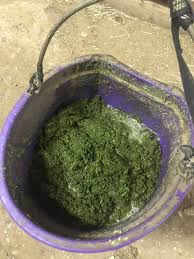
Soaking improves safety and hydration. It’s especially helpful for seniors, greedy eaters, and travel days.
Ratios and timing (by volume):
Mash: 1:1 water : pellets, soak 10–20 minutes
Soup: 2:1 water : pellets, soak 15–30 minutes (longer in cold weather)
Readiness checks: pellets are fully softened with no hard centers, the mix crumbles easily, and there’s no sour or fermented odor.
Travel plan (simple and effective):
Offer a small soaked mash at each stop and after unloading.
Keep hay type consistent; avoid big concentrate changes on the road.
Use wide, low tubs and slow-feed inserts to reduce bolting.
Monitor hydration with quick field checks—skin tent, gum moisture, and manure consistency—using our dehydration guide.
Storage notes: keep bags cool, dry, and rodent-proof; fold or seal after opening. Use by the manufacturer’s date; in humid climates, make smaller, more frequent purchases to prevent clumping or spoilage.
When to switch to cubes: if pellets start displacing a large share of hay, move to alfalfa cubes (better fiber length) while keeping long-stem forage in the diet for gut motility and chew time.
Building a Balanced Ration Around Alfalfa Pellets
Alfalfa pellets bring protein and calcium; the rest of the ration should even out minerals and keep enough long-stem fiber. Most horses do best with a grass-hay base, a measured amount of alfalfa pellets, and a ration balancer that fills vitamin–mineral gaps. Aim for a whole-diet Ca:P near 1.5–2:1, with sodium supplied by plain salt and clean water always available. If you need a refresher on energy, protein, and fiber targets, review The Basics of Equine Nutrition.
Sample day plans (500 kg / 1,100 lb horse, as-fed):
Goal | Forage base | Alfalfa pellets | Balancer & salt | Notes |
Light work/maintenance add-on | Free-choice grass hay | 1.5 kg/day split a.m./p.m. | 1 balancer dose + 28–56 g salt | Simple way to add amino acids without jumping to grain. |
Performance/weight gain | Free-choice grass hay | 2.5–3.0 kg/day split 2–3 feeds | 1–1.5 balancer doses + salt | Watch Ca:P; balancer and grass hay help keep it in range. |
EMS/easy keeper (managed) | Controlled grass hay (by weight) | 0.5–1.0 kg/day only if low-NSC | Balancer formulated for low-NSC diets + salt | Keep calories tight; reassess body condition every 2 weeks. See EMS guide. |
If pellets begin to displace a large share of hay, switch part of that allocation to alfalfa cubes so chew time and fiber length remain adequate. Maintain ≥50% of daily forage as long-stem hay or pasture for gut motility and behavior.
Ulcers vs. EMS: Practical Decision Guide
Many owners reach for alfalfa pellets for ulcer comfort or to support a horse with metabolic risk. The tactics differ, even though the feed is the same.
If ulcer comfort is the priority
Use a small pre-ride feeding of 0.45–0.9 kg (1–2 lb) about 30–60 minutes before work. The calcium and protein help buffer stomach acid during exercise. Keep grain light around ride time, and consider soaking if your horse eats quickly or has a choke history.
If EMS/PPID or easy-keeper management is the priority:
Treat alfalfa pellets like a measured supplement, not a staple. Choose tested low-NSC pellets and limit to 0.05–0.2% bodyweight/day, with the ration built on weighed grass hay. Track body condition, neck crest, and girth; adjust every 10–14 days. Details and early-warning signs are in our EMS guide.
Side-by-side summary:
Priority | Amount & timing | Forage base | Extra notes |
Ulcer comfort around work | 0.45–0.9 kg (1–2 lb) pre-ride | Usual hay/pasture | Soak if needed; keep ride-time concentrates minimal. |
EMS/easy keeper control | 0.05–0.2% BW/day, tested low-NSC | Grass hay (weighed) | Tighten calories; use a low-intake balancer; reassess often. |
Whichever path you follow, introduce changes over 7–10 days, watch manure consistency and appetite, and keep water intake high—especially in travel or heat (see How to Tell if a Horse is Dehydrated).
Choosing the Right Alfalfa Pellet (Quality, NSC, and Tag Reading)
Not all alfalfa pellets are the same. Pick with intent and read the tag the same way you’d read a hay test.
Start with ingredients. You want alfalfa listed first with minimal binders. A little binder is normal; heavy molasses isn’t ideal for easy keepers or metabolic horses. If your horse is insulin-resistant, ask the supplier for typical NSC (or choose a product marketed/tested as low-NSC, generally ≤10–12%).
Look for a guaranteed analysis that makes sense beside your hay. Higher crude protein (16–18%) is expected. Calcium will be high; phosphorus modest. You’ll balance that with grass hay and a ration balancer.
Pellet size and screening matter for safety and palatability. Uniform pellets that don’t crumble to dust reduce sorting and waste. If your horse bolts feed or has a choke history, plan to soak every serving.
Label & Supplier Checklist
Item to verify | What you want to see | Why it matters |
Primary ingredient | Alfalfa first; minimal additives | Keeps nutrients predictable; avoids hidden sugars/fillers |
NSC (if provided) | ≤10–12% for EMS/easy keepers | Supports metabolic management |
Crude protein | ~16–18% | Adds essential amino acids for topline |
Calcium : Phosphorus | Ca high, P moderate → diet balanced to ~1.5–2:1 | Prevents mineral imbalance across the full ration |
Pellet integrity | Uniform, not dusty; no rancid/sour smell | Palatability, airway health, and safety |
Storage guidance | Cool, dry, sealed; reasonable shelf life | Prevents clumping, mold, or pests |
If pellets begin substituting a large share of hay, switch some of that portion to alfalfa cubes for better fiber length, and keep at least half of total forage as long-stem hay or pasture.
Troubleshooting: When to Adjust, Pause, or Switch
Most issues are solved with small, steady adjustments. Make one change at a time and reassess after 10–14 days.
Unwanted weight gain.
Reduce the pellet amount by 10–20%, tighten hay portions if needed, and increase low-intensity exercise. For easy keepers, confirm you’re using a low-NSC product and keep the grass-hay base dominant.
Soft or flaky manure.

Cut back the new feed by 25–50%, add a bit more long-stem hay, and check soaking times (undissolved cores can irritate). Reintroduce gradually over a week.
Choke scare or fast eating.
Move to mandatory soaking (10–20 minutes for mash, longer for cold water), feed from wide, low tubs, and add slow-feed inserts or large, clean rocks to slow intake. Consider alfalfa cubes if pellets remain problematic.
Dullness or “too hot.”
Alfalfa isn’t “hot” by starch, but it is calorie-dense. Trim back the amount, ensure adequate turnout, and review the whole ration for overlapping calories from concentrates or oils.
Crusty urine smell in stalls.

High protein can increase ammonia. Improve ventilation and bedding management; make sure water and plain salt intake are adequate.
Regional stone (enterolith) risk.
In some regions and breeds, heavy alfalfa use has been associated with enterolith formation. If you’re in a known risk area or have a susceptible horse, keep alfalfa to a measured portion of the forage program, pair with grass hay, and discuss history with your vet.
If problems persist, pause the pellets for a week, return to a simple grass-hay base, and rebuild slowly. Keep notes on amounts, soak times, manure, and workload so you can spot patterns and fine-tune confidently.
Track Changes After Adding Alfalfa Pellets
Adding alfalfa pellets should not be a one time guess. Track the amount fed, soaking method, body condition, weight estimate, manure changes, energy level, and any changes in behaviour over the next few weeks. This makes it easier to see whether the pellets are actually helping or quietly adding too many calories.
If you manage more than one horse, the Horse Tracker can help you keep feeding notes, weight changes, health observations, and care records organized in one place. Pair it with the Alfalfa Pellet Feeding Planner so you can plan the starting amount, then track what happens after the change.
Conclusion & Next Steps
Used thoughtfully, alfalfa pellets are a precise way to add amino acids, steady calories, and pre-ride buffering—without leaning on high-starch feeds. Keep at least half of daily forage as long-stem hay, balance Ca:P across the full diet, and scale amounts to body condition and workload.
Quick takeaways:
Start small, measure by weight, and adjust every 10–14 days.
For ulcers, a 0.45–0.9 kg (1–2 lb) pre-ride serving can help; for EMS/easy keepers, limit to 0.05–0.2% BW/day with low-NSC pellets.
Soak when traveling or with fast eaters, and monitor hydration using our field checks.
The easiest next step is to run your horse’s weight, goal, and feeding situation through the Alfalfa Pellet Feeding Planner, then reassess body condition every 10 to 14 days.
Level up your program with our deeper resources and credentials:
Memberships (full access to guides, tools, and printables)
Certifications (prove your knowledge; great for owners, students, and pros)
Study materials (flashcards, posters, manuals)
FAQ: Alfalfa Pellets for Horses
How much alfalfa pellets should I feed a horse per day?
Most horses using alfalfa pellets as a supplement start around 0.2 to 0.5 percent of body weight per day, split into two or three meals. A 500 kg horse may start around 1.0 to 2.5 kg per day, depending on workload and body condition. Easy keepers and metabolic horses usually need much less.
Are alfalfa pellets or cubes better for horses?
Alfalfa pellets are better for convenience, soaked mashes, pre ride snacks, and measured protein or calorie support. Alfalfa cubes are usually better when replacing a larger share of hay because they provide more fiber length and chewing value than pellets.
Can alfalfa pellets replace hay?
Usually no. Alfalfa pellets are short fiber and do not provide the same chew time as long stem hay or pasture. They can support the ration, but most horses still need long stem forage as the foundation of the diet.
When should you not feed alfalfa pellets?
Avoid or limit alfalfa pellets when a horse is overweight, gaining too quickly, insulin resistant, laminitis prone, or already receiving enough calories. Also be cautious with horses that bolt feed or have a history of choke unless the pellets are soaked.
Do alfalfa pellets help horses gain weight?
They can help some horses gain weight because they add quality protein, calcium, and calories without relying on high starch grain. Weight gain should be gradual and tracked with body condition scoring, not just scale weight or scoop size.
Should alfalfa pellets be soaked?
Soaking is not always required, but it is safer for seniors, fast eaters, horses with choke history, and travel mashes. A common starting point is equal parts water and pellets by volume for a mash, or more water for a soup like consistency.
Are alfalfa pellets safe for EMS horses?
They may be safe in small amounts if the product is tested low in non structural carbohydrates and the rest of the diet is controlled. For EMS, PPID, laminitis prone, or easy keeping horses, alfalfa pellets should be treated as a measured supplement, not a free choice feed.


Comments