Horse Health Log for Owners: A Simple System for Vitals, Symptoms, Meds, and Vet Calls

Updated: Aug 24
Barn life is busy. When a horse feels “a bit off,” most owners do the same thing: they try to remember what changed, scroll through photos, search old texts, or piece together a timeline from scattered notes.
That works until it does not. A stressful vet call is not the moment you want to guess whether the fever started this morning or last night, or whether you gave the last dose at 6 pm or 9 pm.
A horse health log fixes that. It is a simple, repeatable way to record vitals, symptoms, and care in two minutes, so you can spot trends earlier and give your vet clean, useful information when it matters.
What a horse health log is, and why it works
A horse health log is a simple, time stamped record of what you notice and what you do. It captures vitals, symptoms, manure and water changes, and any treatments in a consistent format. The goal is not perfect data. The goal is a clear timeline you can trust.
A log works because it turns vague worry into specific information. Instead of “he seems off,” you can see what changed, when it started, and whether things are improving or getting worse. That makes it easier to act early and avoid guessing.
It turns “something seems off” into a clear timeline
Small problems often show up as small changes first. When you write them down with times, patterns become obvious: appetite dipping, manure slowing, a mild fever that keeps returning, or a pulse that is creeping up. If you want a quick checklist of early warning signs worth logging, use this guide on early signs your horse may be sick.
It makes vet conversations faster and more accurate
Vets make better decisions with clear facts. A good log lets you report the timeline, the numbers, and what changed after each recheck or treatment. It also reduces missed details, especially when multiple people are caring for the horse. For a quick reference on what you should be checking and recording, keep the horse’s vital signs guide bookmarked.
What to track in a horse health log
A useful log is not “everything.” It is the handful of things that help you compare today to normal, and build a timeline when something changes.
Baseline daily checks (when your horse is healthy)
You are building a “normal for your horse” picture. Keep it simple.
Quick baseline checklist (60 to 90 seconds):
Temperature (only if you suspect illness, or you are establishing a baseline week)
Pulse and respiration at rest (even a rough count is useful if consistent)
Appetite and water intake (finished hay, grain, drinking normally)
Manure and urine (normal amount, normal consistency)
Attitude and movement (bright, dull, stiff, reluctant to move)
Owners often obsess over one number. What matters more is the pattern.
If heart rate is the number that confuses you most, Horse Education Online breaks it down clearly in this average heart rate guide.
Tip that improves accuracy:Do your baseline check at roughly the same time each day (for example, evening feed). Consistency beats perfection.
When your horse is not quite right
This is where logs earn their keep. Write down what you see and what changes.
Include:
Symptom(s): what you noticed (be specific)
Onset time: when you first noticed it (even an estimate)
What changed recently: feed, turnout, weather swing, travel, workload, new horse, new hay batch
What helped or worsened: walking helped, eating improved, heat made it worse, etc.
Recheck time: when you will check again (and what you’ll check)
Example symptom notes that help a vet:
“Pawing and looking at flank every 10 minutes, not constant rolling.”
“Cough only when eating hay, none at rest.”
“Left nostril discharge, thick, yellow, started today.”
“Short stride behind on right, worse on circles, improved after walking 10 minutes.”
Pro tip: Avoid single words like “not himself.” Write one sentence with a concrete behavior instead.
If reduced drinking or dry manure is part of the picture, use this dehydration check guide to know what to record:
Medications and treatments (owners forget this most)
This is the most common place owners get confused, especially with multiple people in the barn helping.
Minimum medication log fields:
Name of medication or supplement used for treatment
Dose
Time given
Route (oral, IM, topical)
Response (what changed and when)
Side effects (diarrhea, dullness, reduced appetite)
Simple double dosing prevention rule: If it is not written down, assume it was not given.
Baseline vs “not quite right” comparison table
Category | Healthy baseline example | Not quite right example |
Attitude | Bright, interactive | Dull, standing away |
Appetite | Finished hay | Picking at hay |
Water | Normal drinking | Seems reduced |
Manure | Normal amount | Reduced since afternoon |
Movement | Normal | Stiff, reluctant to turn |
Vitals | Typical for this horse | Higher than usual at rest |
Quick how to take vitals fast
You do not need fancy equipment. What you need is a repeatable method and a timestamp. If you check vitals the same way each time, your notes become comparable, which is what helps your vet most.
If you want a fast refresher on what each vital means and what “normal” generally looks like, keep our vital signs guide handy. It makes it easier to stay calm and consistent when you are worried.
Temperature in under 60 seconds

A digital rectal thermometer is still the simplest and most consistent option for owners. The key is safety and a calm horse.
Stand close to the hip rather than behind the horse. Angle your body so you can step away quickly if needed. Use lubricant, insert gently, and keep a hand on the thermometer until it beeps. Write down the temperature immediately, plus the time you took it.
When you log temperature, add one short context note if it matters. For example, “just came in from turnout,” “blanketed and sweating,” or “anxious in cross ties.” Those details help explain weird readings.
If the number is elevated or you are seeing a trend, use this fever guide with red flags and what to do to decide whether you should recheck, call your vet, or treat it as urgent.
Pulse and respiration without fancy equipment
For pulse, the facial artery along the lower jaw is usually the easiest spot. Use two fingers, not your thumb, and count beats for 30 seconds, then double it. If the horse is excited, note that, because stress can raise the reading.
For respiration, watch the flank rise and fall, or feel air at the nostrils. Count breaths for 30 seconds and double it. Then add one short sentence about effort, such as “quiet and easy,” “slightly faster than normal,” or “working harder to breathe.”
If heart rate is the number you second guess most, this guide to average heart rate and how to check it makes counting mistakes less likely and helps you interpret what you see.
Simple hydration and gum checks you can do at home

Hydration notes become extremely useful during fever, colic watch, travel, or hot weather. You do not need to overthink it. A simple, consistent description is enough.
Look at the gums and describe them as moist, slightly tacky, or dry. Press a finger briefly and watch how quickly colour returns. Then write one line about drinking, such as “drank normally,” “seems reduced,” or “unknown in group turnout.”
If you want a simple checklist you can copy into your log so your wording stays consistent every time, use these dehydration checks for horse owners.
Gut sounds and what “quiet” can mean
Gut sounds can be confusing, but your notes still help because you are tracking change over time. Listen on both sides, high and low, and give each area about a minute. Then write what you hear in plain language.
“Normal gurgles,” “occasional sounds,” “very quiet,” and “silent” are all valid owner notes. The most important thing is whether today is different from that horse’s normal.
If you are ever in a situation where you need a clear first hour plan and a reminder of what to record, keep this emergency colic kit and first hour checklist saved on your phone.
The horse health log template
The best template is the one you will actually use when you are tired, it is dark, and you are worried. A good log is short, timestamped, and consistent. You can always add detail later, but you cannot recover missing timing.
If you want to keep the same structure per horse, with entries that are searchable and easy to share, Horse Tracker is the cleanest upgrade path because it keeps every note tied to the right horse.
The fastest format that works in real barns
Use this format for every entry. It keeps your notes readable for you, barn staff, and your vet.
Field | What you write (keep it short) |
Date and time | Include am or pm |
Reason | Baseline, recheck, “off,” fever watch, colic watch, post travel |
Temperature | Number plus quick context if needed |
Pulse | Number plus calm or stressed |
Respiration | Number plus easy or effort |
Eating and drinking | Finished hay, slow on feed, drinking normal, seems reduced |
Manure and urine | Normal, reduced, dry, watery, none seen |
Symptoms | One clear sentence |
Meds and care given | Name, dose, time, route, response |
Next check time | When you will recheck and what you will re measure |
Example entries (healthy day vs sick day)
Healthy day example: March 2, 7:10 pm. Baseline check. Eating normally, drinking normally, manure looks normal, and movement is normal. Pulse and respiration look typical for this horse at rest, and nothing stands out.
Not quite right example: March 2, 8:40 pm. Horse is dull and standing away from the herd. Temperature is higher than usual for this horse, and pulse is up compared with earlier. Drinking seems reduced and manure output looks lower since afternoon. Plan is to recheck in two hours and record temperature, pulse, manure, and attitude again.
If you want to save this template digitally per horse and set reminders for rechecks, you can pair Horse Tracker with membership so you are not relying on paper when things get stressful.
How to use your log to spot trends
A log is not just an emergency tool. It is how you notice small changes early and how you prove a pattern when you need your vet to take a concern seriously. One clean timeline beats a dozen vague memories.
If you want one place to organize observations before a call, especially when you are not sure what category a sign fits into, our symptoms hub helps you phrase notes clearly and consistently.
The baseline week (when your horse is normal)
Pick a normal week and do one short entry per day. You are not trying to collect perfect data. You are building a “this is typical for my horse” reference that makes illness easier to spot.
After a baseline week, you usually know your horse’s usual resting pulse and respiration pattern, what “normal” appetite looks like, and what manure output looks like across different days. That baseline is what makes your sick day notes meaningful.
If you want to add a simple monthly objective check, log weight or body condition changes using the horse weight and body condition calculator. Even rough tracking helps catch slow changes.
During illness (set check times and compare readings)
When a horse is unwell, consistency matters more than volume. Choose recheck times you can actually stick to, then follow them. That might be every two hours at first, then every four hours once things stabilise.
Each entry should answer one question: is the horse improving, worsening, or staying the same. That is why a trend line matters more than a single number. A temperature that stays elevated, a pulse that climbs across checks, or manure that steadily decreases can all be more important than one “bad” reading.
After changes (feed, weather swings, travel, workload)
A lot of “mystery” issues line up with a change that did not feel important at the time. Your log helps you connect those dots without guessing.
When something changes, add one short line to your log that day. New hay batch, sudden weather swing, travel, new herd mate, time off, or a harder than usual ride are all worth noting. Later, if your horse is off, those details can explain why.
When to call the vet
A horse health log helps you make the call sooner and with less stress. You are not trying to diagnose. You are watching for red flags and recording a clear timeline so your vet can triage fast.
If you are unsure whether what you are seeing counts as “real,” anchor your observations with this guide to early signs your horse may be sick and write your notes in the same plain language.
Fever and trend red flags
Call your vet if your horse has a fever that climbs on rechecks, returns after dropping, or comes with dullness, reduced appetite, or dehydration signs. A practical “do not wait” pattern is a temperature around 39.0°C or higher, or any fever paired with rapid decline.
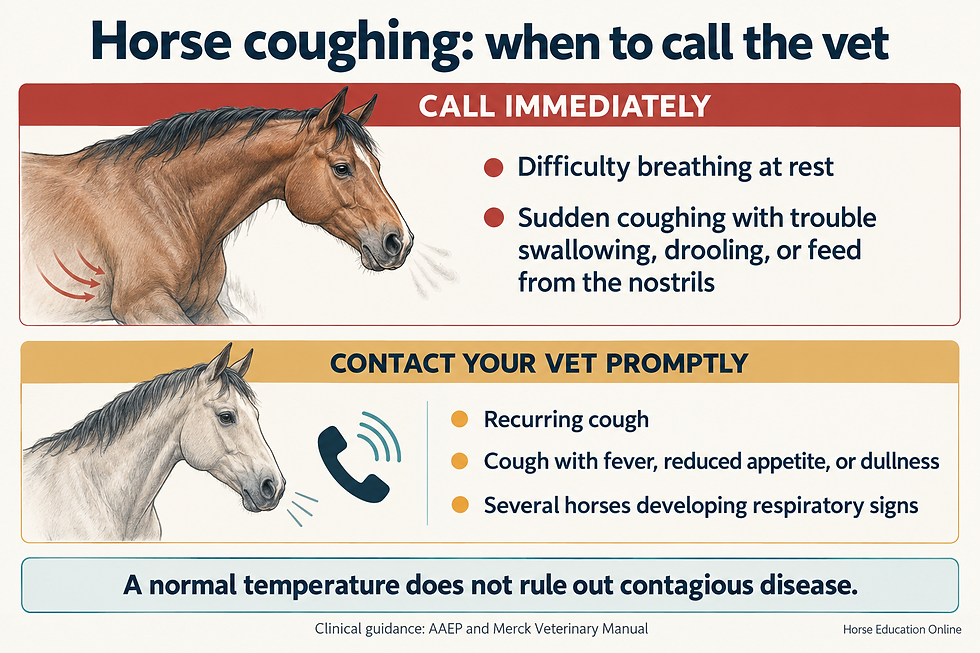
If fever is paired with cough, nasal discharge, swollen lymph nodes, or more than one horse in the barn looking sick, treat it as a vet call plus isolation situation. These two pages are good references for what owners should watch for while protecting the rest of the barn: strangles symptoms isolation and biosecurity and equine herpesvirus risks and prevention.
Gut pain, diarrhea, and dehydration red flags
Call urgently if pain is severe, escalating, or keeps returning after short improvement. A rising resting heart rate can be a useful “severity clue,” especially when paired with reduced manure, depression, or poor drinking.
If you are seeing diarrhea with dullness or dehydration signs, call sooner rather than later and log timestamps. It helps your vet understand how fast things are changing and how much fluid loss is likely.
If bute is part of your barn reality, make sure your medication notes include the exact time and dose. This safety guide pairs well with your medication log: bute for horses safe use and risks.
Breathing or neurologic red flags
Laboured breathing at rest is always a “call now” situation. If respiration is clearly elevated at rest, nostrils are flaring, or your horse looks distressed and cannot settle, call your vet and bring your timeline.
Neurologic signs also deserve urgent attention, especially stumbling, weakness, drifting, head tilt, or sudden incoordination. These two resources help you recognise patterns owners commonly notice and log clearly: West Nile virus signs and prevention and EPM early signs and management.
When to Call the vet Snapshot
Call your vet urgently if you see | Log this for the call |
Severe or escalating pain | Time it started, what you saw, heart rate trend |
Fever that is climbing or horse is dull | Temps with timestamps, eating, drinking, manure |
Laboured breathing at rest | Resp rate, effort notes, gum colour |
Stumbling, weakness, incoordination | Exact examples, when it began, progression |
Profuse diarrhea with dullness | Manure changes, hydration notes, vitals trend |
Common mistakes that make logs useless
Most logs fail for one simple reason: they are not consistent. A good log is short, timestamped, and written in the same format each time so you can compare entries without guessing.
If you want an easy way to keep entries consistent across days, use the same wording from the vital signs guide as your baseline language. That way you are not reinventing your template during a stressful moment.
No timestamps
A note that says “gave meds” or “seemed better” is hard to use without a time. Timestamps are what turn a diary into a clinical timeline.
If you only fix one thing in your system, fix this. Write the time for every reading and every treatment.
Inconsistent checks
Checking vitals at random times or using different methods makes numbers hard to compare. If you take a pulse right after turnout one day and at rest the next day, you might think the horse is worsening when it is actually just context.
Your log should include one quick context phrase when it matters, such as “resting in stall” or “just came in from turnout.” Those tiny notes prevent big misunderstandings.
Forgetting meds, feed changes, and stressors
Owners commonly remember the symptom and forget the important background. Feed changes, new hay, travel, weather swings, herd stress, and workload changes can all matter.
When something changes, add one short line to your log that day. Later, that line can be the clue that explains the whole pattern.
Logging a single number instead of the trend
A single heart rate reading is not the story. The story is whether it is rising, falling, or staying the same over time, and whether the horse’s attitude and gut function match the numbers.
A simple way to make trends obvious is to write each recheck in the same order. Temperature, pulse, respiration, appetite, water, manure, attitude. Then one sentence about what changed since last check.
Upgrade path: keep everything inside Horse Tracker
Paper logs work, but they fail in predictable ways. They get lost, they live in the tack room instead of with the horse, and they do not travel well when you are away from the barn or talking to a vet on the phone.
If you want a clean record system built for real owner life, Horse Tracker is the practical upgrade because it keeps every entry attached to the right horse and easy to find when you need it.
What Horse Tracker solves
First, it creates a profile for each horse so your notes do not blend together. That matters a lot if you manage more than one horse, or if multiple people help with care.
Second, it keeps a searchable history. Instead of scrolling through texts or guessing dates, you can pull up the last time the horse spiked a fever, how long it lasted, what you gave, and what your vet advised.
Third, reminders change behaviour. When you log a check, you can set a follow up so you do not forget the next temperature recheck or the next medication time. That alone prevents a lot of “I think I gave it but I am not sure” moments.
If you want to keep your log organised per horse and unlock the full record system, pair Horse Tracker with membership so your vitals, symptoms, medication notes, and vet timelines stay in one place.
FAQs
What should I write down first when my horse suddenly seems “off”
Start with the time you noticed the change, then write one clear sentence describing what looks different today. After that, add the basics you can observe quickly: appetite, water interest, manure output, and attitude.
If you want a simple owner checklist for those early “something’s not right” moments, follow the same observation style in this guide on early signs your horse may be sick and mirror the wording in your log.
How do I track vaccinations in a way that actually helps later

Log the vaccine name, date given, who administered it, and the lot number if you have it. Then add a short note about any reaction in the next 24 hours, even if it is “no issues.”
For context on what owners typically track and why it matters, use this 5 way vaccine explainer, and if you want a structured plan you can keep alongside your health log, the 5 way vaccine planner makes your records easier to maintain.
What is the safest way to log deworming so I do not lose the timeline
Write the product name, active ingredient if you know it, dose, and the horse’s approximate weight you used to calculate that dose. Then record the date and why you chose it, such as “high risk season” or “new arrival.”
If you want your log to follow a risk based approach rather than random dates, pair your notes with this deworming schedule by region and risk and use the equine deworming schedule planner to keep the plan consistent.
What should I log when I change feed, hay, or supplements
Write the exact change and the date it started. Then log a short daily note for the next week about appetite, manure consistency, energy, and any skin or behaviour changes. Most “feed related” problems show up as a pattern over several days, not one dramatic moment.
If electrolytes or salt are part of the change, keep your notes aligned with this salt and electrolytes guide and use the salt and electrolyte calculator so your amounts and timing stay consistent in your log.
How do I track weight changes without a scale
Use a weight tape or consistent measurements, and log it the same way each time. Then add a simple body condition note monthly, because slow weight drift often shows up there first.
For a quick grounding on what horse weight numbers usually look like, see this guide on how much horses weigh and record your estimates using the horse weight and body condition calculator so your monthly entries are comparable.
What should I record when my horse has an abscess or draining swelling
Log when you first noticed it, where it is, what it looks like, and whether the horse is more or less comfortable over time. Add daily notes on heat, swelling size, discharge, smell, and any change in appetite or attitude.
If you are dealing with an abscess style illness that can have biosecurity implications, it helps to keep your notes consistent with owner guidance like pigeon fever signs abscess care and isolation.
How long should I keep health records for each horse
Keep them as long as you own the horse. Old episodes often repeat, and a previous timeline can save time and money during a future vet call.
If you want your records searchable per horse instead of spread across notebooks, using an app based system like Horse Tracker (or the dedicated Horse Tracker app page) makes long term record keeping much easier.
How do I share my log with barn staff or a vet without confusion
Use one format, and keep the language concrete. “Dull, not finishing hay, manure reduced since morning” is more useful than “not himself.” When multiple people care for the horse, the biggest win is having one shared place where notes and timestamps live.
If you manage more than one horse or have a team involved, the management pages for stable management software and equine management software fit naturally as the “how we keep records clean across people” link inside this FAQ section.


Keeping a detailed horse health log is one of the best ways for owners to notice changes early and communicate clearly with their vets. A simple system for tracking vitals, symptoms, medications, and vet visits can make daily care much easier. Tools like My Apeiron Hub can help organize important health information, notes, and records in one place, giving owners a practical way to stay prepared and support better care decisions for their horses.