Lumbosacral Pain vs Sacroiliac Pain vs Hindlimb Lameness in Horses

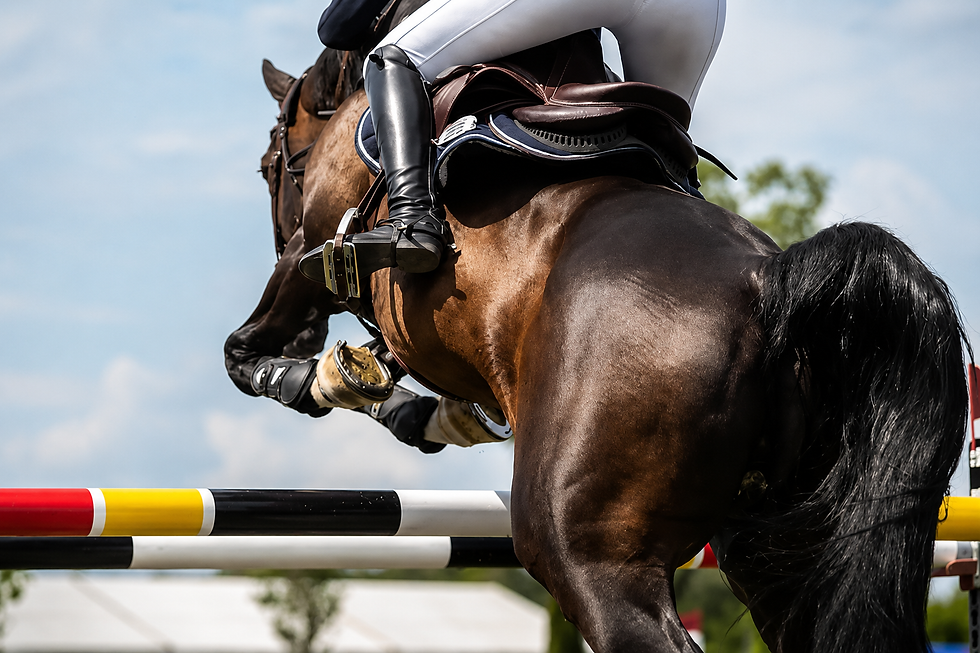
Diagnosing the source of poor performance, gait abnormalities, or hind-end discomfort in horses can be one of the most challenging aspects of equine medicine. Three conditions that are frequently discussed together are lumbosacral (LS) pain, sacroiliac (SI) region pain, and primary hindlimb lameness.
These conditions often produce similar signs, including reluctance to work, difficulty engaging the hindquarters, poor impulsion, and reduced athletic performance. In many horses, more than one condition may be present simultaneously, making diagnosis even more complicated.
Understanding the differences between these disorders can help owners, trainers, and riders communicate more effectively with their veterinarian and recognize when further investigation is needed.
Comparative Table: Lumbosacral vs Sacroiliac vs Hindlimb Lameness
The following table highlights the key differences commonly used by veterinarians when evaluating horses with hind-end performance problems.
Feature | Lumbosacral (LS) Area Lameness | Sacroiliac (SI) Region Pain | Primary Hindlimb Lameness |
Primary anatomical site | L6-S1 joint, adjacent vertebrae, discs, epaxial/hypaxial muscles | Sacroiliac articulation, surrounding ligaments and musculature | Distal or proximal hindlimb joints, bones, tendons, ligaments |
Primary biomechanical role | Flexion-extension hinge for hindlimb propulsion and collection | Force transfer between pelvis and axial skeleton | Load-bearing and propulsion at limb level |
Typical onset | Gradual, chronic | Gradual or acute after overload/trauma | Acute or gradual depending on pathology |
Laterality | Often bilateral or symmetrical | Often unilateral but may appear bilateral | Usually unilateral (can be bilateral) |
Visible limb lameness | Often subtle or absent | Subtle, inconsistent | Usually clearly detectable |
Effect on impulsion | Marked reduction | Marked reduction | Reduced on affected limb |
Canter quality | Poor, flat, difficulty maintaining collection | Disunited, incorrect leads common | Affected lead avoidance |
Transitions | Reluctant, stiff, delayed | Reluctant, resistant | Pain-related hesitation |
Response to circles | May worsen in canter circles | Often worsens on small circles | Worsens on inside or outside limb depending on lesion |
Back pain on palpation | May be present (low specificity) | Often minimal or absent | Secondary muscle tension possible |
Pelvic asymmetry | Usually minimal | Common (but not diagnostic) | May occur secondarily |
Diagnostic analgesia | Low specificity, regional diffusion | Moderate specificity but technically challenging | High specificity when correctly applied |
Imaging utility | Limited sensitivity | Limited sensitivity | Often high diagnostic yield |
Response to limb nerve blocks | Minimal or none | Minimal or none | Significant improvement |
Response to SI/LS analgesia | Improvement possible | Improvement possible | Usually minimal |
Why These Conditions Are Frequently Confused
The horse's hindquarters function as an integrated system. The hindlimbs generate force, the pelvis transfers that force, and the lumbosacral region helps coordinate propulsion and collection.
When pain develops in any part of this system, the horse may show similar signs:
Reduced impulsion
Shortened stride length
Poor engagement
Difficulty collecting
Resistance during transitions
Loss of athletic performance
Changes in canter quality
Because these signs overlap considerably, a horse with sacroiliac pain can resemble one with hock arthritis, while a horse with lumbosacral disease may appear similar to a horse with a proximal suspensory injury.
Understanding Lumbosacral Pain
The lumbosacral junction is located where the last lumbar vertebra (L6) meets the sacrum. This area acts as a critical hinge point during movement.

When a horse collects, jumps, accelerates, or works in advanced dressage movements, the lumbosacral region undergoes substantial flexion and extension. Problems affecting this region may involve:
Joint degeneration
Soft tissue injury
Inflammation
Muscle dysfunction
Disc-related changes
Horses with lumbosacral pain often demonstrate a generalized reduction in hindquarter power rather than a clearly identifiable limb lameness.
Common signs include:
Difficulty maintaining collection
Poor canter quality
Stiff transitions
Reluctance to work from behind
Reduced athletic performance
Because many affected horses appear bilaterally compromised, the problem may be mistaken for training issues or generalized weakness.
Understanding Sacroiliac Region Pain
The sacroiliac region forms the connection between the pelvis and the spine. Its primary role is to transfer the enormous forces generated by the hindlimbs into the rest of the body.
Unlike many joints, the sacroiliac articulation has very limited movement. However, the surrounding ligaments and musculature are subjected to substantial stress during athletic activity.
Potential contributing factors include:
Repetitive overload
Jumping injuries
Slipping accidents
Falls
Poor conditioning
Compensation for hindlimb lameness
Sacroiliac pain often presents as a performance problem rather than an obvious lameness.
Affected horses may show:
Difficulty picking up a canter lead
Disunited canter
Poor impulsion
Resistance during transitions
Reduced willingness to engage the hindquarters
Loss of performance under saddle
Although pelvic asymmetry is commonly discussed, it should not be considered diagnostic by itself. Many normal horses have minor asymmetries, while some horses with confirmed SI pain show little visible asymmetry.
Understanding Primary Hindlimb Lameness
Primary hindlimb lameness originates within the limb itself rather than the back or pelvis.
Common causes include:
Hock osteoarthritis
Stifle disease
Proximal suspensory desmitis
Tendon injuries
Ligament injuries
Hoof pain
Fractures
Joint inflammation
Unlike lumbosacral or sacroiliac disorders, primary hindlimb lameness often produces a more recognizable gait abnormality.
Veterinarians may observe:
Shortened stride
Hip hike
Toe dragging
Reduced weight-bearing
Consistent asymmetry
Improvement following nerve blocks
Because many hindlimb conditions cause secondary muscle tension in the back and pelvis, determining the true source of pain often requires a complete diagnostic workup.
Read "Is it Hock, Stifle, or Back Pain? How to Tell the Difference" and "Comprehensive Guide to Equine Lameness" learn more.
The Importance of Diagnostic Analgesia
Diagnostic analgesia, commonly called nerve blocks or joint blocks, remains one of the most valuable tools for distinguishing hindlimb lameness from axial skeleton pain.
In horses with primary limb lameness, correctly placed diagnostic blocks frequently produce significant improvement.
In contrast:
Horses with lumbosacral pain typically show little response to limb nerve blocks.
Horses with sacroiliac pain often show minimal improvement with limb blocks.
Improvement following targeted SI or LS analgesia may help support involvement of those regions.
However, no single test provides a definitive answer in every case.
Challenges of Imaging
Imaging the hindquarters can be frustrating for both veterinarians and owners.
The lumbosacral and sacroiliac regions are located deep beneath large muscle masses, making them difficult to evaluate using traditional imaging techniques.
Radiographs and ultrasound may provide useful information, but they often have limitations.
By comparison, many hindlimb conditions can be identified more readily using:
Radiography
Ultrasonography
Nuclear scintigraphy
Computed tomography (CT)
Magnetic resonance imaging (MRI)
For this reason, diagnosing lumbosacral and sacroiliac disorders frequently relies on a combination of history, physical examination, gait analysis, diagnostic analgesia, and advanced imaging when available.
Can a Horse Have More Than One Problem?
Yes. In fact, this is one of the greatest challenges in equine sports medicine. A horse with chronic hock arthritis may develop compensatory sacroiliac pain. Likewise, a horse with lumbosacral dysfunction may place abnormal stress on the hindlimbs, eventually leading to limb pathology.
This overlap explains why successful treatment often requires addressing all contributing sources of pain rather than focusing on a single diagnosis.
Track Hind-End Changes Over Time
Lumbosacral pain, sacroiliac pain, and hindlimb lameness can be difficult to separate because the signs often overlap. A horse may show poor impulsion one week, lead problems the next, and a more obvious hindlimb asymmetry later. Keeping a clear record helps your veterinarian see patterns instead of relying on memory.
Use Horse Tracker to record short videos, canter quality, lead issues, transition problems, toe dragging, stiffness after work, veterinary findings, nerve block results, imaging dates, treatment changes, and return-to-work progress.
This is especially useful when more than one problem may be present, such as hock arthritis with compensatory sacroiliac pain or lumbosacral discomfort with secondary hindlimb strain.
Key Takeaways
Lumbosacral pain, sacroiliac pain, and primary hindlimb lameness frequently produce similar signs, including poor impulsion, resistance under saddle, and reduced athletic performance. While primary hindlimb lameness often causes more obvious gait abnormalities and responds well to limb nerve blocks, lumbosacral and sacroiliac disorders tend to produce subtler signs related to collection, propulsion, and performance. Because these conditions commonly coexist, a thorough veterinary examination and systematic diagnostic approach are essential for reaching an accurate diagnosis and developing an effective treatment plan.
Frequently Asked Questions
What is the difference between lumbosacral pain and sacroiliac pain in horses?
Lumbosacral pain involves the area where the last lumbar vertebra meets the sacrum. This region acts like a hinge during propulsion, collection, jumping, and acceleration. Sacroiliac pain involves the connection between the pelvis and spine, where force from the hind limbs is transferred into the horse’s body. Both can reduce impulsion and performance, but they affect different anatomical regions.
How can you tell sacroiliac pain from hindlimb lameness?
Sacroiliac pain often appears as a performance issue, with poor impulsion, disunited canter, lead problems, and resistance during transitions. Primary hindlimb lameness usually produces a more detectable gait abnormality, such as shortened stride, hip hike, toe dragging, reduced weight-bearing, or consistent asymmetry. A veterinary lameness exam is needed because the signs can overlap.
Can lumbosacral pain look like a hindlimb lameness?
Yes. Lumbosacral pain can make a horse look weak, stiff, or reluctant to work from behind even when there is no obvious limb lameness. Horses may struggle with collection, transitions, canter quality, jumping effort, or overall athletic performance. Because the signs are often subtle or bilateral, the problem may be mistaken for weakness, training resistance, or a limb issue.
Is pelvic asymmetry a reliable sign of sacroiliac pain?
No. Pelvic asymmetry can be seen in some horses with sacroiliac region pain, but it is not diagnostic by itself. Some normal horses have minor asymmetry, and some horses with sacroiliac pain may show little visible asymmetry. Pelvic shape should be interpreted alongside movement, history, palpation, diagnostic analgesia, and imaging when appropriate.
Why are nerve blocks important for hind-end lameness diagnosis?
Diagnostic analgesia, often called nerve blocks or joint blocks, helps veterinarians determine whether pain is coming from the limb or from the back and pelvis. Primary hindlimb lameness often improves significantly after correctly placed limb blocks. Lumbosacral and sacroiliac pain usually show little improvement with limb blocks, although targeted SI or LS analgesia may help support involvement of those regions.
Can a horse have sacroiliac pain and hindlimb lameness at the same time?
Yes. Multiple problems can exist at the same time. A horse with chronic hock arthritis may develop compensatory sacroiliac pain, while a horse with lumbosacral dysfunction may place abnormal stress on the hindlimbs. This is why treating only one suspected area may not fully solve the performance problem.
When should I call the vet for possible back, sacroiliac, or hindlimb pain?
Call your veterinarian if your horse has persistent poor impulsion, difficulty maintaining canter, repeated lead problems, disunited canter, toe dragging, shortened stride, reduced performance, resistance during transitions, visible lameness, or worsening hind-end discomfort. These signs are not specific enough to diagnose at home and often require a systematic lameness and performance evaluation.


Comments