
Capped Elbow (Olecranon Bursitis) in Horses

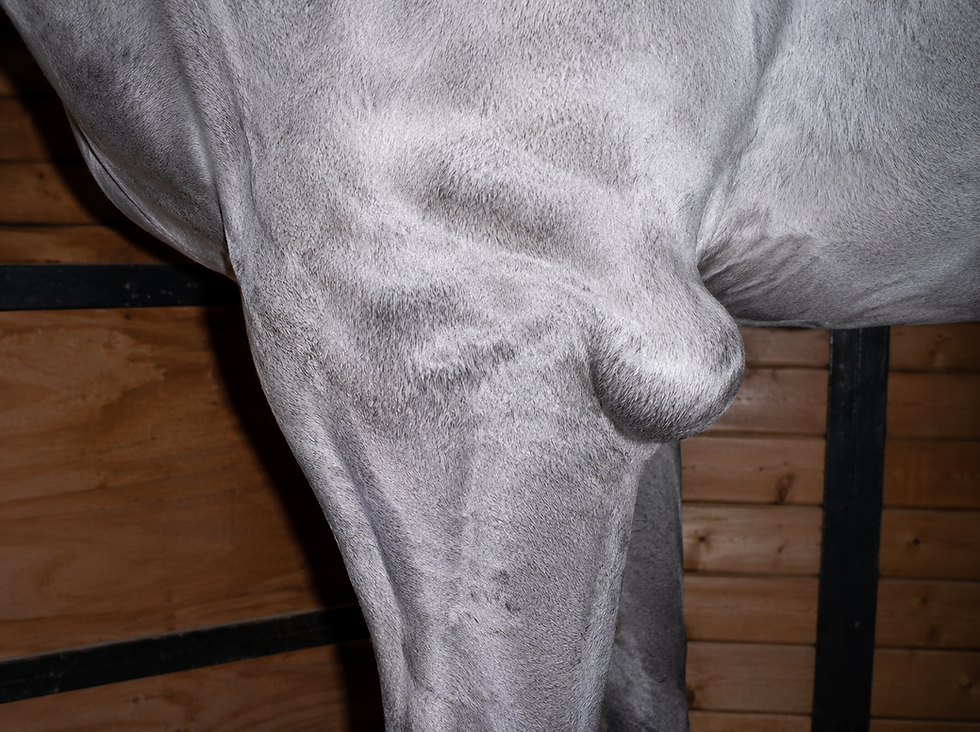
Capped elbow, commonly known as a shoe boil, is a condition that affects the point of a horse's elbow. While it can look alarming, it is usually a cosmetic issue rather than a serious cause of lameness. Understanding what causes capped elbow, how it develops, and how it can be managed can help horse owners identify the problem early and prevent it from becoming more severe.
What Is a Capped Elbow?
A capped elbow develops when the olecranon, the bony prominence at the point of the elbow, becomes irritated. This irritation leads to inflammation and the accumulation of fluid in the subcutaneous bursa, a small fluid-filled sac that helps reduce friction between tissues.
The condition is often considered a cosmetic blemish because it typically does not affect a horse's ability to move. However, if infection develops or the swelling becomes significant, veterinary attention may be required.
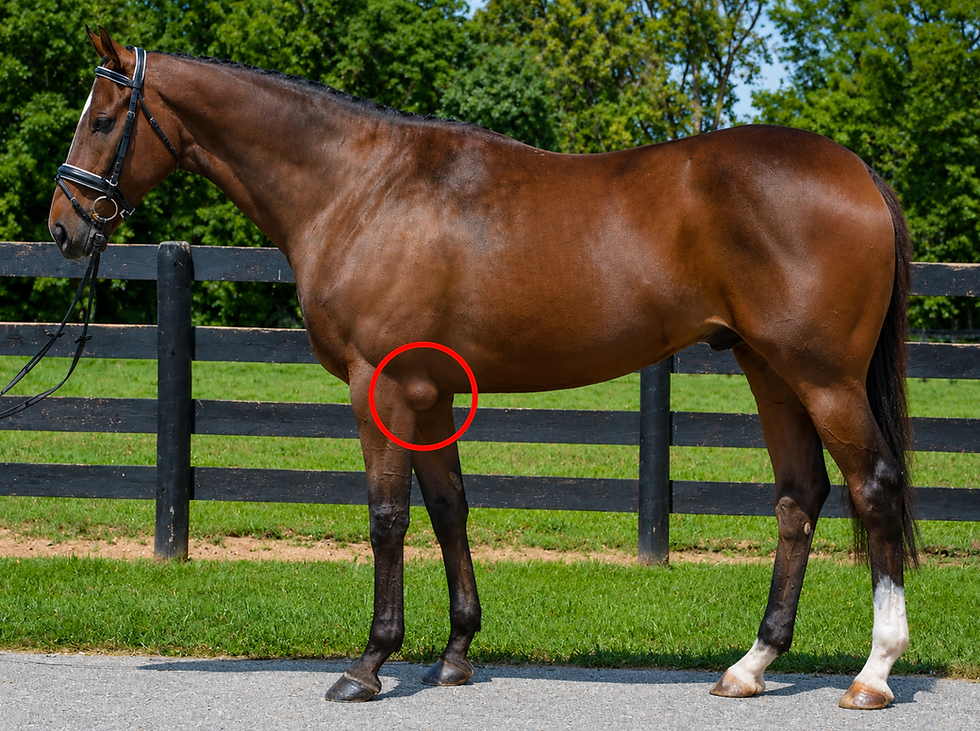
Understanding the Anatomy Involved
To understand capped elbow, it helps to know a little about the structures involved.
The olecranon is the prominent bony point that forms the tip of the elbow. It is part of the ulna and serves as an attachment point for muscles that extend the forelimb.
Covering this area is the subcutaneous bursa, a thin sac filled with a small amount of lubricating fluid. The bursa acts as a cushion between the skin and the underlying bone, reducing friction when tissues move over one another.

Under normal circumstances, the bursa contains very little fluid. However, repeated irritation or trauma can cause the lining of the bursa to become inflamed. When this happens, excess fluid accumulates within the sac, leading to the characteristic swelling associated with capped elbow.

Learn more about equine anatomy by enrolling in our Equine Anatomy Certification Program, download the Bones of the Horse Study Flashcards, or test your knowledge with the Interactive Horse Skeleton.
How Does a Capped Elbow Develop?
The condition develops when repeated pressure or trauma causes inflammation of the bursa. One of the most common scenarios occurs when a horse lies down. If the heel of the hind hoof repeatedly strikes the elbow, the continual impact can irritate the tissues and trigger inflammation.
As the irritation continues, the bursa responds by producing more fluid. This fluid accumulation causes the swelling that owners notice on the point of the elbow.
In many cases, the swelling develops gradually. Horses may show no signs of discomfort, and the condition may only be discovered during grooming or routine handling.
Did You Know? The term "shoe boil" originated because the condition was frequently associated with horses whose shoes repeatedly struck the elbow when lying down. Although the term is still widely used, capped elbow can occur in horses whether they wear shoes or not.
Causes of Capped Elbow
Most cases of capped elbow are associated with repeated trauma or pressure to the elbow region.
Common causes include:
Repeated Impact From the Hind Foot
The most frequent cause is the heel of the hind hoof striking the elbow when the horse is lying down. Horses with long shoes, protruding heels, or certain conformational traits may be more susceptible.
Horses that spend significant time lying on hard surfaces may experience increased pressure on the elbow. Repeated contact with firm flooring can contribute to irritation of the bursa. Learn more about choosing safe flooring for your stalls with our article Horse Stall Mats vs Stall Mattresses: Cost, Install, Joint Safety, and Ammonia Control
Prolonged Recumbency
Horses that spend extended periods lying down may place increased pressure on the elbow region, increasing the likelihood of inflammation.
Poor Hoof Balance or Long Toes
Abnormal hoof shape or excessive hoof length can alter the way the hind foot contacts the elbow when the horse is resting. Start here to learn the science of balanced hoof trimming.
Ill-Fitting Leg Protection
In some cases, protective equipment may rub or apply pressure to the elbow area, leading to irritation.
Less Common Causes
Although trauma is responsible for most cases, other causes are occasionally seen.
Direct Trauma
A single significant injury to the elbow can damage the bursa and lead to swelling.
Hackney Ponies, one of the most animated breeds in existence, can sometimes give themselves a capped elbow by striking the olecranon process with the hoof on the same leg.
Look how close to the elbow and the hoof can get on an animated hackney pony:

Infection
If bacteria gain access to the bursa through a wound or puncture, infection can develop. Septic bursitis is more serious than a simple capped elbow and requires prompt veterinary treatment.
Penetrating Injury
Any injury that penetrates the skin over the elbow can introduce bacteria and trigger inflammation.
The Pathophysiology of Capped Elbow
The development of capped elbow follows a predictable series of events.
1. Inflammation of the Bursa
Repeated trauma irritates the tissues around the elbow. The bursa becomes inflamed as the body's response to injury begins.
2. Increased Production of Inflammatory Fluid
The inflamed bursa produces excess fluid. This fluid is intended to protect the area but also contributes to swelling.
3. Enlargement of the Bursa
As fluid accumulates, the bursa expands. The swelling becomes visible externally and may feel soft or fluctuant when touched.
4. Thickening of the Bursa Wall
With ongoing irritation, the walls of the bursa may thicken and become more fibrous.
What Happens If the Condition Becomes Chronic?
If the source of irritation continues for an extended period, the condition can become chronic.
In chronic cases:
Fibrous tissue develops within the swelling.
The swelling becomes firm and persistent.
Mineralization may occur in long-standing cases.
The cosmetic appearance may become permanent.
Once substantial fibrous tissue forms, complete resolution becomes less likely without surgical intervention.
What Happens If Infection Occurs?
Infected capped elbows are much more concerning than simple fluid-filled swellings.
Signs of infection may include:
Heat in the affected area
Pain when touched
Drainage or discharge
Increased swelling
Fever
General signs of illness
Because infection can spread into surrounding tissues, veterinary evaluation is essential whenever infection is suspected.
Clinical Signs of Capped Elbow
The most obvious sign is swelling over the point of the elbow.
The appearance can vary depending on the stage and severity of the condition.
Early Signs
In the early stages, owners may notice:
Soft swelling over the elbow
A fluid-filled appearance
Little or no pain
Normal movement
More Advanced Cases
As the condition progresses:
The swelling may become larger.
The bursa wall may thicken.
The area may feel firmer.
Cosmetic distortion becomes more obvious.
Severe or Infected Cases
When infection develops, additional signs may include:
Warmth
Pain
Drainage
Systemic illness
Does Capped Elbow Cause Lameness?
One of the distinguishing features of capped elbow is that it rarely causes lameness.
Most horses continue to move normally despite having a noticeable swelling at the elbow.
However, severe inflammation, infection, or complications involving surrounding tissues can occasionally cause discomfort that affects movement.
For this reason, any horse showing both elbow swelling and lameness should be evaluated carefully to rule out other conditions.
Diagnosing Capped Elbow
Diagnosis is often straightforward because the location and appearance of the swelling are characteristic.
Veterinarians typically begin with:
A physical examination
Observation of the swelling
Palpation of the affected area
Assessment for heat, pain, or drainage
In some cases, additional diagnostics may be recommended to determine whether infection or deeper tissue involvement is present.
These may include:
Ultrasound examination
Fluid aspiration
Laboratory testing of bursal fluid
Treatment Considerations
Treatment depends largely on the severity of the condition and whether infection is present.
An important first step is identifying and eliminating the source of trauma. If the hind hoof continues striking the elbow, the swelling is likely to recur regardless of treatment.
Management strategies may include:
Correcting hoof balance
Adjusting shoeing practices
Providing softer bedding
Reducing pressure on the elbow
Monitoring for infection
Veterinary treatment may be necessary for persistent, large, or infected swellings.
Prevention
Preventing capped elbow is often easier than treating a chronic case.
Owners can reduce risk by:
Maintaining proper hoof care
Monitoring shoe length and fit
Providing adequate bedding
Addressing conformational issues when possible
Regularly checking elbows during grooming
Utilizing a "shoe boil" boot to prevent contact between the hoof/shoe and elbow
Early recognition allows intervention before significant swelling develops.

Did You Know? Many horses with capped elbow remain completely sound and comfortable throughout their lives. In these cases, the condition may be little more than a cosmetic blemish.
Prognosis
The outlook for horses with capped elbow is generally excellent.
Most uncomplicated cases do not affect athletic performance, riding ability, or long-term comfort.
The prognosis is best when:
The source of trauma is removed.
Infection is prevented.
The condition is addressed early.
Chronic fibrous swellings may persist even after the underlying cause has been corrected, but these typically remain cosmetic rather than functional problems.
Key Takeaways
Capped elbow, or shoe boil, is a swelling that develops over the point of the elbow due to inflammation of the subcutaneous bursa. Repeated trauma, particularly from the hind hoof striking the elbow while the horse is lying down, is the most common cause. The condition usually presents as a soft, fluid-filled swelling and is often considered a cosmetic blemish rather than a cause of lameness.
While most cases are uncomplicated, chronic irritation can result in persistent fibrous enlargement, and infection can create more serious health concerns. Early identification, removal of the source of trauma, and appropriate management provide the best outcomes for affected horses.
Frequently Asked Questions About Capped Elbow in Horses
What is capped elbow in horses?
Capped elbow in horses is a swelling over the point of the elbow caused by inflammation of the subcutaneous bursa. This bursa normally cushions the skin and tissues over the olecranon, but repeated irritation can cause it to fill with fluid and become visibly enlarged.
Why is capped elbow called a shoe boil?
Capped elbow is often called a shoe boil because the condition commonly develops when the heel or shoe of the hind foot repeatedly strikes the elbow while the horse is lying down. The term is still used even though capped elbow can also occur in horses that are barefoot.
Does capped elbow cause lameness?
Most uncomplicated capped elbows do not cause lameness. Many horses remain sound and comfortable even with a visible swelling. Lameness is more concerning and may suggest severe inflammation, infection, deeper tissue involvement, or another problem that needs veterinary evaluation.
What causes capped elbow in horses?
Capped elbow is usually caused by repeated trauma or pressure over the elbow. Common causes include the hind hoof or shoe striking the elbow, hard flooring, poor bedding, prolonged lying down, poor hoof balance, long toes, direct trauma, ill-fitting protection, or penetrating injury.
When should I call the vet for capped elbow?
Call the veterinarian if the swelling is painful, hot, rapidly enlarging, draining, associated with lameness, or if the horse has a fever or seems unwell. These signs may indicate infection or a more complicated form of bursitis.
How is capped elbow treated?
Treatment depends on severity. The first step is to remove the source of trauma, such as adjusting hoof balance, shoeing, bedding, or using a shoe boil boot. Persistent, large, painful, or infected swellings may need veterinary treatment, ultrasound, fluid testing, drainage, medication, or surgical discussion.
Can capped elbow be prevented?
Capped elbow can often be prevented by reducing repeated contact between the hind foot and elbow. Proper hoof care, appropriate shoeing, shorter or safer shoe extensions, soft bedding, regular elbow checks, and a shoe boil boot or donut boot can help reduce irritation.




I've been looking into Iceland-based platforms for a while now. The regulatory framework there seems relatively stable compared to some other jurisdictions, which matters if you care about oversight and licensing. I checked out icelandonlinecasino a few weeks ago and found the interface straightforward, nothing flashy. The game selection is decent without being overwhelming. Load times were acceptable on both desktop and mobile. I didn't notice anything unusual in the terms, though reading them fully always takes effort. Performance felt consistent across sessions. Nothing stood out as a red flag, but I wouldn't call it a definitive endorsement either. As with anything in this space, approach with caution and set personal limits before you start.