
The American Paint Horse: Breed, Colors, Traits & History

History, Characteristics, Coat Patterns, Uses, and Genetic Considerations
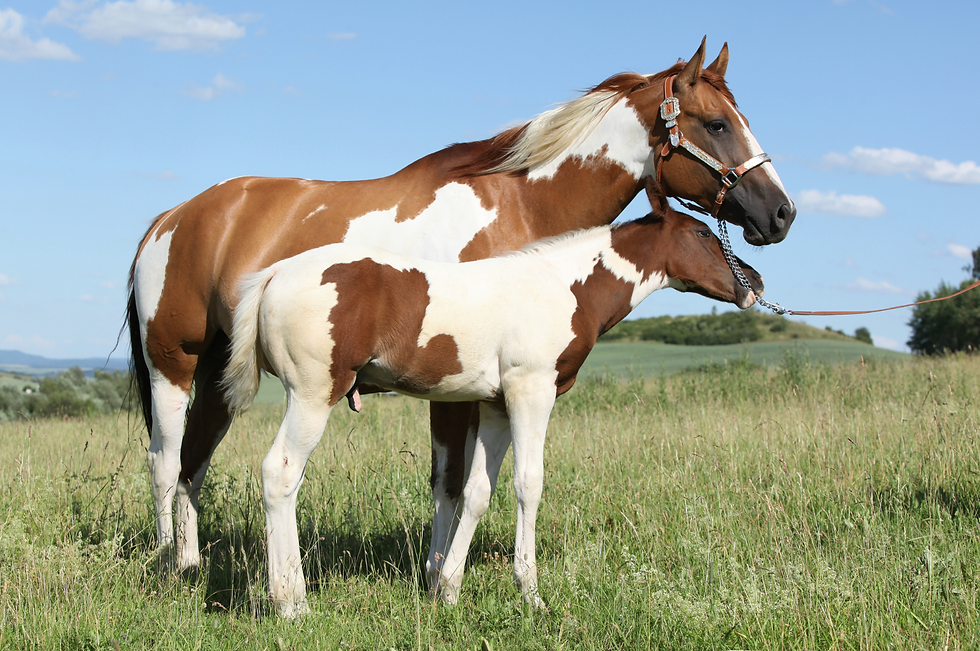
The American Paint Horse is one of the most recognizable horse breeds in the world. Its white spotting may attract attention first, but color alone does not define the breed. The American Paint Horse is a stock-type horse developed from Paint, American Quarter Horse, and Thoroughbred bloodlines. It is valued for the same qualities expected of a useful stock horse: strength, balance, speed, agility, trainability, and the ability to perform a wide range of jobs.
Paint Horses are especially common in Western disciplines, ranch work, trail riding, and breed shows. Individuals also compete in English events, driving, and racing. One Paint may be a compact cattle horse while another has the height and stride expected of a hunter. Pedigree, conformation, temperament, training, and genetic health all matter more than an attractive pattern.
What Makes a Horse an American Paint Horse?
The terms Paint and pinto are often used as if they mean the same thing, but they describe different things.
A pinto is generally identified by a white spotting pattern and may come from many breeds.
An American Paint Horse is registered according to the pedigree and registration rules of the American Paint Horse Association (APHA). A registered Paint may have extensive white, very little white, or no obvious spotting.
This distinction explains why every Paint is not necessarily loudly marked and every spotted horse is not necessarily a Paint. The breed is built around recognized bloodlines and stock-horse characteristics, with coat-pattern genetics forming an important part of its identity.
Origins and History
Horses with bold white spotting were present in the Americas long before the American Paint Horse became a formal breed. Spanish horses brought to the continent beginning in the 1500s carried varied coat colors and spotting patterns. Colorful horses became part of Native American horse cultures and later the ranching culture of the West. The Comanche are especially associated with skilled horsemanship and an appreciation for spotted horses.

Spotted horses were crossed with the stock-type horses used for ranch work and short-distance racing. Many shared ancestry and practical characteristics with early American Quarter Horses, including quick acceleration, agility around cattle, and ranch durability.
As formal registries developed, some horses with Quarter Horse ancestry could not be registered because their white markings exceeded the color rules then in place. Breeders who wanted to preserve these colorful stock horses established organizations of their own.
In February 1962, Rebecca Tyler Lockhart and a small group of supporters formed the American Paint Stock Horse Association in Gainesville, Texas. A separate organization, the American Paint Quarter Horse Association, was pursuing a similar goal. The two groups merged in 1965 and became the American Paint Horse Association. APHA has since registered more than one million horses and developed programs for showing, racing, recreation, youth participation, and international members.
Did You Know? APHA registration number one belongs to Bandit's Pinto, a black tobiano stallion foaled in 1959.
Physical Characteristics and Conformation
The typical American Paint Horse has the functional build of a light stock horse. Many stand approximately 14.2 to 16 hands and weigh between 950 and 1,250 pounds, although individuals may fall outside those ranges.
Common characteristics include a broad chest, strong back and loin, muscular shoulders, powerful hindquarters, substantial bone, and balanced movement suited to acceleration and quick changes of direction.
There is no single body type shared by every Paint. Racing bloodlines may produce a taller, leaner horse with greater Thoroughbred influence. Cutting and reining lines often favor a lower center of gravity and powerful hindquarters. Western pleasure and hunter lines may emphasize a longer, flatter stride. Halter lines may carry heavier muscle.
Conformation should therefore be evaluated according to the horse's intended work rather than its color or breed label alone. The Beginner's Guide to Equine Conformation explains how balance, proportion, limb alignment, and structure influence movement and long-term soundness. Readers who want a more structured study of the subject can also explore the Equine Conformation Certification.
Coat Patterns and Color Genetics
A Paint Horse's appearance results from two layers of genetics. Base-color genes establish colors such as black, bay, or chestnut. Other genes may dilute, modify, gray, or add white spotting to that base.
Registered colors include black, bay, brown, chestnut, sorrel, buckskin, palomino, dun, grulla, gray, roan, champagne, and double-dilute shades.
Patterns range from minimal white to almost entirely white. Appearance does not always reveal the genes involved, so DNA testing is valuable for breeding decisions and health-associated variants.
The Horse Coat Colors and Genetics Guide explains base colors, dilution genes, and pattern inheritance in greater detail. The Horse Coat Color Calculator can estimate possible foal colors when the sire's and dam's visible colors or genotypes are known. These estimates are probabilities, not guarantees.
Tobiano
Tobiano is a dominant white-spotting pattern inherited from at least one parent. Typical features include:
White that crosses the topline between the withers and tail
Smooth, rounded, or oval patches
White lower legs
A predominantly dark head with ordinary facial markings, such as a star, stripe, or blaze
A mane and tail that may contain both white and colored hair
Expression ranges from modest markings to a mostly white coat.

Overo
Overo is a broad visual and registry term, not one genetic pattern. It includes frame overo, splashed white, sabino 1, and certain dominant white patterns. Common features include irregular patches, facial white, blue eyes, and white that usually does not cross the back between the withers and tail. Features vary by subtype.
Because several genes can produce an overo appearance, a horse should not be assumed to carry the frame overo variant based only on how it looks. Some frame carriers have minimal white and may appear nearly solid.

Tovero
Tovero describes a horse with tobiano plus one or more overo-pattern genes. These horses may show extensive white, dark pigment around the ears or mouth, blue eyes, or colored areas on the chest, flanks, and tail base. DNA results provide more useful genetic information than the label alone.

Did You Know? A Paint Horse can carry more than one white-pattern gene. The visible coat may reflect the combined effect of several inherited patterns.
There are many more subcategories to Paint Horse color patterns. Learn them all with our Coat Colors Study Flashcards.

Temperament and Trainability
American Paint Horses are commonly described as willing, intelligent, responsive, and people-oriented. Their stock-horse ancestry often supports a practical temperament and a strong ability to learn repetitive tasks. These qualities have made the breed popular with ranchers, competitors, recreational riders, and families.
Breed reputation should never replace assessment of the individual. Temperament is influenced by genetics, early handling, training, health, pain, environment, and previous experience. A quiet trail Paint and a high-powered barrel or race-bred Paint may have very different energy levels and training needs. Buyers should evaluate the horse in the setting and activity for which it will be used.
What Are American Paint Horses Used For?
The Paint Horse's abilities depend on conformation, bloodline, conditioning, and training, but the breed appears in nearly every type of equestrian activity.
Ranch Work and Cattle Events
Paint Horses are used for ranch riding, sorting, team penning, cutting, roping, and livestock work. These jobs require balance, quick acceleration, responsiveness, and steadiness around cattle and equipment.

Western Performance
The breed is represented in reining, barrel racing, pole bending, Western pleasure, trail, horsemanship, and ranch versatility. Each event favors different movement, strengths, and mental qualities.

Recreational and Trail Riding
Many Paints make dependable pleasure and trail horses. Calm behavior, sound feet and limbs, appropriate conditioning, and correct training remain more important than breed alone.

English Events and Other Activities
Paints also participate in hunters, jumping, dressage, eventing, driving, competitive trail, and racing. Taller, more refined individuals with Thoroughbred influence may be particularly suitable for hunter-type events.

Did You Know? APHA competition is broader than color classes. Registered Paint Horses compete in performance, ranch, racing, youth, amateur, and recreational programs.
What Is the Breed Best Suited For?
Depending on the individual, a Paint may suit:
Ranchers and cattle competitors
Western performance riders
Trail and recreational riders
Youth and family programs
Riders seeking an all-around show horse
Owners interested in coat-color genetics and responsible breeding
Training, soundness, conformation, and temperament determine the match. Registration and color do not prove that a horse is safe, sound, or suitable.
Where the Breed May Be Less Specialized
Most Paints are not purpose-bred for elite endurance, upper-level dressage, advanced eventing, or major show jumping. An individual with the right build and training may perform well, but other breeds have generations of specialized selection for these sports.
The stock-horse build is also unsuitable for heavy draft labor, while a tall hunter-bred Paint may lack the compact build preferred for some cattle events. Compare the individual with the demands of the job.
Bloodlines and Breeding Priorities
American Paint Horse bloodlines reflect strong American Quarter Horse and Thoroughbred influence. Breeders may select for ranch ability, cutting, reining, speed, halter conformation, Western pleasure movement, hunter type, or all-around performance.
Breeding stock should be evaluated for:
Sound, functional conformation
Temperament and trainability
Performance record or demonstrated ability
Reproductive health
Genetic disease status
Health of previous offspring
Selecting mainly for pattern can preserve structural, behavioral, or health problems. Genetic testing helps define risk but does not replace selection of the whole horse.
Genetic Disorders Relevant to Paint Horses
Because Paint Horses share ancestry with Quarter Horses, several inherited conditions found in Quarter Horse and related bloodlines are also relevant to the breed. Risk depends on pedigree. A horse's color does not indicate whether it carries HYPP, HERDA, PSSM1, or GBED.
Lethal White Overo Syndrome
Lethal white overo syndrome, also called lethal white foal syndrome or LWO, results from two copies of an EDNRB variant. One copy produces the frame overo pattern.
Carriers are usually healthy. When two are bred, each foal has a 25 percent chance of inheriting two copies. Affected foals are mostly or entirely white and lack intestinal nerve cells needed for normal motility. They cannot pass manure, develop severe colic, and do not survive.
A frame carrier may have very little visible white, so visual inspection is not a reliable screening method. DNA testing before breeding is essential when frame overo may be present.
Hyperkalemic Periodic Paralysis
HYPP is an autosomal dominant muscle disorder traced to the Quarter Horse stallion Impressive. One copy can cause muscle twitching, weakness, abnormal breathing, or collapse. Some positive horses show few signs but can still pass the variant to offspring.
Hereditary Equine Regional Dermal Asthenia
HERDA is a recessive connective-tissue disorder associated with some cutting-horse lines. Abnormal collagen causes fragile skin, lesions, and scars, especially along the back. Signs often appear when training and saddle pressure begin. Carriers are outwardly normal.
Polysaccharide Storage Myopathy Type 1
PSSM1 involves a dominant GYS1 variant that affects muscle glycogen storage. Signs may include tying-up, sweating, pain, stiffness, exercise intolerance, or poor performance. Read What Is PSSM and How Does It Affect Horses? for diagnosis, management, and the distinction between PSSM1 and conditions historically grouped under PSSM2.
Glycogen Branching Enzyme Deficiency
GBED is a recessive, fatal disorder that prevents normal glycogen formation. Affected pregnancies may end in abortion or stillbirth. Live foals may show weakness, low body temperature, seizures, contracted limbs, or sudden death. Carriers are healthy.
Results must be interpreted according to each condition's inheritance. The Horse DNA Test Results Interpreter explains common report terminology, but breeding and medical decisions belong with a veterinarian and qualified laboratory.
Did You Know? Two healthy-looking horses can both carry the same recessive disease variant. If two carriers are bred, each pregnancy has a 25 percent chance of producing an affected foal.
Registration and Solid Paint-Bred Horses
APHA rules consider pedigree, parent registration, markings, genetic results, and other requirements. Because rules change, owners should consult the current rule book or APHA before breeding, purchasing a registration prospect, or applying.
A horse that meets bloodline requirements but lacks qualifying white may be recorded as Solid Paint-Bred. Some solid-appearing horses carry minimally expressed pattern genes.
Under specific rules, pedigree, Paint traits, and verified genes may allow Regular Registry qualification.
Registration status should never be guessed from a photograph. The location, size, skin pigmentation, and origin of a white marking can matter, and DNA testing may be needed.
Care and Management
Paint Horses need forage-based nutrition, clean water, hoof and dental care, vaccination, veterinary-guided parasite control, exercise, turnout, and health monitoring.
Feed according to weight, body condition, workload, age, and health. Easy keepers may gain excess weight, while growing, lactating, or heavily working horses need more energy and protein. The Horse Weight and Body-Condition Estimator supports routine monitoring.
Pink skin may be vulnerable to sunburn and photosensitization. Shade, UV-protective masks, or equine-safe sun protection may help. Persistent redness, crusting, swelling, or sores require veterinary attention.
Choosing an American Paint Horse
Begin with the intended job and rider experience. Evaluate:
Temperament on the ground and under saddle
Training and handling
Conformation and movement
Soundness and medical history
Hoof quality and farrier needs
Pedigree and genetic test results
Registration status, if important to the buyer
Suitability for the discipline
A veterinary pre-purchase examination helps identify concerns. Findings should be weighed against intended use, budget, management options, and risk tolerance.
Conclusion
The American Paint Horse combines stock-horse function with a remarkable range of coat patterns. Its modern population includes ranch horses, speed horses, show horses, trail partners, and family mounts.
Color should remain one part of the evaluation. Soundness, temperament, conformation, training, and suitability matter most. Responsible testing and breeding help protect those qualities.
Frequently Asked Questions About the American Paint Horse
What is an American Paint Horse?
An American Paint Horse is a stock-type horse registered according to American Paint Horse Association rules.
The breed developed from Paint, American Quarter Horse and Thoroughbred bloodlines and is valued for strength, balance, agility, trainability and versatility. Color is an important part of the breed’s identity, but pedigree and registration requirements are what define an American Paint Horse.
Is a Paint Horse the same as a pinto?
No. A pinto is generally a horse with a white spotting pattern and can belong to many different breeds.
An American Paint Horse is a specific registered breed. A spotted horse is therefore not automatically eligible for APHA registration, and a registered Paint may have very little visible white.
How tall are American Paint Horses?
Many American Paint Horses stand approximately 14.2 to 16 hands and weigh around 950 to 1,250 pounds, although individual horses may fall outside those ranges.
Their build varies considerably by bloodline and intended discipline. Owners can use the Horse Weight & Body-Condition Calculator to monitor weight and condition over time.
What is the difference between tobiano, overo and tovero?
Tobiano is a dominant spotting pattern that commonly produces smooth patches, white lower legs and white crossing the topline between the withers and tail.
Overo is a broader term covering several non-tobiano spotting patterns rather than one specific gene.
Tovero describes a horse carrying tobiano plus one or more overo-pattern genes. Because appearance alone does not always reveal the underlying genetics, the Horse Coat Color Calculator can help explore possible inherited colors and patterns.
What is lethal white overo syndrome?
Lethal white overo syndrome results when a foal inherits two copies of an EDNRB variant associated with frame overo.
Affected foals lack the intestinal nerve cells needed for normal motility. They cannot pass manure, develop severe colic and do not survive.
When two frame-overo carriers are bred, each foal has a 25% chance of inheriting two copies. Some carriers have very little visible white, so DNA testing is important when frame overo may be present.
What are American Paint Horses used for?
Paint Horses participate in ranch riding, cutting, roping, reining, barrel racing, Western pleasure, trail riding and other cattle and Western events.
They also compete in hunters, jumping, dressage, eventing, driving, competitive trail and racing. Individual conformation, training and conditioning matter more than the breed label alone when deciding which discipline suits a particular horse.
Are American Paint Horses good for beginners?
Some Paint Horses can be excellent beginner horses, but breed alone does not determine suitability.
A beginner needs an experienced, sound and well-trained horse with an appropriate temperament. Energy level, training history, health, pain and supervision should all be considered when matching a horse to a rider.
Can an American Paint Horse be solid colored?
Yes. A horse that meets APHA bloodline requirements but lacks qualifying white markings may be recorded as Solid Paint-Bred.
Some apparently solid horses can still carry minimally expressed pattern genes. Registration should not be guessed from photographs alone because pedigree, markings, skin pigmentation and genetic results may all matter.
What genetic tests may be relevant for an American Paint Horse?
Testing depends on pedigree and breeding plans. Conditions discussed in the article include frame overo/LWO, HYPP, HERDA, PSSM1 and GBED.
Color alone does not indicate whether a horse carries these variants. Genetic testing should be interpreted according to the inheritance pattern of each condition. Owners dealing with PSSM1 can also review What Is PSSM and How Does It Affect Horses?.
For routine management, Horse Tracker can keep pedigree, genetic results, health records, weight and training information together.
References and Further Reading
American Paint Horse Association: About APHA and Breed History
American Paint Horse Association: The American Paint Horse Breed, Patterns, and Registration Rules
UC Davis Center for Equine Health: Lethal White Overo Syndrome
UC Davis Center for Equine Health: Hyperkalemic Periodic Paralysis
UC Davis Veterinary Genetics Laboratory: Hereditary Equine Regional Dermal Asthenia
UC Davis Veterinary Genetics Laboratory: Glycogen Branching Enzyme Deficiency
UC Davis Veterinary Genetics Laboratory: Polysaccharide Storage Myopathy Type 1




Comments