
The Equine Poll: Anatomy, Function, and Its Role in Riding
- Horse Education Online

- Apr 22
- 7 min read
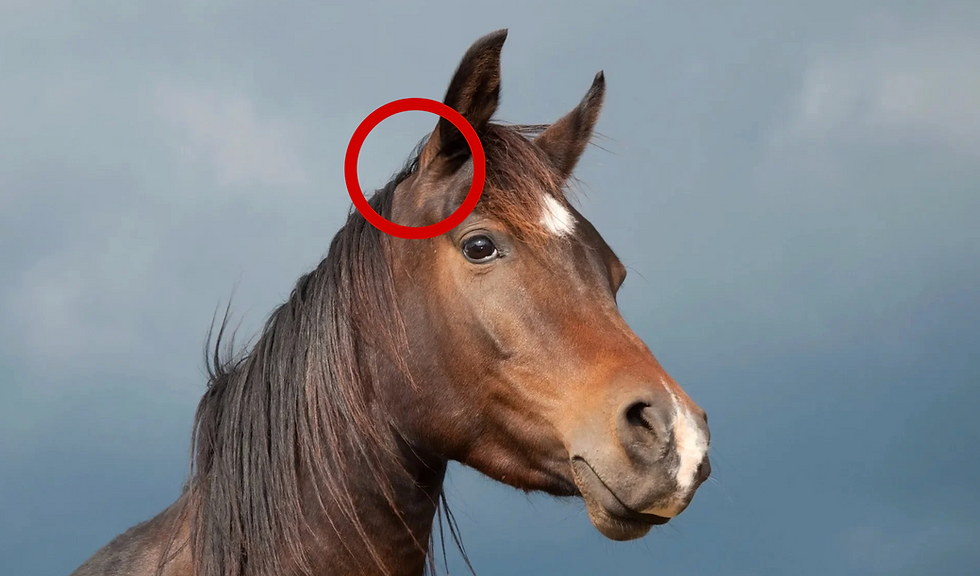
The equine poll is the small but important region just behind the ears where the head meets the neck. It plays a major role in head carriage, balance, comfort, and communication between horse and rider. Although it looks simple from the outside, the poll contains several key structures that help the horse move freely, carry itself efficiently, and respond to subtle rein and body cues.
Because the equine poll is involved in nearly every movement, even mild discomfort in this area can affect the whole horse. Horses use the poll when grazing, lifting the head, bending, turning, balancing, and working under saddle. That is why understanding poll anatomy matters for owners, riders, and students who want to recognize early signs of tension, pain, or restricted movement.
In practical terms, learning about the equine poll helps explain why some horses resist flexion, feel stiff through the neck, struggle with contact, or show changes in posture and performance. A clear understanding of this region can lead to earlier recognition of problems and better decisions about training, handling, and overall care.
What Is the Poll?
The poll sits at the top of the neck, directly behind the ears. It is not a single structure but rather a compact region made up of several key components working together. The technical name for the poll is the atlanto-occipital joint.
Within the poll you will find:
The back portion of the skull
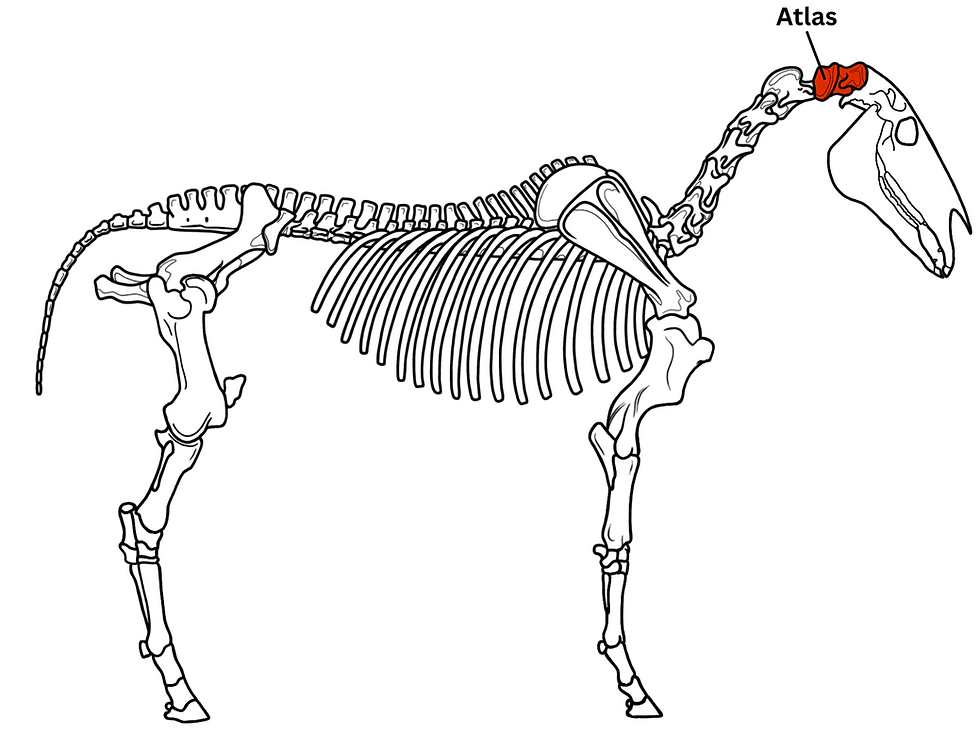
The first neck vertebra, called the atlas
A specialized joint connecting the head and neck
Strong ligaments that provide support
Small stabilizing muscles
Important nerves and blood vessels
This combination of structures allows the horse to move its head with both strength and precision. It also means the area is sensitive. Even mild irritation can affect how a horse carries itself.
Recommended study tools: Joint Anatomy Flashcards
The Bones and Joint of the Poll
The Occipital Bone
The occipital bone forms the back of the horse’s skull. It provides a smooth, rounded surface that connects with the first vertebra of the neck. This connection is designed for controlled movement rather than large ranges of motion.

The Atlas (C1)
The atlas is the first cervical vertebra and plays a critical role in supporting the head. Its ring-like shape allows it to cradle the base of the skull. Unlike other vertebrae, it is designed more for stability and controlled motion than for bearing heavy loads.
The Atlanto-Occipital Joint
Between the occipital bone and the atlas lies the atlanto-occipital joint. This joint is responsible for the familiar nodding motion of the horse’s head.
It allows:
Flexion, bringing the nose inward toward the chest
Extension, lifting the head upward
Movement here is smooth and controlled. Side-to-side motion is minimal at this joint, which is why true lateral bending happens further down the neck.
This joint is particularly important in riding. When a horse is correctly trained, soft flexion should occur here rather than being forced through the lower neck.
The Nuchal Ligament: The Support System
One of the most remarkable features of the poll region is the nuchal ligament. This thick, elastic structure runs from the back of the skull along the neck and helps support the weight of the head.
A horse’s head is heavy, yet horses can graze for hours without fatigue. The nuchal ligament makes this possible by acting like a passive support system.
Its key roles include:
Holding the head up without constant muscle effort
Reducing strain on the neck muscles
Storing and releasing energy during movement
When the

horse lowers its head, the ligament stretches slightly. When the head is raised again, that stored energy helps lift it back up. This efficient system reduces fatigue and allows for fluid, economical movement.
Muscles of the Poll
Although the poll does not contain large muscle groups, the muscles in this area are highly specialized. They are responsible for fine, controlled adjustments rather than powerful movements.
These muscles help the horse:
Lift and lower the head smoothly
Make subtle positional changes
Stabilize the head during motion
Maintain balance in response to terrain or rider input
In ridden work, these small muscles play a significant role in softness and responsiveness. When they are relaxed and functioning well, the horse can move freely through the poll. When they are tense or restricted, the entire neck and topline can become stiff.
Learn more about equine muscles with the Interactive Horse Muscles Tool
Why the Poll Matters in Riding
The poll is central to correct head and neck carriage. In well-balanced work, the poll should be the highest point of the neck, with the horse flexing softly at the atlanto-occipital joint.
This position allows:
Even distribution of forces through the neck and back
Clear communication between horse and rider
Greater comfort and relaxation
Problems arise when the horse is forced into a shape that restricts the poll. For example, if the neck bends lower down instead of at the poll, the horse may appear “collected” but is actually compensating in a way that can create tension.
Over time, this can lead to:
Muscle soreness
Reduced range of motion
Resistance under saddle

Correct training focuses on allowing the poll to remain soft and mobile. This supports long-term soundness and better overall performance. For a broader understanding of how posture and movement connect, explore related anatomy and biomechanics resources on HorseEducationOnline.
Why the poll should be understood as part of the whole topline
The poll is easy to think of as a small, isolated area, but the article makes clear that it affects much more than the space behind the ears. Because it influences head carriage, balance, and the way forces travel through the neck and back, it helps to study it alongside the equine nervous system and the deeper follow-up in the equine nervous system part 2.
It is also useful to view the poll in the context of the rest of the body rather than as a single joint. Readers who want a better picture of how the skull, atlas, muscles, and nearby structures work together can explore the interactive horse skeleton and interactive horse muscles for a more visual understanding.
If you want to connect anatomy to performance and day-to-day observation, our interactive horse anatomy and equine study materials are good next steps. They help bridge the gap between knowing where the poll is and understanding why tension or discomfort there can change the way a horse moves and feels under saddle.
Common Problems of the Poll
Because the poll is both exposed and sensitive, it is prone to several types of issues.
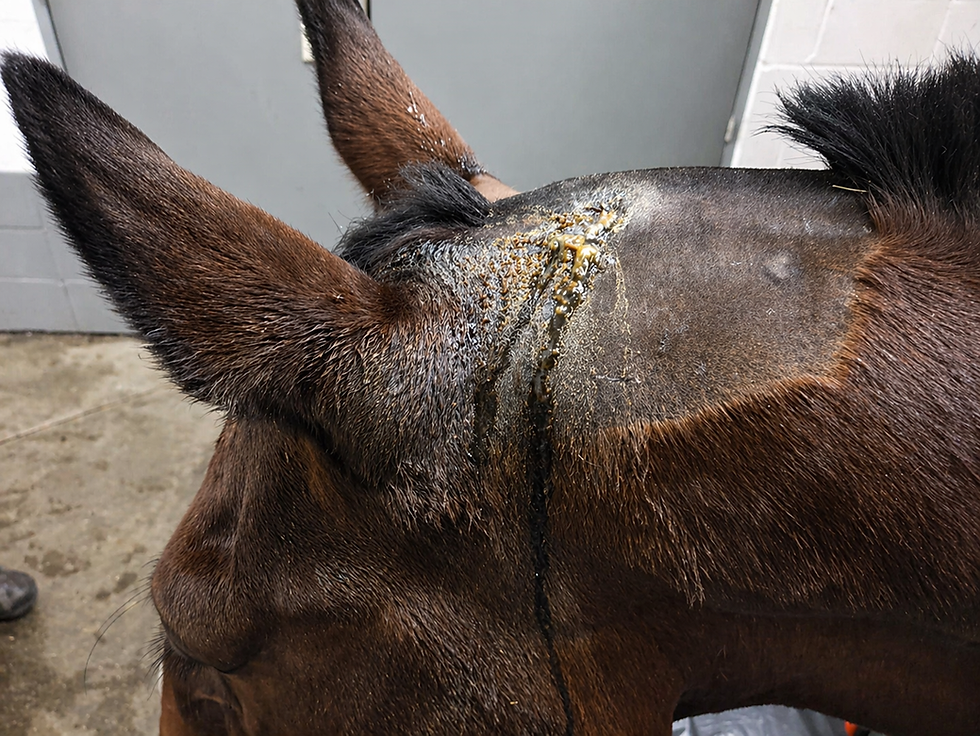
Poll Evil (Occipital Bursitis)
Poll evil refers to inflammation in the poll region. While the name sounds severe, many cases are manageable when caught early.
Common causes include:
Hitting the head on low structures
Pulling back forcefully against a halter
Repeated pressure from tack or handling
Infection, which is less common today
Signs may include:
Swelling behind the ears
Pain when touched
Reluctance to move the head
Stiffness or restricted motion
Drainage in more advanced cases
Prompt veterinary care usually leads to a good outcome.
Trauma and Injury
The poll is vulnerable to injury because of its position. Situations that commonly lead to trauma include:
Rearing and falling backward
Hitting the head in trailers or barns
Striking low beams or doorways
These injuries can range from mild bruising to more serious damage. Because the spinal cord and major nerves are nearby, severe trauma may affect coordination, balance, or even behavior.
Nuchal Ligament Strain
Strain or inflammation of the nuchal ligament can develop gradually or occur after a sudden incident.
Signs may include:
Pain when bending or lifting the neck
Resistance during work
Sensitivity behind the ears
Changes in head carriage
These issues are often subtle at first, which is why careful observation is important.
Why Poll Health is so Important
The poll plays a key role in how a horse moves, balances, and interacts with its environment.
It contributes to:
Balance and coordination
Protection of important neurological structures
Comfortable head and neck movement
Efficient posture and performance
Because it sits at the top of the kinetic chain, discomfort in the poll can influence the entire body. A horse that is sore in this area may compensate elsewhere, leading to tension in the neck, back, or even the limbs.
Key Takeaways
The poll is the junction between the head and neck.
It includes the skull, atlas, and a specialized joint.
The nuchal ligament supports the head and reduces muscle fatigue.
The poll allows controlled nodding and fine adjustments in position.
Injury or inflammation can lead to stiffness, pain, and performance issues.
Thoughtful handling and correct training help maintain poll health.
FAQ: Equine poll
What is the poll in a horse?
The poll is the region at the top of the neck just behind the ears, where the head meets the neck. In technical terms, it centers on the atlanto-occipital joint and includes the back of the skull, the atlas, supporting ligaments, small stabilizing muscles, and important nerves and blood vessels.
What joint is found at the poll?
The main joint at the poll is the atlanto-occipital joint, which connects the occipital bone of the skull to the atlas, or first cervical vertebra. This joint is designed for controlled head movement rather than large ranges of motion.
What movement happens at the poll?
The poll mainly allows flexion and extension. In simple terms, that means bringing the nose inward toward the chest and lifting the head upward. The article notes that side-to-side motion is minimal here, which is why true lateral bending happens farther down the neck.
Why is the poll important in riding?
The poll matters in riding because it influences head and neck carriage, balance, communication, and relaxation. The article explains that in well-balanced work, the poll should be the highest point of the neck, with soft flexion occurring at the atlanto-occipital joint rather than being forced lower down the neck.
What does the nuchal ligament do at the poll?
The nuchal ligament helps support the weight of the head without constant muscle effort. It also reduces strain on the neck muscles and stores and releases energy as the horse lowers and raises its head. This is one reason horses can graze for long periods without obvious fatigue.
What are common problems in the poll region?
The article highlights poll evil, trauma, and nuchal ligament strain as common poll-region problems. Signs can include swelling behind the ears, pain on touch, stiffness, reluctance to move the head, and changes in head carriage. Severe trauma can also affect coordination and balance because important neurological structures are nearby.
Why can poll discomfort affect the rest of the horse?
Because the poll sits at the top of the kinetic chain, discomfort there can influence the entire body. The article explains that soreness in this region may lead to compensation elsewhere, including tension through the neck, back, or even the limbs.




Comments