
The Clydesdale Horse

Updated: Sep 8

History, Characteristics, Uses, and Breed Considerations
The Clydesdale is one of the world's most recognizable horse breeds. Known for its towering height, flowing feathered legs, and calm demeanor, this Scottish draft horse has become an international symbol of strength and elegance. Although many people recognize the breed from the famous Budweiser hitch teams, the Clydesdale's history stretches back centuries and is rooted in agriculture, transportation, and hard work.
Despite their enormous size, Clydesdales are often described as "gentle giants." Their patient temperament, willingness to work, and impressive athletic ability have allowed them to remain popular long after tractors and trucks replaced horses on farms and city streets.
Whether pulling a carriage through a parade, carrying riders on scenic trails, or serving as ambassadors for agriculture, the Clydesdale continues to captivate horse lovers around the world.
The History of the Clydesdale
The Clydesdale originated in the fertile valley surrounding the River Clyde in Lanarkshire, Scotland, during the eighteenth century. Scottish farmers needed horses capable of pulling heavy plows through dense soils while also transporting crops and supplies over long distances.
To develop a larger and more powerful horse, local mares were crossed with imported Flemish stallions and other large European draft horses. Over several generations, breeders selected horses that combined tremendous strength with good movement, sound feet, and a willing disposition.

By the early 1800s, the Clydesdale had earned a reputation as one of Britain's premier working horses. The establishment of the Clydesdale Horse Society in 1877 helped standardize the breed and maintain detailed pedigree records.
As the British Empire expanded, so did the popularity of the breed. Thousands of Clydesdales were exported to Canada, the United States, Australia, New Zealand, and South America, where they became indispensable on farms, in logging operations, and in commercial freight transport.
The arrival of mechanized farming equipment after World War II dramatically reduced the demand for draft horses. Like many heavy breeds, Clydesdale numbers declined sharply and the breed approached endangered status in several countries. Fortunately, dedicated breeders and preservation organizations continued breeding programs that prevented the breed from disappearing.

Today, although still considered a conservation breed in some regions, the Clydesdale enjoys renewed popularity among driving enthusiasts, recreational riders, and horse lovers worldwide.
Did You Know? At one point during the twentieth century, fewer than 900 breeding mares were believed to remain worldwide. Conservation breeding efforts helped save the Clydesdale from extinction.
Physical Characteristics
The Clydesdale is among the tallest and most powerful horse breeds in existence, yet it possesses an elegance that distinguishes it from many heavier draft horses.
Size
Most adult Clydesdales stand between 16 and 18 hands (163 to 183 cm) tall.
Typical weights range from 1,600 to 2,200 pounds (725 to 1,000 kg), although exceptional stallions may weigh considerably more.
Stallions generally develop heavier musculature and more substantial bone than mares.
Build
The ideal Clydesdale possesses:
A long, muscular neck
Broad, sloping shoulders
A deep chest
Well-sprung ribs
Powerful hindquarters
Strong, clean limbs
Large, durable hooves
Although enormously powerful, the breed is often considered more refined than some other draft breeds, giving it an elegant appearance despite its massive size.

Feathering
Perhaps no feature is more recognizable than the breed's luxurious feathering.
Long, silky hair grows from the knees and hocks downward, covering much of the lower legs and partially surrounding the hooves. This feathering contributes greatly to the breed's striking appearance but also requires regular maintenance to prevent skin problems.
Coat Colors
Common colors include:
Bay (most common)
Brown
Black
Roan
Chestnut
Most people associate the breed with a rich bay coat accompanied by:
Four white stockings
A broad white blaze
Extensive white facial markings
Learning to recognize and name the leg and face markings of horses? Download our Leg Marking Flashcards and Face Marking Flashcards. Free to Horse Education Online Members!
While this classic appearance is common, many perfectly purebred Clydesdales display different color patterns.
Did You Know? The white markings seen on many Clydesdales are influenced by genes that produce distinctive white facial and leg markings. These markings help give the breed its unmistakable appearance.
Temperament and Personality
One of the greatest strengths of the Clydesdale is not its physical power but its temperament.
Owners consistently describe the breed as calm, patient, intelligent, and eager to please. These characteristics have made the Clydesdale popular in public demonstrations, educational events, therapy programs, and family farms.
Typical personality traits include:
Calm disposition
High intelligence
Excellent trainability
Patience
Reliability
Willingness to work
Friendly attitude toward people
Because of these qualities, properly trained Clydesdales are often suitable for less experienced horse owners, provided the owner understands the management requirements associated with such a large animal.
Like any horse, however, they still require consistent training, proper handling, and regular exercise. Take our Online Horse Ownership Foundations Certification Course to learn more about the basics of equine care and management.
Athletic Ability
Although their size sometimes leads people to assume they are slow and cumbersome, Clydesdales are surprisingly athletic.
They demonstrate:
Excellent pulling strength
Good endurance
Comfortable gaits
Smooth movement
Moderate agility
Strong work ethic
Historically, these horses often worked full days hauling heavy loads while maintaining a steady walking pace.
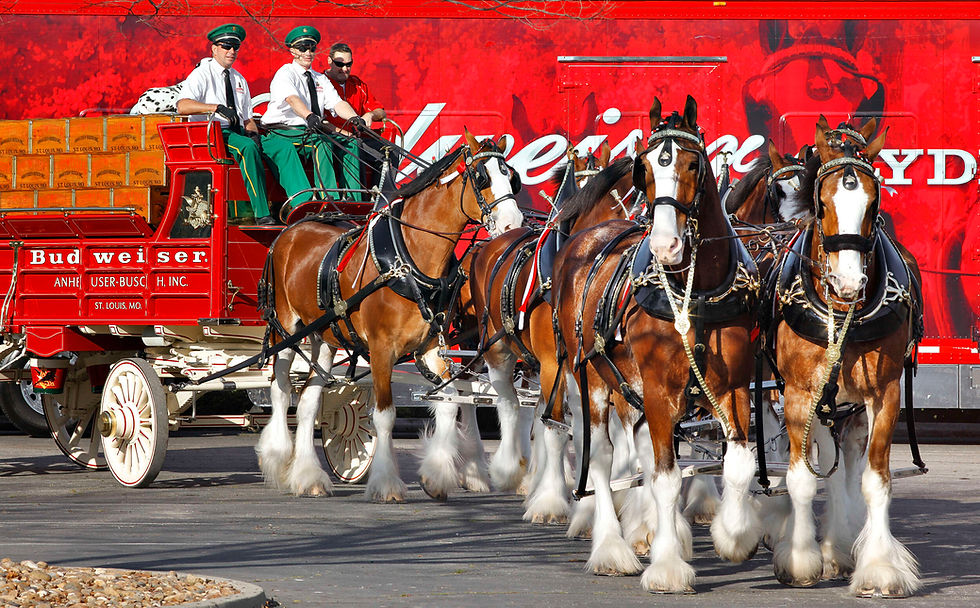
Modern Clydesdales continue to impress in driving competitions and recreational riding, proving that draft horses are capable athletes.
Traditional Uses
Agriculture
For centuries, the Clydesdale was primarily a farm horse.
Its daily responsibilities included:
Plowing fields
Harrowing
Cultivating
Hauling hay
Pulling wagons
Transporting crops
Before tractors became common, many Scottish farms depended almost entirely upon horses like the Clydesdale.
Freight Transportation
During the nineteenth and early twentieth centuries, Clydesdales became essential urban workhorses.
They hauled:
Brewery wagons
Coal carts
Milk deliveries
Agricultural goods
Commercial freight
Their calm temperament allowed them to navigate busy city streets safely despite heavy traffic and noisy surroundings.
Logging
The breed also became popular in forestry.
Their tremendous strength allowed them to:
Skid logs
Remove timber
Work in steep terrain
Access forests where machinery could not safely operate
Even today, some environmentally sensitive logging operations continue using draft horses to minimize soil disturbance.

Did You Know? Draft horses can often remove logs from forests while causing significantly less environmental damage than heavy machinery, especially in protected ecosystems.
Modern Uses
Although agriculture has changed dramatically, the Clydesdale remains remarkably versatile.
Driving
Driving is perhaps the breed's most popular modern discipline.
They compete in:
Pleasure driving
Carriage driving
Combined driving
Six- and eight-horse hitch competitions
Parades
Few sights are as impressive as a well-matched team of Clydesdales pulling a polished wagon.
Recreational Riding
Many people are surprised to learn that Clydesdales make excellent riding horses.
They are commonly used for:
Trail riding
Pleasure riding
Ranch work
Mounted patrol
Leisure riding
Their smooth walk and steady temperament make them especially appealing for adult riders.
Horse Shows
The breed remains highly competitive in:
Halter classes
Hitch classes
Driving competitions
Draft horse exhibitions

Therapy and Education
Some Clydesdales participate in:
Equine-assisted therapy
Public education
Agricultural demonstrations
Historical reenactments
Their patient personalities often allow them to interact comfortably with large crowds.
Crossbreeding
Clydesdales are frequently crossed with lighter riding horses to produce larger sport horses.
These crosses often inherit:
Greater bone density
Increased height
Calm temperament
Strong work ethic
Improved versatility
Such horses are sometimes seen in fox hunting, eventing, dressage, and recreational riding.
What the Clydesdale Excels At
The Clydesdale is particularly well suited for owners seeking a dependable, versatile draft horse.
The breed excels in:
Draft work
Carriage driving
Recreational riding
Ranch work
Public exhibitions
Educational demonstrations
Therapy programs
Parade participation
Their calm temperament often makes them excellent ambassadors for the horse industry.
Limitations of the Breed
Despite their versatility, Clydesdales are not ideal for every discipline.
They generally are not competitive in:
Any type of racing event
High-speed endurance
Show jumping
Eventing
Sports requiring rapid acceleration and sharp turns
Their tremendous body mass naturally limits their speed and agility compared with lighter breeds.
Ownership Considerations
Owning a Clydesdale is rewarding, but prospective owners should understand that larger horses require larger budgets.
Compared with average riding horses, Clydesdales generally require:
More hay
Larger stalls
Stronger fencing
Larger trailers
Larger tack
More bedding
Larger water troughs
Heavier-duty equipment
Routine veterinary procedures may also require specialized equipment because of the horse's size.
Perhaps one of the biggest challenges is finding a farrier experienced with draft horses.
Their large feet require specialized shoes, larger tools, and significant physical effort during trimming and shoeing. The cost of trimming and shoeing a Clydesdale is therefore considerably higher than that of a standard-sized horse.
If you're considering purchasing a Clydesdale, it is wise to locate an experienced farrier before bringing the horse home. Horse Education Online offers numerous articles on hoof care, conformation, and routine farrier maintenance that can help new draft horse owners better understand the unique needs of these impressive horses.
Did You Know? A single Clydesdale horseshoe may weigh several times more than a shoe used on an average riding horse.
Common Health Concerns
Like every breed, the Clydesdale has several conditions owners should understand.
CPL is considered one of the most significant diseases affecting draft horse breeds.
Signs include:
Progressive swelling of the lower legs
Thickened skin
Fibrosis
Skin folds
Secondary infections
Although the precise cause remains under investigation, genetics appear to play an important role.
There is currently no cure, making early recognition and long-term management essential.
Heavy feathering traps moisture, mud, and bacteria against the skin.
This increases the likelihood of:
Pastern dermatitis
Skin irritation
Bacterial infections
Routine grooming and keeping the legs clean and dry can significantly reduce the risk.
Feather Mites (Chorioptic Mites)
The dense feathering that makes the breed so attractive can also provide an ideal environment for mites. Affected horses may stamp their feet, itch excessively, or develop skin irritation beneath the feathers. Regular inspection is important because infestations can easily be missed until they become severe.

Because of their substantial body weight, older Clydesdales may develop osteoarthritis and other degenerative joint conditions.
Maintaining an appropriate body condition score helps reduce stress on the joints. If you are unfamiliar with evaluating weight, Horse Education Online's article on Equine Body Condition Scoring can help owners recognize when a horse is overweight or underweight.
Obesity
Although draft horses often have different metabolic characteristics than ponies, obesity remains a concern.
Excess weight increases the risk of:
Reduced athletic performance
Regular exercise and careful nutritional management are important throughout the horse's life.
Hoof Care
The tremendous forces placed upon a draft horse's feet make routine hoof care especially important. Regular trimming or shoeing every six to eight weeks helps maintain proper balance and reduces excessive stress on joints and tendons.
Clydesdales, like many other large breeds, are at an increased likelihood of developing:
Concussion-related diseases (sidebone, sole bruising, pedal osteitis)
Hoof flares and cracks, which predispose to white line disease
Supporting limb lameness
Canker (this is a rare condition, but more common in draft-sized horses)

Management Tips
Most Clydesdales thrive with straightforward, consistent management.
Owners should provide:
High-quality forage
Fresh water at all times
Regular turnout
Daily exercise
Routine hoof care
Preventive veterinary care
Careful monitoring of feathered legs
Clean, dry living conditions
Because draft horses consume larger quantities of feed, owners should also become familiar with assessing hay quality and body condition. These simple skills can help prevent nutritional deficiencies and obesity.
Frequently Asked Questions
1. How tall is a Clydesdale horse?
Most Clydesdales stand between 16 and 18 hands tall, although exceptional individuals may be even taller.
2. How much does a Clydesdale weigh?
Adult Clydesdales typically weigh between 1,600 and 2,200 pounds, with some stallions exceeding this range.
3. Are Clydesdales good riding horses?
Yes. Although they are draft horses, many Clydesdales make excellent trail, pleasure, and ranch riding horses because of their calm temperament and comfortable gaits.
4. Are Clydesdales good for beginners?
A properly trained Clydesdale can be suitable for novice owners, but beginners should understand the breed's larger feed requirements, equipment needs, and higher maintenance costs.
5. Why do Clydesdales have feathered legs?
Their abundant feathering is a defining breed characteristic that developed through selective breeding. It contributes to their distinctive appearance but requires regular grooming to prevent skin problems.
6. What health problems are common in Clydesdales?
Important concerns include chronic progressive lymphedema (CPL), pastern dermatitis, feather mites, degenerative joint disease, obesity, and hoof-related problems.
7. Can Clydesdales jump?
Some individuals can comfortably jump small obstacles, but they are not typically competitive in upper-level show jumping or eventing.
8. How often should a Clydesdale's feet be trimmed?
Like most horses, they generally require trimming or shoeing every six to eight weeks, although the exact schedule depends on hoof growth, workload, and individual needs.
9. Are Clydesdales expensive to own?
Generally, yes. Their larger size means they consume more feed, require larger equipment and facilities, and often have higher veterinary and farrier costs than average riding horses.
10. Are Clydesdales endangered?
Although the breed has recovered significantly from the population decline of the mid-twentieth century, it is still considered a conservation breed in some parts of the world, making responsible breeding and preservation efforts important.



Comments