The Shetland Pony: History, Characteristics, Uses, and Care

A practical guide to the strength, temperament, and management needs of this small native pony breed

The Shetland Pony is one of the most recognizable pony breeds in the world. Its compact body, abundant mane, thick winter coat, and short, sturdy legs reflect generations of adaptation to life on the Shetland Islands, northeast of mainland Scotland.
Traditionally used to carry loads, work the land, and haul coal underground, the Shetland developed a lasting reputation for strength and endurance. Today, these ponies participate in children’s riding, carriage driving, showing, educational programs, and companionship.
Their small size can make them approachable, but it can also lead people to underestimate their needs. Shetlands require appropriate training, equine companionship, routine professional care, and particularly careful feeding. The ability to maintain weight on relatively little feed becomes a disadvantage when a pony has unrestricted access to rich pasture.
Understanding the breed means recognizing both its useful qualities and the responsibilities that come with keeping it healthy.
History and Origins
A Native Pony Shaped by Island Life
Small ponies have lived on the Shetland Islands for thousands of years. Their precise ancestry is less certain than some breed histories suggest, but archaeological evidence supports a long association between ponies and the islands’ inhabitants.

Cold winds, wet weather, rugged ground, and seasonal shortages of forage favored animals that could survive difficult conditions. Small, robust ponies with protective coats and modest nutritional requirements were particularly well suited to this environment.
Islanders used them to carry peat for fuel, transport seaweed for agricultural use, and help with everyday work. Their value depended on their ability to remain useful under conditions that challenged both people and livestock.
From Island Work to Coal Mines
During the nineteenth century, industrial demand created a substantial market for Shetland Ponies. Their height allowed them to work in low underground passages, while their strength made them useful for hauling coal.

This trade influenced breeding decisions, with particular demand for ponies possessing substantial bone and strong bodies.
The Shetland Pony Stud-Book Society was established in 1890, creating a formal framework for recording pedigrees and preserving the breed. As working roles declined, riding, driving, and showing became increasingly important. Shetland Pony Stud Book Society
Did you know? The Shetland Pony’s small stature is an inherited breed characteristic. A well-fed Shetland does not grow into a large horse. Excess feed is more likely to produce excess body fat.
Physical Characteristics
Height and Size
Under the traditional Shetland Pony Stud-Book Society standard, registered ponies must not exceed 42 inches, approximately 107 centimeters, at the withers.
This equals 10.2 hands. In equine height notation, the number after the point represents inches: 10.2 hands means 10 hands and 2 inches, not 10.2 decimal hands.
American Shetlands follow a different breed framework, discussed later in this article.
Conformation and Movement
The traditional Shetland has a substantial body, strong quarters, short cannon bones, and well-shaped feet. Its head should be proportionate, with small ears and a broad forehead.
Despite its compact appearance, the pony should move freely and comfortably. Excessive body fat, distorted hooves, and restricted movement should never be accepted as normal breed characteristics.
For an introduction to evaluating structure, read The Beginner’s Guide to Equine Conformation.
Coat and Colors
Shetlands develop a dense winter coat, including longer outer hairs that help shed rain. Their manes and tails are typically abundant.
The traditional breed standard accepts equine colors other than spotted coloring of the leopard-complex type. Piebald and skewbald patterns are accepted. Shetland Pony Stud Book Society

To understand how colors are inherited, explore Horse Breeding Color Chart: How to Predict Foal Coat Color and the Horse Coat Color Calculator.
Temperament and Personality
Shetlands are commonly described as alert, curious, intelligent, and confident. Individual temperament varies, however, and a breed description cannot predict whether a particular pony will suit a particular child or household.

Their reputation for being difficult often deserves closer examination. A pony that pulls toward grass may have learned that pulling results in grazing. One that avoids being caught may associate capture with uncomfortable work or separation from companions. A pony that suddenly refuses to walk may have painful feet.
Calling these behaviors “stubbornness” does not explain their cause.
Training Should Be Consistent and Understandable
A Shetland benefits from the same clear teaching expected for a larger horse. Useful foundation skills include:
Leading without dragging or crowding the handler.
Standing quietly for grooming and examination.
Lifting and holding its feet.
Loading and traveling calmly.
Responding reliably to appropriate cues.
Remaining manageable around food.
Small size should not become a reason to skip training or allow children to manage problems beyond their ability.

At the same time, consistent handling does not require intimidating the pony. Effective training uses clear cues, appropriate reinforcement, manageable steps, and recognition of fear or discomfort.
Investigate Changes in Behavior
Sudden nipping, resistance, irritability, or withdrawal warrants attention. Dental pain, poorly fitting equipment, lameness, social stress, and feeding arrangements can all affect behavior.
The Influence of Human Management on Equine Behavior explains why management matters. The Equine Behavior Study Kit provides a more structured introduction to communication, learning, and environmental influences.
Strength and Athletic Ability
Shetlands have a well-established working history, but claims about pulling several times their body weight require context.
A wheeled vehicle moving over firm, level ground presents a different task from dragging a load through mud or pulling uphill. Vehicle design, wheel resistance, harness fit, speed, distance, weather, and the pony’s fitness all affect the effort required.
A historical account of impressive pulling power is therefore not a safe loading recommendation.
Pulling ability also does not establish riding weight capacity. Carrying a rider places a load directly on the pony’s back and limbs. The rider’s balance, saddle fit, pony’s conformation, age, condition, and duration of work all matter.
A pony carrying excess fat does not gain useful carrying capacity simply because it weighs more. Rider suitability should be assessed using the pony’s healthy condition and actual physical ability. bhs.org.uk
Uses and Disciplines
Children’s Riding
A suitably trained Shetland can introduce a small child to grooming, leading, and riding. Its height may make mounting and everyday interaction less intimidating.
However, small does not automatically mean suitable for beginners. Some Shetlands are forward-going, sensitive, or inexperienced. Others are excellent leadline ponies but need a more capable rider when working independently.
A child’s first pony should have demonstrated experience in the intended role. Adult supervision remains necessary, including during grooming, feeding, and handling. Correctly fitted helmets, suitable footwear, and properly fitted tack are essential.
Driving
Driving is a particularly useful role for Shetlands because it allows adults to work with them without riding.

Activities include pleasure driving, harness showing, and appropriately scaled competition. Training must prepare the pony for the vehicle, harness pressure, noises, and situations it will encounter.
Equipment should fit the individual. A harness or cart described as “pony size” may still be unsuitable for a small Shetland. Balance, shaft position, braking arrangements, and the combined vehicle and passenger load require experienced assessment.
Showing and Pony Sport
Shetlands compete in breed classes, in-hand showing, ridden classes, and driving events. Some also participate in jumping and racing displays.
The Shetland Pony Grand National demonstrates that the breed can be athletic and energetic. Its participating ponies and riders undergo selection and must meet suitability requirements. This is a specialized activity, rather than evidence that every Shetland is appropriate for fast work or jumping. Shetland Pony Grand National
Educational, Assisted, and Companion Roles
Selected Shetlands can participate in educational and equine-assisted programs. Suitability depends on health, training, temperament, and comfort with the environment.
Repeated touching, unfamiliar equipment, crowds, or indoor visits can be stressful.
Programs should protect the pony’s welfare through appropriate preparation, rest, and opportunities to leave interactions.
Shetlands can also make useful equine companions. Compatibility and feeding needs matter, especially when a small pony shares space with a much larger horse.
Hardy ponies may participate in conservation grazing, but these projects still require supervision, suitable fencing, nutritional assessment, and veterinary care.
What the Shetland Pony Is Well Suited For
The breed can be a good choice for owners seeking:
A small riding pony for an appropriately matched child.
A driving pony.
An equine companion with compatible management needs.
A pony for in-hand activities, education, or showing.
A long-term family pony whose work can change as children grow.
Shetlands often live into their twenties, and some reach their thirties. Purchasing a young pony can therefore involve decades of responsibility.
Children may outgrow riding before the pony becomes old. Families should consider how they will provide continued exercise, companionship, and care when that happens.
Situations That May Not Suit the Breed
Shetlands are generally unsuitable for riders whose size, weight, or balance exceeds the individual pony’s capacity. They are also a poor match for owners who expect an untrained pony to become safe simply through exposure to children.
A property with unrestricted rich pasture and no way to manage intake may create substantial health difficulties.
Although a small pony usually eats less than a large horse, veterinary visits, dentistry, emergency transport, fencing, and farrier care remain significant expenses. The Horse Purchase Budget Planner can help prospective owners consider costs beyond the purchase price.
Common Health and Genetic Concerns
Equine Metabolic Syndrome and Insulin Dysregulation
Shetlands are among the pony populations in which metabolic health deserves particular attention.
Equine metabolic syndrome, or EMS, describes a collection of features associated with increased risk of insulin-related laminitis. Insulin dysregulation is its central component.
Insulin helps regulate nutrient handling. In affected animals, insulin concentrations may become excessively high, including after eating. These disturbances can increase laminitis risk.
Obesity and localized fat deposits are common, but a pony does not have to be visibly obese to have insulin dysregulation. Conversely, appearance alone cannot establish an EMS diagnosis. Veterinary testing and clinical assessment are needed. Merck Veterinary Manual
Read Equine Metabolic Syndrome: Symptoms, Diagnosis, and Prevention for more detail.
Laminitis
Laminitis damages the tissues that attach the hoof wall to the coffin bone. In severe cases, failure of this attachment allows the bone to change position within the hoof.
Warning signs may include:
Shortened or hesitant steps.
Reluctance to turn.
Repeated weight shifting.
Stronger-than-usual digital pulses.
Increased time lying down.
An obvious change in stance.
Hoof warmth alone is not diagnostic, and some affected ponies never display the dramatic leaning-back stance commonly associated with laminitis.
Suspected laminitis requires immediate veterinary attention. Do not force the pony to walk or exercise it for weight loss. Follow veterinary instructions on movement, footing, feeding, and support. horseeducationonline.com
Hyperlipemia
Hyperlipemia is a potentially life-threatening disorder involving excessive fat mobilization and high concentrations of circulating lipids. Ponies are particularly susceptible when energy intake becomes inadequate.
Illness, stress, reduced appetite, pregnancy, lactation, and inappropriate feed restriction can contribute. Fat accumulation in organs, especially the liver, can impair their function.
An overweight pony that stops eating is not safely losing weight. Reduced appetite, dullness, or weakness requires prompt veterinary assessment.
This is one reason weight reduction must be gradual and supervised rather than achieved through starvation. Merck Veterinary Manual
PPID in Older Ponies
Pituitary pars intermedia dysfunction, or PPID, is an endocrine disorder affecting many older equines. It can cause abnormal hair growth and delayed or incomplete shedding.
A Shetland’s naturally thick winter coat can make changes less obvious. A coat that no longer sheds normally should be investigated rather than dismissed as a breed trait. Merck Veterinary Manual
Dental and Inherited Skeletal Problems
Routine dental examinations remain important throughout life. Dropping partially chewed forage, difficulty eating, facial swelling, or unexplained weight loss warrants investigation.
Horse Teeth and Floating explains dental care and common warning signs.
One specifically documented inherited disorder is skeletal atavism, which occurs in Shetland Ponies and Miniature Horses. It causes abnormal bone development and potentially severe limb deformities. Genetic testing can identify carriers and inform breeding decisions.
A healthy, proportionate Shetland is not considered to have pathological dwarfism simply because it is small. Veterinary Genetics Laboratory
Nutrition and Weight Management
Feed the Individual Pony
Many mature Shetlands in light work require relatively few calories, but they still need adequate fiber, protein, vitamins, minerals, water, and salt.
A low-energy diet must remain nutritionally complete. Growing youngsters, working ponies, broodmares, and older animals may have different requirements.
Forage should form the foundation of the ration. Additional feed should address a demonstrated need rather than be offered automatically because other horses receive grain.
The Basics of Equine Nutrition provides a foundation for understanding these requirements.
Choose Forage Using More Than Its Name
Hay type, appearance, and maturity provide useful clues, but they cannot reliably establish sugar, starch, or energy content. Laboratory analysis is particularly helpful when feeding a pony with insulin dysregulation or previous laminitis.
Our comparison of Orchard Grass, Timothy, and Alfalfa explains important differences between common forages.
Weigh hay rather than estimating by flakes. The amount should be individualized, especially during weight reduction.
Manage Pasture Access
Grass intake can be difficult to estimate. A pony may consume substantial amounts during a short turnout period, and closely grazed pasture is not automatically safe.
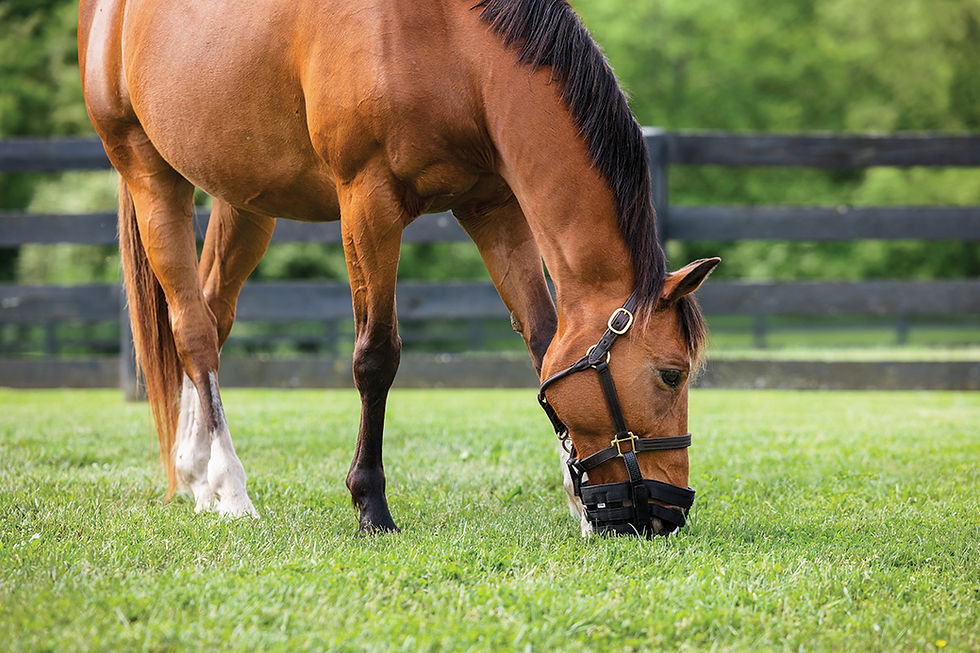
Depending on the pony’s health, management may involve a dry lot, controlled turnout, or a properly fitted grazing muzzle. Muzzles require regular checks for rubbing and confirmation that the pony can drink and obtain appropriate forage.
Slow feeders can help extend eating time, but they do not remove calories from the ration. Choose equipment that allows comfortable access and minimizes entanglement risks. The Hay Net and Slow Feeder Selector can help compare options.
Assess Condition Beneath the Coat
Use your hands to assess the ribs, neck, withers, back, shoulder region, and tailhead. Thick hair can conceal both excessive fat and weight loss.
Follow the approach in Body Condition Scoring: What It Is and How to Score Your Horse.
For weight monitoring, see How Much Does a Horse Weigh? and the Horse Weight and Body-Condition Estimator. General horse formulas may be less accurate for very small ponies, so confirm with a suitable scale when possible.
Did you know? A pony’s weight and body condition describe different things. Weight measures total mass; body condition scoring evaluates fat cover. Both help guide management.
Daily Management and Preventive Care
Exercise and Enrichment
Regular, appropriate activity supports fitness and weight management in sound ponies.
Options include walking, groundwork, driving, and suitable ridden work.
Increase exercise gradually. A sedentary pony needs conditioning before sustained or demanding work.
Avoid relying on prolonged work on tight circles. Read Lunging a Horse: Benefits, Risks, and Effects on the Limbs and Joints before making lunging a major part of the routine.
Hoof Care
Strong-looking hooves still require regular farrier attention. Overgrowth, imbalance, cracks, infection, and laminitis can affect Shetlands just as they affect larger horses.
Some remain comfortable barefoot; others need protection or therapeutic support. Decisions should reflect the pony’s feet, workload, environment, and medical history.
Teach foot handling early and maintain it consistently. A pony that stands comfortably for the farrier is easier to assess and care for.
Housing, Companionship, and Weather
Provide secure fencing suitable for a small equine, accessible water, shelter, and a dry resting area. Check spaces beneath gates and rails, where small ponies may escape or become trapped.
Compatible equine companionship supports welfare. Feeding arrangements must also prevent bullying or unrestricted access to another animal’s higher-calorie ration.
Hardiness does not remove the need for weather protection. Assess blanketing and clipping according to climate, health, body condition, workload, and coat. In warm weather, provide shade and monitor comfort. The British Horse Society
Preventive Care and Records
Vaccination, parasite control, dentistry, and routine veterinary examinations should be individualized.
Read Horse Deworming Schedule by Region and Risk and use the Deworming Schedule Planner alongside veterinary guidance.
Horse Tracker can organize farrier dates, diet changes, weight records, health observations, and veterinary care.
Traditional and American Shetlands
The traditional Shetland and the American Shetland have related histories but should not be described as identical.
American breeding developed a range of types, including more refined ponies with greater height and more animated movement. The American Shetland Pony Club recognizes divisions with different characteristics, including Classic, Modern, Modern Pleasure, and Foundation.
Modern American Shetlands may stand up to 46 inches, or 11.2 hands, compared with the traditional society’s 42-inch limit. American Shetlands also vary substantially in appearance and intended use. shetlandminiature
When buying, showing, or breeding, check the actual registry and pedigree. The word “Shetland” alone does not establish height eligibility, registration status, temperament, or suitability.
Choosing and Caring for a Shetland Pony
The Shetland offers considerable versatility in a small body. A suitable individual can become a valued riding pony, driving partner, or companion.
Successful ownership depends on matching the pony to its intended role and maintaining appropriate feeding, training, and preventive care. For new owners, Horse Ownership Foundations covers essential daily responsibilities. The Professional Study Kits offer further learning in behavior, anatomy, conformation, and lameness.
Frequently Asked Questions About Shetland Ponies
1. How tall is a Shetland Pony?
Traditional registered Shetland Ponies must not exceed 42 inches, approximately 107 centimeters or 10.2 hands. American Shetlands follow different standards and may reach 46 inches. Always check the relevant registry rather than applying one height limit to every pony called a Shetland.
2. Are Shetland Ponies good for children?
A well-trained, appropriately selected Shetland can be an excellent children’s pony. Suitability depends on the individual’s experience, temperament, health, and response to young handlers. Children still require adult supervision, and small size does not guarantee safe behavior.
3. Why are Shetland Ponies considered stubborn?
The label often overlooks learning, management, fear, or discomfort. Pulling toward food may be a reinforced behavior; refusing work may reflect confusion or pain. Investigate the circumstances and teach clear responses rather than assuming the pony is deliberately difficult.
4. Can adults ride Shetland Ponies?
Most adults are unsuitable riders for traditional Shetlands. The pony’s size, conformation, fitness, soundness, saddle fit, and the rider’s balance all matter. A reputation for strength does not establish riding capacity. Driving and groundwork offer alternatives for adults.
5. How long do Shetland Ponies live?
Many live into their twenties, and some reach their thirties. Lifespan varies with individual health and management. Dental care, appropriate nutrition, hoof care, companionship, and attention to age-related changes remain important throughout life.
6. Do Shetland Ponies need grain?
Many mature Shetlands in light work do not need grain for additional energy. They still require a balanced diet, and forage may need appropriate vitamin and mineral supplementation. Growing, breeding, working, or elderly ponies require individual assessment.
7. Can Shetland Ponies live on pasture all year?
Some can live outdoors year-round with appropriate shelter and management, but unrestricted grass intake may be unsuitable. Pasture access should reflect body condition, insulin regulation, previous laminitis, seasonal conditions, and the nutritional value of the grazing.
8. Why are Shetlands at risk of laminitis?
Metabolic predisposition and insulin dysregulation can increase their susceptibility. Excessive calorie intake and obesity may compound the problem, although affected ponies are not always overweight. Veterinary assessment is important when a pony has suspicious fat deposits, recurrent foot soreness, or previous laminitis.
9. Do Shetland Ponies need shoes?
Some do well barefoot with regular professional trimming. Others need protection or support because of their workload, footing, hoof condition, or medical problems. Shoeing decisions should be individualized rather than based solely on breed.
10. Is a Shetland Pony the same as a Miniature Horse?
No. They have different breed and registry identities, although their heights can overlap and some animals may qualify for more than one registry. Pedigree and registration requirements determine identity. Small size alone does not make an equine a Shetland or a registered Miniature Horse.


Comments