
The Thoroughbred Horse


The Thoroughbred is one of the most recognizable and influential horse breeds in the world. Developed for racing, it is known for speed, stamina, courage, and an intensely athletic build. Thoroughbreds dominate flat racing internationally, but their importance reaches well beyond the racetrack. They have shaped modern event horses, hunters, jumpers, polo ponies, Warmbloods, and many other performance bloodlines.
The breed has a reputation for being hot, delicate, or difficult. That description is too simple. Thoroughbreds are often sensitive, energetic, and quick to react, but they are also intelligent, trainable, generous, and remarkably versatile. Their suitability depends heavily on the individual horse, its breeding, early handling, racing experience, health, retraining, and current management.
Understanding the Thoroughbred requires looking at the purpose for which it was developed. For more than three centuries, breeders have selected these horses to run efficiently at speed. Their long stride, powerful cardiovascular system, lean muscling, and competitive nature all reflect that history.
Origins and Early History
The Thoroughbred developed in England during the late seventeenth and early eighteenth centuries. Native and imported mares were crossed with stallions brought from the Middle East and North Africa. Historical records describe these stallions with terms such as Arabian, Barb, and Turk, although those labels were not always used as precisely as modern breed names.
The imported stallions were valued for refinement, speed, stamina, and the ability to pass those qualities to their offspring. English mares contributed size, strength, and generations of adaptation to local conditions. The resulting horses became increasingly important as organized racing grew among the English aristocracy.
Three stallions became especially important because their direct male lines survived in the modern breed:
The Byerley Turk, brought to England in the late 1600s and traditionally associated with Captain Robert Byerley
The Darley Arabian, imported from Syria to England in 1704 by Thomas Darley
The Godolphin Arabian, foaled around 1724 and later owned by Francis Godolphin, 2nd Earl of Godolphin

These horses are commonly called the three foundation sires. The phrase can be misleading if taken to mean that they were the only stallions involved in creating the breed. Other imported stallions and many foundation mares also contributed genetic material. The three famous sires are important because modern Thoroughbred direct paternal lines converge on them, not because the entire breed descended from only three horses.

The Darley Arabian’s male line became overwhelmingly dominant. Pedigree research has estimated that more than 95 percent of modern Thoroughbreds trace their direct sire line to him. Much of that influence runs through his great-great-grandson Eclipse, an undefeated eighteenth-century racehorse whose name still appears deep in modern pedigrees.
Did You Know? Eclipse won all 18 of his races and became far more influential as a sire than he had been as a racehorse. The phrase “Eclipse first, the rest nowhere” is traditionally associated with his dominance, although the exact origin of the wording is debated.

Racing Creates a Recognizable Breed
Horse racing existed in Britain long before the Thoroughbred was formally recognized, but changes in the seventeenth and eighteenth centuries helped shape the modern racehorse. Royal support increased the prestige of racing, permanent racecourses developed, and owners began keeping more detailed breeding and performance records.
Early races were not always the short, fast contests familiar today. Many were run in repeated heats over several miles. Horses needed both speed and the ability to recover and race again. As racing practices changed, breeding priorities changed with them. Shorter races, younger competitors, and greater commercial pressure increased the value placed on early speed and precocity.
In this context, precocity means the ability to mature and perform relatively early. It does not mean abnormal or premature development. A precocious racehorse may be physically and mentally ready to train or compete sooner than its peers.
The Jockey Club was established in Britain during the eighteenth century and became a major authority over racing rules. Standardized rules, recorded results, and increasingly organized pedigrees allowed breeders to compare horses more systematically. Racing performance became a practical test of breeding decisions.
The General Stud Book
Pedigree recording became one of the defining features of the Thoroughbred. James Weatherby published An Introduction to a General Stud-Book in 1791, followed by the first volume of the General Stud Book in 1793. The work gathered pedigrees of horses that had raced or contributed to racing bloodlines in Britain.
Weatherbys continues to maintain the General Stud Book for Great Britain and Ireland. Other countries have their own recognized Thoroughbred stud books, including the American Stud Book maintained by The Jockey Club in the United States.
You can read the first edition of the General Stud Book in our free online library. Click here to view it.

Modern registration involves far more than accepting an owner’s written pedigree. Identification and parentage verification may include markings, microchips, DNA testing, and breeding records, depending on the registry and jurisdiction. A registered Thoroughbred must meet the requirements of an approved stud book and descend from accepted
Thoroughbred bloodlines.
The closed stud-book system has preserved a highly recognizable breed, but it also limits the introduction of new genetic material. This makes genetic diversity and the repeated use of popular sires important subjects in modern breeding discussions.
Did You Know? “Thoroughbred” is the name of a specific breed. A purebred Arabian, Quarter Horse, or Morgan may be purebred, but it is not a Thoroughbred.
Physical Characteristics
Thoroughbreds are built for efficient movement at speed. There is considerable variation within the breed: a compact sprinter may look different from a taller horse bred for distance or turf racing. Still, many Thoroughbreds share a recognizable outline.
Typical characteristics include:
Height commonly ranging from about 15.2 to 17 hands
Mature weight often around 1,000 to 1,200 pounds, depending on height and build
A lean, athletic body with clearly defined muscling
A deep chest with room for the heart and lungs
A long, refined neck
Prominent withers
Long, sloping shoulders
Long legs and relatively light distal limbs
Strong, athletic hindquarters without the heavy muscling typical of many stock breeds
A short, fine hair coat and relatively thin skin
Bay, chestnut, brown, black, and gray are the most familiar colors. White markings on the face and lower legs are common. Less common colors and patterns can occur, but registration rules and genetic terminology should be consulted before identifying an unusual color.
Conformation varies widely enough that breed alone cannot predict soundness or suitability. Hoof quality, limb alignment, back length, shoulder angle, bone, joint structure, and overall balance should be evaluated in the individual horse.
Speed and Athletic Physiology
The Thoroughbred’s performance depends on several systems working together. No single feature creates a fast horse.
During a race, the cardiovascular and respiratory systems must deliver large amounts of oxygen to working muscles. The spleen contracts during intense exercise and releases stored red blood cells into circulation, increasing the blood’s oxygen-carrying capacity. A large cardiac output helps move that oxygenated blood through the body. Meanwhile, muscle fibers generate rapid force, tendons store and release elastic energy, and the limbs cycle through long, efficient strides. Learn more about equine muscles with our article Horse Muscle Anatomy Explained: Major Muscle Groups, What They Do, and Why They Matter.
Thoroughbreds generally possess a high proportion of fast-contracting muscle fibers suited to intense athletic work. They can also use both aerobic and anaerobic energy. Aerobic metabolism supports sustained effort using oxygen; anaerobic metabolism produces energy quickly but contributes to fatigue as exercise intensity rises.
Elite racehorses can exceed 40 miles per hour for portions of a race. Actual speed depends on distance, surface, conditions, pace, track configuration, and the individual horse.

The breed’s large heart is often discussed as though every Thoroughbred has an abnormally oversized heart. Thoroughbreds do have exceptional cardiovascular capacity, and heart size can vary among individuals, but speed cannot be explained by heart size alone. Genetics, conformation, muscle characteristics, training, soundness, behavior, and racing conditions all matter.
Did You Know? A galloping horse usually takes one breath per stride. This locomotor-respiratory coupling helps coordinate breathing with the movement of the body, but it also places enormous demands on the respiratory system at racing speed.
Temperament and Personality
Thoroughbreds are often alert, responsive, and highly aware of their surroundings. They tend to learn quickly and notice small changes in a rider’s balance, rein tension, voice, and body position. These traits can produce an exceptional partnership with a skilled rider, but inconsistent handling can also create confusion or tension.
Common traits include:
High energy and a forward way of going
Sensitivity to pressure and environmental changes
Intelligence and rapid learning
Strong work ethic
Competitive behavior
Athletic confidence
A quick flight response in some individuals
There is no single Thoroughbred temperament. An older gelding with years of careful retraining may be quiet enough for a novice under supervision, while a recently retired racehorse may need an experienced professional. Some never race and have little racetrack conditioning. Others leave racing after dozens of starts and may be calm, seasoned horses accustomed to travel, crowds, equipment, and daily handling.
Management also affects behavior. Inadequate turnout, pain, gastric disease, excessive dietary energy, social isolation, and an inconsistent routine can make a sensitive horse harder to manage. Behavior should not automatically be blamed on the breed when discomfort or management may be contributing. Take our free Equine Management Foundations Certification Program to learn more.
Primary Uses of the Thoroughbred
Flat Racing
Flat racing remains the breed’s defining purpose. Thoroughbreds compete on dirt, turf, and synthetic surfaces at distances ranging from short sprints to longer routes. Racing industries operate throughout North America, Europe, Asia, Australia, South America, Africa, and the Middle East.
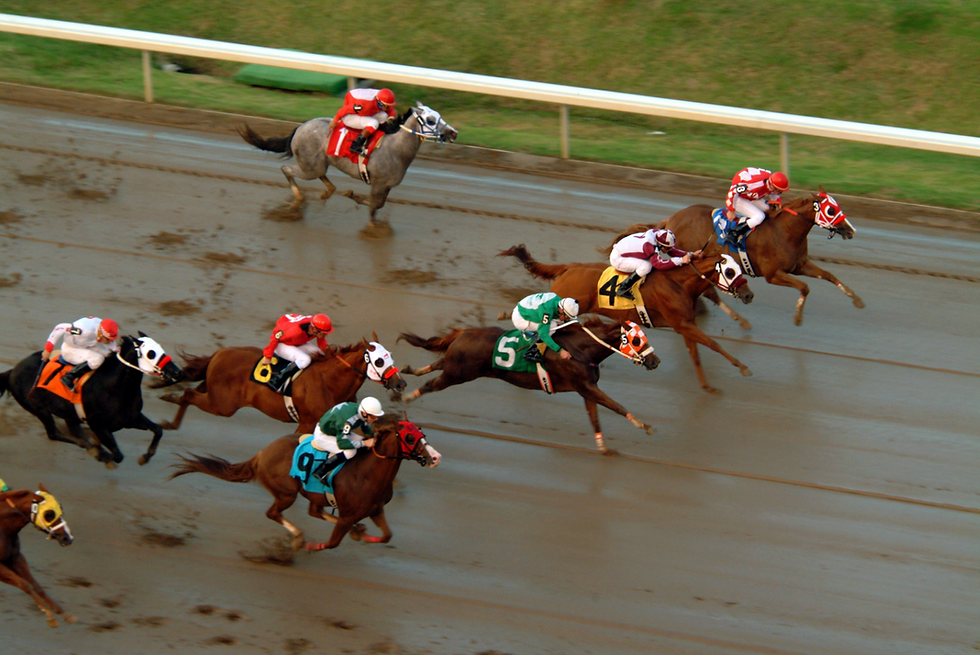
Famous races such as the Kentucky Derby, the Epsom Derby, the Prix de l’Arc de Triomphe, the Melbourne Cup, and the Japan Cup reflect different national traditions, distances, surfaces, and racing cultures.
Steeplechasing and Hurdle Racing
Thoroughbreds also compete over fences and hurdles. These races require speed, stamina, judgment, and courage. National Hunt racing in Britain and Ireland includes both hurdle races and steeplechases, while other countries have their own jumping-race traditions.

Eventing
The breed has had an enormous influence on eventing. Thoroughbreds bring galloping efficiency, stamina, bravery, and the ability to cover ground. Full Thoroughbreds and Thoroughbred crosses have competed at the highest international levels.

Modern eventing has changed over time, and Warmblood influence has increased, particularly as dressage and show-jumping performance have become more important. Even so, Thoroughbred blood remains valuable for endurance, refinement, and speed across country.
Show Jumping and Hunters
Thoroughbreds may succeed as jumpers because of their athleticism, scope, quick reactions, and willingness to move forward. In hunters, the ideal individual also needs rhythm, manners, and a suitable jumping style. Many former racehorses have become successful show hunters, although not every racing movement pattern immediately fits the hunter ring.

Thoroughbred blood has been widely used in Warmblood breeding to add refinement, stamina, and athletic ability. Several European stud books historically used approved Thoroughbred stallions to improve or modernize riding-horse populations.
Dressage
The Thoroughbred is not generally bred for the powerful, elevated movement favored in upper-level dressage, but suitable individuals can perform well. Their sensitivity, intelligence, and work ethic can be advantages. Success depends on conformation, movement, relaxation, correct training, and the horse-rider match.

Polo, Foxhunting, and Recreational Riding
Speed and agility have made Thoroughbreds and Thoroughbred crosses important in polo. Their stamina and courage have also suited foxhunting. Away from organized sport, properly selected and retrained Thoroughbreds may become trail horses, Pony Club mounts, lesson horses, ranch pleasure horses, or all-around partners.

Did You Know? The Thoroughbred influenced the development of several other breeds, including the Anglo-Arabian and many modern Warmblood populations. Thoroughbred blood is often described as adding “blood,” meaning refinement, energy, stamina, and athletic quickness.
What Is the Breed Best Suited For?
Thoroughbreds often excel in homes that can provide regular exercise, consistent handling, turnout, and mentally engaging work. They are especially well suited to riders who appreciate sensitivity and forward movement.
Good matches may include:
Racing and race training
Eventing
Jumping and hunter competition
Polo
Competitive trail and endurance-related activities, depending on the individual
Experienced riders seeking an athletic partner
Owners interested in retraining a horse for a second career
The breed can be deeply rewarding for riders who communicate clearly and enjoy building confidence through patient, progressive training.
What May Be a Poor Match?
A Thoroughbred should not be rejected solely because of its breed, but certain situations require careful selection.
Many recently retired racehorses are unsuitable for an inexperienced rider without professional help. A beginner may struggle with speed, sensitivity, tension, or unfamiliar responses. However, an older, proven Thoroughbred can be quieter than an inadequately trained horse of a supposedly calm breed.
Their lighter build generally makes them less suitable for heavy draft work. Some can perform ranch tasks, but a horse intended for demanding roping, prolonged pulling, or carrying a very heavy load should be evaluated for appropriate build, training, and soundness.
Thoroughbreds may also struggle under management that provides too little forage, limited turnout, poor weather protection, inconsistent hoof care, or long periods without exercise. Many are easy keepers, but others require careful nutritional planning to maintain weight without relying on large, ulcer-promoting concentrate meals.
Breeding, Bloodlines, and Genetic Diversity
Thoroughbred breeding uses pedigree, racing performance, conformation, soundness, surface preference, distance ability, and commercial demand. Some families become known for sprinting, stamina, turf performance, mental qualities, or early maturity, but pedigrees indicate probability rather than certainty.
Popular-sire breeding can narrow genetic diversity when a small number of stallions produce very large numbers of foals. The effect may become more pronounced when their sons and grandsons also dominate breeding. Pedigree analysis and genomic research have confirmed that the breed has limited diversity compared with more open populations.
That does not mean every Thoroughbred is closely related in an immediately obvious way or destined to develop genetic disease. It means breeders should pay attention to inbreeding, repeated ancestors, reproductive decisions, and long-term population health.
The Thoroughbred has relatively few well-known disorders controlled by a single identified gene compared with some breeds. Many important health outcomes are complex. They arise from interactions among numerous genes, conformation, training, track surface, nutrition, age, workload, previous injury, and management.

Common Health and Management Concerns
Musculoskeletal Injury
High-speed work places exceptional forces on bone, joints, tendons, and ligaments. Racehorses may develop stress-related bone injury, fractures, tendon lesions, suspensory injuries, joint inflammation, or degenerative change.
Exercise also stimulates bone adaptation. Appropriate progressive loading is necessary for a young athlete to develop stronger bone. Problems arise when training load, recovery, skeletal adaptation, surface, conformation, or existing damage become poorly matched. Rest alone is not a complete conditioning program, and hard work without adequate recovery is equally problematic.
Exercise-Induced Pulmonary Hemorrhage
Exercise-induced pulmonary hemorrhage, or EIPH, is bleeding within the lungs during strenuous exercise. It is common in racehorses and may be detected by endoscopy or laboratory examination of airway samples after exercise. Visible blood at the nostrils occurs in only a small proportion of affected horses, so the absence of a nosebleed does not rule it out.
EIPH can be associated with reduced performance, but severity and clinical effect vary. Diagnosis and treatment require veterinary involvement, and medication rules differ among racing jurisdictions.
Equine Gastric Ulcer Syndrome
Racehorses are at high risk for gastric ulcers. Contributing factors may include intermittent feeding, large concentrate meals, prolonged exercise, transport, stabling, stress, and limited access to forage. Signs can be vague and may include poor appetite, weight loss, girthiness, behavioral change, dull coat, recurrent mild colic, or reduced performance.
Gastroscopy is the standard method of confirming gastric ulcers. Management commonly includes veterinary treatment, frequent access to forage, dietary changes, turnout where practical, and reduction of avoidable stress.
Respiratory Health
Dust, mold spores, poor ventilation, and airborne stable particles can contribute to airway inflammation. High-performance horses may show coughing, nasal discharge, slow recovery, or reduced performance even when signs at rest are subtle.
Low-dust forage, appropriate bedding, good ventilation, and careful stable management support respiratory health. Persistent coughing or exercise intolerance warrants veterinary evaluation.
Hoof Care and Body Condition
Some Thoroughbreds have thin soles, underrun heels, mismatched feet, or hoof capsule distortion, but there is substantial individual variation. Frequent assessment by a qualified farrier and veterinarian is especially important when transitioning out of racing. Sudden changes in hoof angle, shoeing method, workload, or surface may create new strain.
Maintaining weight can also be challenging during transition. The answer is not simply adding more grain. Dental health, ulcers, parasites, forage quality, social stress, pain, and total calorie intake should all be considered. Diet changes should be gradual.
Did You Know? A horse leaving race training may look lean without being neglected. Racehorses are conditioned athletes with low body fat. However, visible muscle loss, poor topline, prominent bones, dull coat, or continued weight loss should never be dismissed as “just a Thoroughbred.”
Read the following articles and guides to learn more about assessing body condition and muscle condition.
Off-Track Thoroughbreds and Second Careers
An off-track Thoroughbred, commonly called an OTTB, is a Thoroughbred that has left race training or racing. The term may also be used more broadly for horses bred for racing that never started. It does not describe a specific temperament, soundness level, or amount of experience.
Race training gives many Thoroughbreds a useful foundation. They are accustomed to grooming, farrier work, veterinary care, loading, travel, exercise riders, and busy environments. They understand routines and often have a strong work ethic.
However, retraining is not as simple as changing the saddle. A former racehorse may associate mounting with immediate forward movement, be unfamiliar with standing at a mounting block, or understand rein and leg aids differently. It may never have hacked alone, navigated a quiet trail, or worked in a small indoor arena.
A sensible transition may include:
Time to decompress and adjust to a new routine
A veterinary and lameness evaluation
Dental, nutritional, and farrier assessment
Treatment or rehabilitation of known injuries
Gradual introduction to turnout and new social groups
Groundwork and mounting-block training
Slow development of balance, topline, and strength
Exposure to the demands of the intended second career
Some horses benefit from a period of reduced work; others do better with a predictable job. The plan should be based on the individual rather than a fixed rule that every racehorse needs several months turned away.
Aftercare organizations now play a major role in rehabilitation, retraining, retirement, and rehoming. The Thoroughbred Aftercare Alliance accredits organizations in North America, while other programs promote competition and recognition for retired racehorses.
Choosing a Thoroughbred
The right horse should be selected by intended use, temperament, soundness, training, conformation, and the owner’s experience. Breed reputation should never replace an individual assessment.
Before buying or adopting, ask:
What is the horse’s complete racing and training history?
Why did it leave racing?
Are veterinary records available?
Has it had time off or any formal retraining?
How does it behave for turnout, hauling, farrier care, and veterinary procedures?
Does its current level of training match the rider’s ability?
Is its conformation and soundness suitable for the intended job?
What ongoing maintenance may be required?
A pre-purchase examination cannot guarantee future soundness, but it can identify current concerns and help the buyer understand risk. The veterinarian should know the intended use because a finding that is acceptable for light trail riding may be important for upper-level eventing.

The Thoroughbred’s Lasting Influence
Few breeds have shaped equestrian sport as extensively as the Thoroughbred. It helped establish modern racing, influenced the development of national stud books, and contributed speed and refinement to riding-horse populations around the world.
The same qualities that make the breed exceptional require responsible handling. Thoroughbreds tend to do best when their minds and bodies are given useful work, adequate forage, turnout, consistent care, and training that rewards relaxation rather than punishing sensitivity.
A good Thoroughbred is an athlete with a long history behind it and many possible futures ahead. Racing remains central to the breed, but it does not define the limits of what these horses can become.
Frequently Asked Questions
1. Is a Thoroughbred the same as a purebred horse?
No. Thoroughbred is the name of one specific breed. A horse of another breed may be purebred, but it should not be called a Thoroughbred.
2. Do all Thoroughbreds descend from three stallions?
All surviving direct male lines trace to the Byerley Turk, Darley Arabian, or Godolphin Arabian. Many mares and additional stallions also contributed to the breed’s overall ancestry.
3. How tall is a Thoroughbred?
Most stand about 15.2 to 17 hands, although individuals can fall outside that range. Height alone does not indicate speed, quality, or suitability.
4. Are Thoroughbreds good horses for beginners?
Some are, but many recently retired racehorses require an experienced rider or professional retrainer. A quiet, well-schooled individual may be suitable for a beginner under appropriate supervision.
5. Are all Thoroughbreds difficult to keep weight on?
No. Metabolism and feed requirements vary. Horses that remain thin should be evaluated for diet, forage quality, dental disease, ulcers, parasites, pain, stress, and other health problems.
6. What does OTTB mean?
OTTB means off-track Thoroughbred. It generally describes a Thoroughbred that has left racing or race training, although some horses called OTTBs were bred for racing but never started.
7. What disciplines are Thoroughbreds good at after racing?
They may excel in eventing, hunters, show jumping, dressage, polo, foxhunting, trail riding, Pony Club, and recreational riding. Suitability depends on the individual horse’s health, temperament, conformation, and retraining.
8. Are Thoroughbreds genetically fragile?
That description is inaccurate. The breed has health risks related to limited genetic diversity, conformation, and intense athletic selection, but training load, management, injury history, nutrition, and the individual horse are equally important.
9. Why are gastric ulcers common in racehorses?
Risk factors include intensive exercise, stabling, transport, stress, high-concentrate feeding, and periods without forage. A veterinarian can confirm ulcers through gastroscopy and recommend treatment and management changes.
10. How long does it take to retrain an off-track Thoroughbred?
There is no fixed timeline. Some transition quickly, while others need substantial physical rehabilitation or time to learn new skills. Progress should be based on soundness, relaxation, strength, and understanding rather than a deadline.
Selected Sources
Weatherbys. Our History and Breeding: The General Stud Book.
The Jockey Club. The American Stud Book and Thoroughbred registry information.
Hinchcliff, K.W. et al. Exercise-Induced Pulmonary Hemorrhage in Horses: ACVIM Consensus Statement. Journal of Veterinary Internal Medicine.
MSD Veterinary Manual. Exercise-Induced Pulmonary Hemorrhage in Horses.
Thoroughbred Aftercare Alliance. What Is Aftercare?




Comments