
Eastern Equine Encephalitis (EEE) in Horses

Updated: Aug 26

Symptoms, Transmission, Treatment, Vaccination, and Prevention
Eastern equine encephalitis, commonly shortened to EEE, is a mosquito-borne viral disease that causes severe inflammation of the horse’s brain and sometimes the spinal cord. It is also called eastern equine encephalomyelitis. The words encephalitis and encephalomyelitis refer to inflammation of the brain and inflammation of the brain and spinal cord.
EEE is uncommon compared with many equine diseases, but its consequences are severe. There is no specific antiviral cure, the mortality rate in clinically affected horses is approximately 75 to 95 percent, and survivors may have permanent neurologic problems.
Vaccination is the most effective protection. The American Association of Equine
Practitioners (AAEP) classifies vaccination against EEE and Western equine encephalomyelitis as core protection for horses residing in or traveling within the United States. A horse does not have to travel, compete, or live in a busy barn to be exposed. A mosquito can reach a horse in a pasture, backyard, or stall.
Key Takeaways
EEE is caused by a virus transmitted mainly through the bites of infected mosquitoes.
It can cause fever, depression, ataxia, seizures, recumbency, and death.
EEE does not normally spread directly from horse to horse or from horses to people.
There is no specific cure. Treatment consists of intensive supportive and nursing care.
Vaccination is considered core protection for horses in the United States.
Mosquito control adds useful protection, but it cannot replace vaccination.
What Causes EEE in Horses?
EEE is caused by eastern equine encephalitis virus, an alphavirus in the family Togaviridae. It is an arbovirus, meaning an arthropod-borne virus transmitted by blood-feeding insects, primarily mosquitoes.
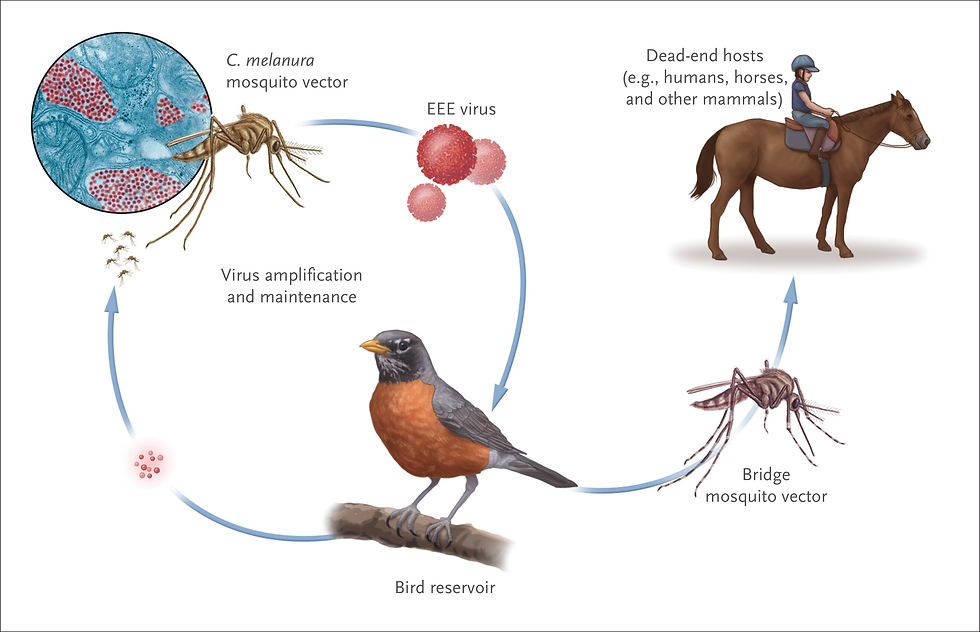
The virus is maintained in nature through a cycle involving wild birds and mosquitoes. Mosquitoes become infected after feeding on a bird carrying the virus. Bridge-vector species can then carry the virus from birds to horses or people.
After an infected mosquito bites a horse, the virus may reach the central nervous system and damage the brain and, in some cases, the spinal cord. The incubation period between infection and the appearance of signs is generally 5 to 14 days.
EEE has historically been most common in the eastern and southeastern United States, particularly in areas with wooded wetlands and large mosquito populations. Cases have also occurred farther west, as far as Texas, and north into eastern Canada. Risk changes with rainfall, temperature, mosquito numbers, local virus activity, and the length of the mosquito season.
Did You Know? A horse with EEE is called a dead-end host. The horse usually does not develop enough virus in its blood to infect another mosquito, so it does not continue the natural transmission cycle.
Can EEE Spread Between Horses or From Horses to People?
EEE does not ordinarily spread through touching, shared buckets, coughing, nasal discharge, manure, or direct contact. Horses and people become infected through the bite of an infected mosquito, not from one another.
An undiagnosed neurologic horse should still be managed cautiously. EEE can resemble rabies, Equine Herpesvirus-1 Myeloencephalopathy, West Nile Virus, EPM, toxicities, and other conditions. Keep the horse away from other horses, minimize handling, and follow veterinary instructions until the cause is investigated.
A confirmed equine case signals that infected mosquitoes may be active locally. People should strengthen mosquito precautions even though the horse is not the source of human infection.
Early Signs of EEE
Clinical signs may begin abruptly, and the horse’s condition can deteriorate within hours. Early signs are often general signs of illness rather than obvious neurologic abnormalities:
Moderate to high fever
Reduced appetite or complete loss of appetite
Depression, unusual quietness, or drowsiness
Lethargy and reduced interest in surroundings
Sudden behavior or temperament changes
These changes can resemble another infection, heat stress, fatigue, or mild colic. Knowing the horse’s normal temperature, pulse, respiration, appetite, and behavior makes illness easier to recognize. Review The Horse’s Vital Signs and How to Tell if Your Horse Is Sick before an emergency occurs.
Neurologic Signs of EEE
Condition | Useful clue |
EEE | Often rapid onset with fever, profound depression and severe neurologic deterioration |
West Nile Virus | Another mosquito-borne neurologic disease; clinical overlap can be substantial |
EHV-1 neurologic disease | Neurologic signs may occur during an infectious-disease situation involving other horses |
EPM | Can cause asymmetric weakness, ataxia and muscle loss |
Rabies | Behaviour changes and neurologic signs make it an important differential |
These signs overlap. You cannot diagnose EEE from symptoms alone. Sudden neurologic signs require veterinary evaluation.
As inflammation affects the brain and spinal cord, the horse may develop:
Weakness or an unsteady, poorly coordinated gait (ataxia)
Stumbling, crossing the limbs, or difficulty turning
Muscle tremors or twitching, especially around the face and neck
Circling or aimless wandering
Head pressing against a wall, fence, or other object
Blindness or reduced awareness of the surroundings
Facial droop, an abnormal head position, or weakness of the tongue
Difficulty chewing or swallowing
Periods of agitation, hyperexcitability, or unusual aggression
Seizures
Paralysis
Recumbency, meaning the horse goes down and cannot rise
Coma and death
Ataxia in horses means poor coordination caused by dysfunction in the nervous system. It is different from a typical painful lameness. A horse that suddenly becomes uncoordinated should not be walked around repeatedly for assessment. Move people and other animals away, prevent the horse from entering unsafe footing or confined spaces, and call a veterinarian immediately.
Did You Know? EEE was historically called “sleeping sickness” because severely affected horses may appear profoundly depressed, drowsy, and unaware of their surroundings. The name can be misleading because some horses become restless, reactive, or dangerously excitable instead.
How Serious Is EEE?
Reported mortality among clinically affected horses is approximately 75 to 95 percent, and AAEP guidance notes that it can exceed 90 percent in immunologically naive horses. Death may occur within two to three days after signs begin.
Horses that become recumbent, have repeated seizures, lose awareness of their surroundings, or cannot swallow have an especially poor prognosis. Severe neurologic dysfunction can make safe nursing difficult and may place both the horse and handlers at risk.
Survivors may retain ataxia, weakness, altered awareness, or behavior changes. They need repeated veterinary and safety assessments before turnout, transport, breeding, or ridden work is considered.
When to Call the Veterinarian
EEE is an emergency. Call a veterinarian immediately if a horse develops sudden fever with depression, unexplained weakness, incoordination, tremors, head pressing, circling, difficulty swallowing, seizures, or recumbency.
While waiting for help:
Keep people, dogs, and other horses away from the affected horse.
Do not ride, trailer, or force an uncoordinated horse to walk unless the veterinarian directs you to do so.
Remove obvious hazards only if this can be done safely.
Reduce noise and activity around the horse.
Record the horse’s temperature and other observations if it is safe to approach.
Find the horse’s vaccination record, including dates, products, and recent boosters.
Do not place hands near the mouth of a horse that is disoriented or having difficulty swallowing.
Never try to restrain a seizing or violently struggling horse. Human safety comes first.
How Veterinarians Diagnose EEE
Diagnosis requires a neurologic examination, the horse’s history and vaccination status, and laboratory testing. The veterinarian will also consider the season, mosquito activity, recent disease reports, and travel.
An IgM-capture ELISA on blood is commonly used to investigate acute EEE. Cerebrospinal fluid and other tests may provide additional evidence. Recent vaccination can affect some results, which is one reason accurate dates matter.
The veterinarian may test for other causes of encephalitis or neurologic dysfunction, including West Nile virus, rabies, equine herpesvirus, and EPM. For comparison with another mosquito-borne neurologic disease, read West Nile Virus in Horses.
EEE is a reportable disease in the United States. Veterinarians and diagnostic laboratories work with state animal health officials when it is suspected or confirmed. Reporting supports surveillance and helps warn other horse owners that infected mosquitoes may be active.
Treatment and Supportive Care
There is no medication that specifically eliminates EEE virus from an infected horse. Treatment is supportive and tailored to the horse’s condition. It may include:
Intravenous fluids and electrolyte support
Anti-inflammatory medication to reduce pain and inflammation
Medication to control seizures or severe agitation
Nutritional and hydration support when swallowing is impaired
Protection from pressure sores and injuries during recumbency
Urinary catheterization or other nursing assistance when required
A quiet, deeply bedded, carefully managed environment
Treatment cannot reverse extensive central nervous system damage. Humane euthanasia may be recommended if the horse is suffering, repeatedly seizing, unable to stand, or unlikely to regain an acceptable quality of life.
Vaccination: The Most Important Protection
EEE vaccination is a core recommendation because the disease is highly fatal, mosquitoes are difficult to avoid, and effective vaccines are available. Indoor, retired, and stay-at-home horses still need protection.
General AAEP guidance includes the following:
Previously Vaccinated Adult Horses
Revaccinate annually before mosquito season. Horses with prolonged mosquito exposure, limited immunity, or increased local risk may need differently timed or more frequent boosters under veterinary direction.
Unvaccinated Adult Horses or Horses With an Unknown History
Give a two-dose primary series, generally three to six weeks apart according to the label. Revaccinate before the next mosquito season and annually thereafter.
Pregnant Mares
Previously vaccinated mares are generally vaccinated four to six weeks before foaling. Mares with no reliable history need a veterinarian-directed primary series and booster plan.
Foals
AAEP guidance recommends a two-dose primary series beginning at four to six months, with four to six weeks between doses. A third dose is given at 10 to 12 months before the next mosquito season. High-risk situations may require a modified schedule.
Exact timing depends on the vaccine label, the foal’s age, maternal vaccination, geography, local disease activity, and veterinary judgment. Use the Horse Vaccination Center, review the complete Horse Vaccination Schedule, or try the 5-Way Vaccine Planner to organize questions for your veterinarian.
Did You Know?Many combination vaccines include protection against EEE and WEE, but the diseases included vary by product. Read the label rather than relying on a casual name such as “five-way.” Our guide to the 5-Way Equine Vaccine explains what common formulations cover.
Mosquito Control Around the Barn
No mosquito-control program can eliminate every bite, but practical management can reduce exposure:
Empty or refresh small containers that hold standing water.
Clean troughs regularly and repair leaking faucets, hoses, and waterers.
Improve drainage around gates, manure areas, gutters, and low spots.
Dispose of tires, buckets, tarps, and other items that collect rainwater.
Use equine-approved insect repellents according to the label.
Install and maintain screens where practical.
Use fans in stalls or sheltered resting areas because mosquitoes are weak fliers.
Reduce turnout during peak mosquito activity when local conditions make this practical.
Follow local mosquito and equine disease alerts.
Mosquito control supports vaccination. It does not replace it, since even well-managed properties cannot prevent all mosquito exposure.
Keep Accurate Vaccination Records
Record the date, product, diseases covered, lot information when available, administrator, and any reaction. Good records help a veterinarian choose between a routine booster, restarted primary series, or adjusted outbreak plan. Keep dates, veterinary notes, and reminders together in the Horse Tracker.
Frequently Asked Questions About EEE in Horses
What is Eastern Equine Encephalitis in horses?
Eastern Equine Encephalitis, or EEE, is a mosquito-borne viral disease that causes severe inflammation of the brain and sometimes the spinal cord.
It can progress rapidly and is frequently fatal once neurologic signs develop. Owners can review the equine nervous system to better understand how disease affecting the brain and spinal cord can alter movement, behaviour and coordination.
How do horses get EEE?
Horses usually become infected through the bite of a mosquito carrying Eastern Equine Encephalitis virus.
The virus circulates naturally between wild birds and mosquitoes. Certain mosquito species can then transmit the virus from infected birds to horses or people. The incubation period is generally 5 to 14 days.
Can EEE spread from horse to horse or from horses to people?
No. EEE does not ordinarily spread through touching, coughing, shared buckets, nasal discharge, manure or normal contact with an infected horse.
Horses are considered dead-end hosts because they generally do not develop enough virus in their blood to continue the mosquito transmission cycle. However, an undiagnosed neurologic horse should still be handled cautiously until other diseases have been ruled out.
What are the first signs of EEE in a horse?
Early signs may include moderate to high fever, loss of appetite, depression, lethargy, unusual quietness and sudden changes in behaviour or temperament.
These early changes may resemble other illnesses, which is why knowing your horse's normal vital signs can make abnormal changes easier to recognize.
What neurologic signs can EEE cause?
As the disease affects the brain and spinal cord, horses may develop weakness, ataxia, stumbling, circling, head pressing, tremors, blindness, abnormal behaviour, difficulty chewing or swallowing, seizures, paralysis or recumbency.
A horse that suddenly becomes uncoordinated should not be repeatedly walked around for assessment. Owners can use the Equine Neuro Screen and Localization Assistant to organize observations, but sudden neurologic signs require immediate veterinary attention.
Can a horse survive EEE?
Some horses survive, but the prognosis is poor once clinical neurologic disease develops.
Reported mortality among affected horses is approximately 75 to 95 percent, and death may occur within two to three days after signs begin. Survivors can be left with permanent weakness, ataxia, behaviour changes or altered awareness.
Is there a cure for EEE in horses?
There is no specific antiviral medication that eliminates EEE virus.
Treatment is supportive and may include intravenous fluids, electrolyte support, anti-inflammatory medication, seizure control, nutritional and hydration support, protection from injuries or pressure sores and intensive nursing care.
How can EEE be prevented?
Vaccination is the most important protection against EEE. Mosquito control provides additional protection but cannot eliminate every mosquito bite and should not replace vaccination.
Management may include removing standing water, repairing leaking waterers, improving drainage, using equine-approved repellents, installing screens, using fans and reducing turnout during periods of high mosquito activity when practical. The 5-Way Vaccine Planner can help owners organize vaccination questions and schedules for discussion with their veterinarian.
How often should horses be vaccinated against EEE?
Previously vaccinated adult horses are generally revaccinated annually before mosquito season. Horses with prolonged mosquito exposure or increased local risk may require a different schedule under veterinary direction.
Unvaccinated adult horses generally require a two-dose primary series followed by ongoing boosters. Keeping vaccine dates, products and booster history in Horse Tracker can help prevent gaps in protection.
Conclusion
EEE deserves a permanent place in every horse’s preventive health plan. Keep vaccinations current, reduce mosquito breeding areas, learn the horse’s normal vital signs, and treat sudden neurologic changes as an emergency.
References
This article is for educational purposes and does not replace veterinary advice. Contact a veterinarian immediately if a horse shows fever with neurologic signs, sudden incoordination, seizures, difficulty swallowing, or an inability to stand.


Comments