
The Appaloosa Horse

History, Characteristics, Uses, and Breed Suitability
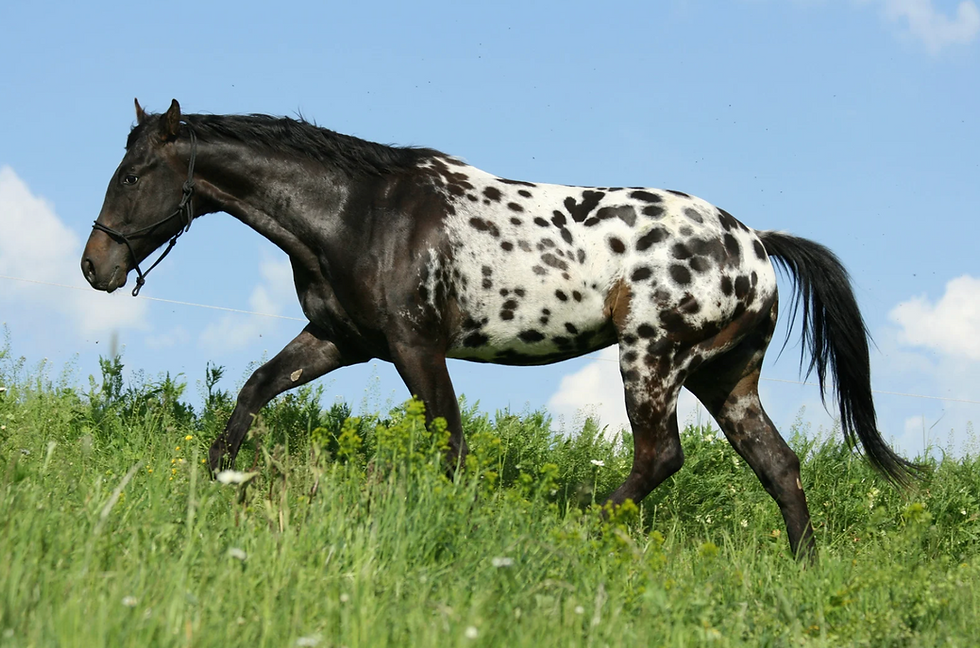
The Appaloosa is one of the most recognizable horse breeds in the world. Famous for its striking spotted coat patterns, hardy constitution, and versatile working ability. Originating in the Pacific Northwest of the United States, the breed combines athleticism, intelligence, endurance, and a practical temperament, making it popular in both Western and English disciplines.
Appaloosas were selectively bred for performance traits such as stamina, sure-footedness, trainability, and adaptability. These qualities helped them meet the demands of travel and work across varied terrain. Today, they remain valued as ranch horses, trail companions, recreational mounts, and competitive athletes.
For prospective owners, understanding the breed means considering its history, physical characteristics, temperament, and health alongside its appearance. A well-chosen Appaloosa can suit many different riding goals, particularly when its training and individual abilities match the rider’s experience.
Historical Origins
The Appaloosa’s development is closely tied to the Nez Perce people, also known as the Nimiipuu, of the Pacific Northwest, particularly in areas now part of Idaho, Oregon, and Washington. The ancestors of the breed descended from horses introduced to North America by the Spanish during the sixteenth and seventeenth centuries. Horses subsequently spread north through trade and exchange, reaching the Northwest by the early eighteenth century.

The Nez Perce became highly skilled horse breeders and developed selective breeding practices that emphasized:
Endurance
Agility
Intelligence
Courage
Sure-footed movement
Manageable temperament
Horses played an important role in transportation, hunting, trade, and warfare. Animals needed to cover considerable distances, negotiate uneven ground, and remain dependable under demanding conditions. Selection for these practical qualities helped establish the athleticism and stamina associated with the Appaloosa today.

The Nez Perce carefully selected breeding animals, retaining desirable horses and limiting reproduction among those considered less suitable. Their herds included both spotted and solid-colored horses. Coat pattern was therefore one feature within a broader tradition of breeding for usefulness and quality.
The Nez Perce War and the Loss of the Herds
The breed’s history changed dramatically during the Nez Perce War of 1877. As the Nez Perce fled the U.S. Army, their horses carried people and supplies through difficult terrain over a prolonged journey. Following the conflict, large numbers of horses were confiscated, dispersed, or killed, disrupting the breeding traditions that had developed these herds.
Surviving horses were scattered, and subsequent crossing with ranch and draft horses changed many of the original bloodlines and physical types. The loss of the herds was part of a much wider displacement of the Nez Perce people.
Preservation of the Modern Breed
Interest in preserving the Appaloosa revived during the 1930s, leading to the establishment of the Appaloosa Horse Club, or ApHC, in 1938. Organized registration and breeding helped preserve recognizable breed characteristics and rebuild interest in the horses.
The modern Appaloosa has since developed into a versatile riding and competition breed. Different breeding priorities have produced horses suited to cattle work, pleasure riding, racing, and English disciplines, while its Nez Perce heritage remains central to its history.
Did you know? The name “Appaloosa” developed from references to horses of the Palouse region. The expression “a Palouse horse” gradually evolved into the breed name used today.
Physical Characteristics
The modern Appaloosa generally stands between 14.2 and 16 hands high and typically weighs approximately 950 to 1,200 pounds. These are useful general ranges, although individuals may be smaller, taller, lighter, or heavier depending on their breeding and body type.
Common physical features include:
A strong, muscular body
A deep chest
A sloping shoulder
A short, strong back
Well-developed hindquarters
Durable legs and hooves
A refined head with an alert expression
There is considerable variation within the breed. Horses bred for ranch work and Western competition often have a compact, muscular build. Individuals bred for hunter classes, jumping, or racing may be taller and more rangy. Quarter Horse, Thoroughbred, and Arabian ancestry has influenced different Appaloosa bloodlines through approved outcrossing.

Three additional characteristics are strongly associated with the breed:
Mottled skin: Patches of pigmented and unpigmented skin, often noticeable around the muzzle and eyes.
Visible white sclera: The white portion surrounding the colored part of the eye may be visible when the eye is in a normal position.
Vertically striped hooves: Alternating lighter and darker bands may appear in the hoof wall.
These features should be considered together with pedigree and registration requirements. No single feature establishes that a horse is an Appaloosa.
As with any riding horse, balanced proportions, limb alignment, and comfortable movement deserve close attention. Horse Education Online’s equine conformation study guide provides a useful starting point for understanding how structure relates to function.
Appaloosa Coat Colors and Patterns
Appaloosas can have a variety of base coat colors, including bay, black, and chestnut. Diluted colors such as palomino and buckskin also occur. The distinctive Appaloosa appearance comes from spotting and white patterning associated with the Leopard Complex, commonly abbreviated LP, together with other genetic influences.
Commonly recognized patterns include:
Leopard: A predominantly white coat with darker spots distributed across much of the body.
Blanket: A white area over the hips and hindquarters, sometimes extending farther forward. The blanket may contain dark spots or remain unspotted.
Snowflake: Small white spots scattered over a darker coat, which may become more noticeable with age.
Varnish roan: A mixture of white and colored hairs that develops over time, often leaving darker areas around bony points such as the face, hips, and legs.
Marble and frost: Descriptive terms used for certain mottled or lightly scattered white patterns. Terminology can overlap, particularly as a horse’s coat changes.
Appaloosa horse with leopard complex pattern coat Appaloosa horse with snowflake coat pattern Appaloosa horse with peacock coat pattern Appaloosa horse with blanket pattern
These patterns vary considerably in their extent and expression. Some horses display a combination of features, and their appearance may change as they mature. A foal’s markings do not always represent its final adult coat.
Not every registered Appaloosa is heavily spotted. Some have minimal markings, while others appear solid-colored. Registration depends on the applicable pedigree and breed rules, and a solid appearance alone does not establish whether a horse carries LP.
Coat pattern is useful for describing an individual horse, but it does not predict temperament or athletic ability. For a broader explanation of base colors and inheritance, see Horse Education Online’s guide to horse coat colors and genetics. Study all equine coat colors with our Coat Colors Study Flashcards.

Temperament and Personality
Appaloosas are generally known for being:
Intelligent
Independent
Calm
Adaptable
People-oriented
Trainable
The breed’s working history required horses capable of responding to their handlers while remaining useful in changing conditions. Many modern Appaloosas retain a practical attitude that riders appreciate during ranch work, trail riding, and everyday handling.
Their intelligence can make them quick learners. They often respond well when the rider’s aids are clear and training progresses in understandable steps. A horse that readily learns a useful response can also learn an unwanted habit if that behavior is repeatedly rewarded, even unintentionally.
Independent-minded individuals may be particularly appealing to experienced riders who value a horse that confidently assesses unfamiliar situations. That same horse may require more thoughtful guidance from a beginner who is still learning how to communicate consistently.

Breed descriptions provide a general impression, but temperament varies between horses. Age, breeding, early handling, training, comfort, and daily management all influence behavior. A mature Appaloosa with a steady record as a lesson or trail horse may be very different from a young competition prospect.
Labels such as “stubborn” can obscure the reason for a horse’s response. Confusion, pain, fear, and inconsistent cues should be considered when behavior changes or training becomes difficult. Horse Education Online’s equine behavior study materials explore the learning principles and behavior that help owners communicate more effectively.
Common Uses of the Appaloosa
One of the Appaloosa’s greatest strengths is versatility. The breed performs in numerous disciplines, with different bloodlines and individuals showing particular strengths.
Western Riding
Appaloosas are especially popular in Western activities such as:
Ranch work
Reining
Trail riding
Barrel racing
Western pleasure
Cutting
Team penning

Their agility, stamina, and practical temperament can make them reliable ranch horses. Cattle work requires a horse to accelerate, turn, stop, and remain attentive while responding to both the rider and moving livestock.
Western disciplines nevertheless place different demands on a horse. A successful pleasure horse needs a different movement style and pace from a barrel racer, while cutting requires specialized training and an aptitude for reading cattle. Breeding, conformation, and demonstrated ability help determine which role is most appropriate.
Trail and Endurance Riding
The breed’s historical development in rugged terrain contributes to its reputation for endurance and sure-footedness. Appaloosas are valued for mountain riding, long-distance trail riding, and endurance competition.
A good trail horse needs confidence around unfamiliar objects, reliable responses to the rider, and the ability to travel comfortably over varied ground. Many Appaloosas combine these qualities with the stamina to remain useful through a full day’s work.
Endurance competition adds more demanding requirements for conditioning, recovery, and soundness. A horse’s breed background can support its potential, but progressive preparation and careful management determine whether it is ready for the distance and terrain in
volved.

English Disciplines
Although more commonly associated with Western riding, Appaloosas also compete in:
Dressage
Eventing
Show jumping
Hunter and hunt seat classes

Thoroughbred and Arabian influences have contributed to the athletic type found in some bloodlines. Taller, longer-striding individuals may be particularly suitable for English work, while balance, coordination, and trainability remain important across disciplines.
An Appaloosa intended for jumping should be assessed for its jumping ability and soundness. A dressage prospect should demonstrate comfortable, regular gaits and the ability to develop balance through training. These qualities are more useful than selecting by markings or relying on a general breed reputation.
Family and Recreational Horses
Well-trained Appaloosas are widely used as family horses, youth mounts, and recreational riding horses. Their versatility can suit households where a horse participates in lessons, trail rides, local shows, and occasional ranch activities.
Selected individuals also work in therapeutic riding programs. These roles require careful assessment of temperament, movement, handling, and tolerance of unfamiliar situations. Suitability comes from the individual horse’s preparation and behavior, particularly when children or inexperienced riders are involved.
Did you know? The Appaloosa became Idaho’s official state horse in 1975, recognizing the breed’s close historical connection to the region.
What the Appaloosa Is Good For
The Appaloosa excels in roles requiring versatility, endurance, and a practical temperament. For many owners, its appeal lies in finding a horse that can take part in several activities while remaining enjoyable to handle and ride.
Versatile Riding Programs
Appaloosas can suit riders who want one horse capable of multiple activities. A suitable individual might combine regular schooling with trail riding and local competition. This is particularly useful for riders still exploring their interests or families whose riding activities change throughout the year.
Trail Riding
Sure-footedness, stamina, and confidence make many Appaloosas rewarding trail companions. When choosing a trail horse, look for experience in conditions similar to those you expect to encounter, including hills, water crossings, group rides, or riding away from other horses.
Ranch and Working Environments
The breed’s intelligence and athleticism suit practical ranch work. Horses from working bloodlines may have useful instincts around cattle, but previous experience matters. A dependable ranch horse should understand its job, respond promptly, and remain manageable during demanding work.
Intermediate Riders
Many Appaloosas offer an appealing balance of responsiveness and steadiness for intermediate riders. A horse with established training can help a rider improve timing, accuracy, and feel while participating in a range of activities. Its education should support the rider’s current skills and intended next steps.
Family Horses
Well-trained individuals often work very well in family settings. Consistent ground manners, a suitable size, and a reliable response under saddle are especially valuable when more than one person handles the horse. Experience with the youngest or least confident rider should guide the choice.
Endurance and All-Day Riding
Appaloosas with suitable conformation, soundness, and conditioning can be well suited to long hours under saddle. Comfortable movement and efficient recovery are valuable qualities for riders who spend substantial time covering ground, whether during organized rides or everyday work.
What the Appaloosa Is Less Suited For
Despite their versatility, Appaloosas are not ideal for every rider or discipline. The main limitations usually concern the match between a particular horse’s abilities and the demands of the intended role.
High-Level Specialized Competition
Appaloosas compete successfully in many sports, but buyers pursuing a highly specialized goal may find a larger selection of purpose-bred prospects in other populations. Examples include Warmbloods bred for upper-level dressage and jumping, Thoroughbreds for Thoroughbred racing, and Quarter Horse lines selected for particular cattle or speed events.
Appaloosas also have specialized performance bloodlines, including racing lines. An individual should therefore be assessed on its pedigree, movement, training, soundness, and record in the intended discipline. A versatile riding horse and an elite competition prospect may require very different selection criteria.
Riders Seeking a Particular Level of Sensitivity
Some riders prefer a very sensitive horse that responds to exceptionally light aids, while others value a steadier response. Appaloosas vary in this respect. A quiet recreational horse may not provide the feel a competitive rider wants, and a responsive performance horse may feel overwhelming to a less experienced rider.
Breeding Programs Focused Mainly on Appearance
Color alone is an inadequate basis for selecting breeding stock. Breeding decisions should account for conformation, temperament, soundness, performance, and inherited health risks.
Approved outcrossing has contributed to the variety found within the breed. The quality of a breeding program depends on the animals selected and the goals behind those choices. A striking pattern cannot compensate for unsuitable structure or an avoidable health risk.
Very Novice Owners Without Guidance
A young, inexperienced, or demanding Appaloosa may be unsuitable for a novice owner working without support. This concern applies across breeds. Beginners generally benefit from an experienced horse with established manners and guidance from a knowledgeable instructor or trainer.
Genetic and Health Issues
Although Appaloosas are generally hardy horses, several important genetic and breed-associated health conditions deserve attention. Eye disorders are particularly relevant, while some other inherited conditions depend on specific ancestry.
Equine Recurrent Uveitis (ERU)
ERU is one of the most significant health concerns in Appaloosas. It involves inflammation within the eye and can cause:
Eye pain
Sensitivity to light
Repeated episodes of inflammation
Progressive damage to structures within the eye
Vision loss or blindness
Appaloosas have an increased risk of ERU compared with many other breeds. Research has identified an association with Leopard Complex genetics, with increased risk reported in horses carrying two copies of LP. However, ERU is a complex condition, and a genetic result does not predict the full course of an individual horse’s eye health.
Some affected Appaloosas develop an insidious form of the disease, in which ongoing inflammation produces few obvious signs of discomfort. An eye that appears comfortable may still require veterinary assessment.
Squinting, tearing, redness, cloudiness, or a change in visual behavior warrants prompt veterinary attention. Regular eye examinations are particularly useful for this breed because early recognition offers an opportunity to manage inflammation before further damage develops.
Congenital Stationary Night Blindness (CSNB)
Horses with two copies of LP are affected by an associated form of congenital stationary night blindness. This inherited condition is present from birth and impairs vision in darkness or very low light. It does not progressively worsen in the way that inflammatory eye disease can.
Affected horses generally see normally in daylight unless another eye condition is present. Difficulties may become apparent when entering a dark stable or trailer, moving through poorly lit areas, or negotiating obstacles after dusk.
Management should provide appropriate lighting and familiar surroundings, with particular care during transitions into darker spaces. Genetic testing can identify the LP status associated with this condition and help inform breeding decisions.
Did you know? “Stationary” in congenital stationary night blindness means the condition is non-progressive. It is different from ERU, which can cause continuing damage to the eye.
Photosensitivity and Skin Issues
Appaloosas with pink skin or lightly pigmented areas can be more susceptible to sunburn, particularly around an unpigmented muzzle. Shade, appropriate protective equipment, and suitable sun protection can help reduce exposure.
Photosensitization is a separate problem in which substances in the skin react to sunlight. It can be associated with certain plants, toxins, or liver disease and may produce marked irritation and skin damage.

Persistent, painful, or widespread skin lesions should be assessed by a veterinarian so that management addresses the underlying cause. A pale coat by itself does not establish that a horse has a photosensitivity disorder.
HYPP Risk in Some Bloodlines
Hyperkalemic Periodic Paralysis, or HYPP, is an inherited muscle disorder associated with descendants of the Quarter Horse stallion Impressive. Appaloosas with this ancestry may carry the mutation.
Signs can include muscle trembling, weakness, and episodes of collapse. Severity varies, and a horse can carry the mutation even when its history contains few obvious symptoms. Because HYPP is inherited as a dominant condition, one copy is sufficient for a horse to be affected.
DNA testing is especially relevant when a horse’s pedigree indicates possible risk. Veterinary guidance is necessary for the management of an affected horse.
HERDA
Hereditary Equine Regional Dermal Asthenia, or HERDA, is a connective tissue disorder associated with certain Quarter Horse bloodlines and related breeds, including some Appaloosas. It causes unusually fragile skin that can tear, scar, and develop serious lesions, often over the back.
HERDA is inherited as a recessive condition. A carrier with one copy generally has normal skin but can pass the mutation to offspring. Breeding two carriers creates a risk of producing an affected foal.
Testing appropriate breeding stock helps identify this risk. Horse Education Online’s horse DNA test results interpreter can help owners understand reported results alongside advice from their veterinarian or testing laboratory.
Care and Management Considerations
Appaloosas generally require the same foundational care as other horse breeds:
Balanced nutrition
Regular hoof care
Dental maintenance
Appropriate parasite control
Vaccination programs
Routine exercise and turnout
Daily management should reflect the horse’s age, workload, body condition, and health. A lightly worked recreational horse has different nutritional needs from an Appaloosa preparing for endurance competition or maintaining an intensive show schedule.
Nutrition and Body Condition
Provide suitable forage, clean water, and a balanced diet adjusted to the individual horse. Avoid assuming that a hardy breed needs either very little nutritional attention or substantial concentrate feed to remain healthy.
Regular assessment of body condition helps owners identify gradual weight gain or loss. Horse Education Online’s horse weight and body condition calculator can support routine monitoring. Its equine nutrition resources provide further guidance on the principles of balanced feeding.
Hoof Care and Soundness
Regular farrier care helps maintain hoof balance and manage wear appropriate to the horse’s work. Trimming intervals, shoeing, and other protection should be decided according to hoof growth, terrain, and individual needs.
Striped hooves are a recognizable breed characteristic, but hoof color is not a reliable measure of strength or quality. Owners should assess the hoof’s condition, shape, and function. Horse Education Online’s guide to hoof balance explains why this matters for comfortable movement.
Did you know? A white or striped hoof is not automatically weaker than a dark hoof. Pigment alone does not determine hoof quality.
Eye Health and Sun Protection
Owners should remain attentive to changes in the eyes and any hesitation that may relate to vision. Discuss an appropriate schedule of eye examinations with a veterinarian, particularly when buying an Appaloosa or managing one with a known eye condition.
Check lightly pigmented areas during sunny weather and provide shade or suitable protection where needed. Horses with night blindness benefit from predictable surroundings and thoughtful lighting arrangements.
New owners can build a broader care foundation through Horse Education Online’s free Horse Ownership Foundations course.
Conclusion
The Appaloosa is a historically significant and highly versatile American horse breed known for its striking appearance, endurance, intelligence, and dependable working qualities.
Developed through the selective breeding traditions of the Nez Perce, the breed remains valued today for ranch work, trail riding, family use, and competition.
Appaloosas are particularly well suited to riders seeking an adaptable horse capable of participating in several disciplines. Their varied bloodlines and physical types provide options for recreational riders, working horse owners, and competitive riders with different goals.
Prospective owners should understand the breed’s elevated risk of certain eye conditions, especially ERU and congenital stationary night blindness. Thoughtful selection, responsible breeding, and informed management help owners choose a suitable horse and support its long-term health and performance.
Frequently Asked Questions About Appaloosa Horses
1. Where did the Appaloosa horse originate?
The Appaloosa developed in the Pacific Northwest of the United States, particularly in areas now within Idaho, Oregon, and Washington. Its history is closely associated with the Nez Perce people, whose selective breeding emphasized endurance, agility, and dependable working ability.
2. How tall is an Appaloosa?
Many Appaloosas stand between 14.2 and 16 hands and weigh approximately 950 to 1,200 pounds. Individuals vary according to breeding and body type, so these figures should be treated as general ranges rather than strict limits.
3. What colors and patterns can Appaloosas have?
Appaloosas occur in several base colors, including bay, black, chestnut, palomino, and buckskin. Their patterns include leopard, blanket, snowflake, and varnish roan. Some have minimal markings or appear solid-colored, and coat appearance can change with age.
4. Are Appaloosas good horses for beginners?
A well-trained, experienced Appaloosa with a suitable temperament can make an excellent beginner’s horse. A young or demanding individual may be less appropriate. Beginners should choose according to the horse’s demonstrated behavior and training, with help from a qualified instructor.
5. What are Appaloosa horses commonly used for?
Appaloosas are used for ranch work, trail riding, Western pleasure, reining, barrel racing, and other Western activities. They also participate in dressage, jumping, eventing, endurance, and family riding. Individual ability and preparation determine suitability for each role.
6. Are Appaloosas good trail horses?
Many Appaloosas make very good trail horses because of their stamina, confidence, and sure-footedness. Look for a sound, appropriately conditioned individual with experience in the terrain and situations you expect to encounter. Reliable training remains essential.
7. Are Appaloosas stubborn?
Appaloosas are often intelligent and independent, but stubbornness is not a reliable breed characteristic. Apparent resistance may reflect confusion, discomfort, fear, or inconsistent training. Clear communication and attention to the cause of a behavior are more useful than a breed label.
8. What health problems are associated with Appaloosas?
Important concerns include equine recurrent uveitis, congenital stationary night blindness associated with two copies of LP, and sunburn on unpigmented skin. HYPP and HERDA may also be relevant in particular bloodlines. Veterinary examinations and appropriate genetic testing help identify individual risks.
9. Is an Appaloosa the same as a Paint Horse?
No. Appaloosas and American Paint Horses are separate breeds with different histories and characteristic coat patterns. Appaloosa spotting is associated with Leopard Complex genetics. Horse Education Online’s American Paint Horse breed article explains the Paint Horse’s background, characteristics, and suitability.
10. Do Appaloosas need special care?
Their basic care is similar to that of other horses, including suitable nutrition, hoof care, dental care, exercise, and preventive veterinary care. Additional attention should be given to eye health, sun protection where needed, and management of any diagnosed inherited condition.


Comments