
The Tennessee Walking Horse

America’s Smooth-Gaited Trail and Pleasure Horse

The Tennessee Walking Horse is one of America’s most recognizable gaited breeds, valued for its comfortable ride, willing temperament, and distinctive running walk. Developed as a practical riding horse in the southern United States, it offered a useful combination of stamina, versatility, and smooth movement for people who spent long hours in the saddle.
Today, Tennessee Walking Horses are popular trail companions, pleasure mounts, and show horses. Their appeal extends to riders who appreciate an active, ground-covering horse without the repeated bounce of a trot.
Understanding the breed means looking beyond its smooth ride. Conformation, training, health, and individual temperament all influence suitability. Its history also includes serious welfare concerns within parts of the show industry, making responsible ownership and humane training essential subjects.
Origins and History
Developed for Everyday Work
The Tennessee Walking Horse developed in Middle Tennessee from the riding and working horses that accompanied settlement and agricultural expansion. Its ancestry reaches into the late eighteenth and nineteenth centuries, although the organized breed and registry emerged much later.
Farmers and plantation owners needed horses that could travel comfortably between fields, carry riders over uneven ground, and remain useful throughout a working day. Horses were selected for practical qualities: manageable temperaments, stamina, and comfortable movement.
The principal ancestral influences recognized by the breed association include:
Narragansett Pacers
Canadian Pacers
Standardbreds
Morgan
Thoroughbreds
American Saddlebreds
These bloodlines contributed different combinations of gait, refinement, strength, and riding ability. The result was a versatile southern saddle horse whose comfortable intermediate gait became its defining feature.
Black Allan and the Foundation Bloodlines
The most influential foundation sire was Black Allan, later designated Allan F-1, foaled in 1886. His background included Standardbred and Morgan ancestry. Although bred with trotting performance in mind, he preferred pacing, making him poorly matched to that original purpose.

His importance emerged through breeding. The movement he passed to his offspring helped establish the foundation of the Tennessee Walking Horse. His story illustrates a practical point in horse breeding: an animal that does not excel at one intended job may possess valuable traits for another.
Roan Allen, a son of Black Allan, also became an influential early stallion. Along with other foundation horses, he helped establish the bloodlines from which the modern breed developed.
Establishing the Registry
The organization now known as the Tennessee Walking Horse Breeders’ and Exhibitors’ Association, or TWHBEA, was founded in 1935. Its registry provided a formal system for recording pedigrees and preserving breed identity.
As mechanization reduced the need for working farm horses, recreational riding and showing became increasingly important. The qualities that once made the breed useful for daily transportation continued to attract owners looking for comfortable riding horses.
Did you know? The Tennessee Walking Horse became Tennessee’s official state horse in 2000, recognizing the breed’s connection to the state’s agricultural and equestrian history.
Breed Characteristics
Size and Appearance
Tennessee Walking Horses generally stand 14.3 to 17 hands and weigh approximately 900 to 1,200 pounds, although individual horses fall outside these ranges.
Typical characteristics include:
A refined head with alert expression
A long neck and sloping shoulder
A relatively short back with strong coupling through the loin
A long, sloping hip
Athletic muscling without excessive bulk
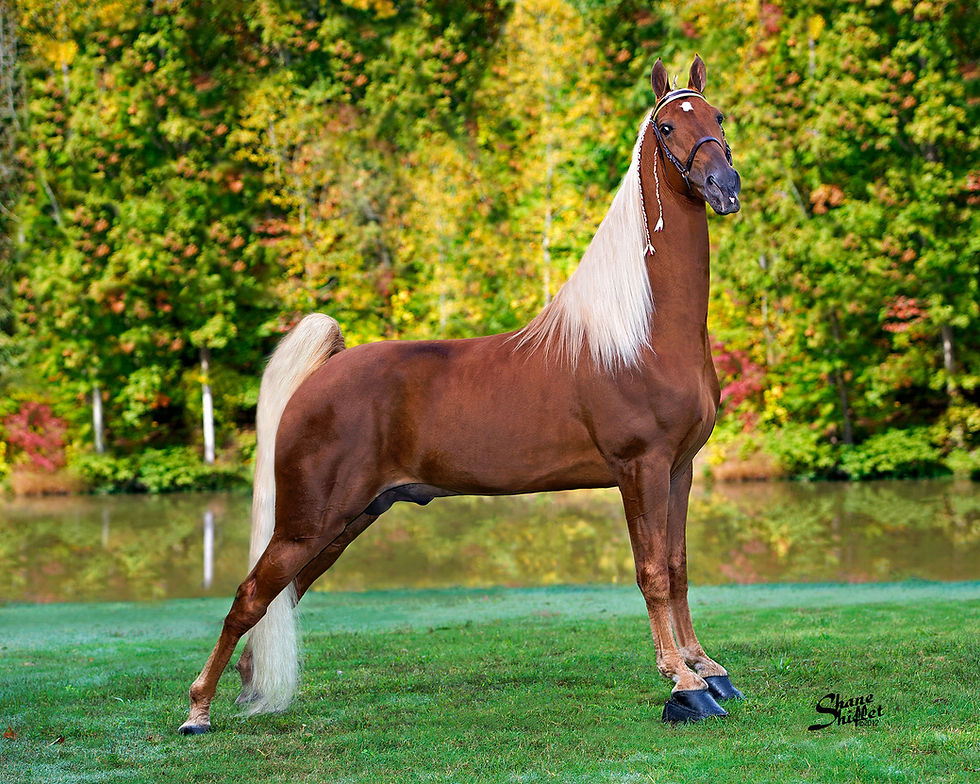
These are general breed characteristics, not a checklist that every horse matches exactly.
A horse should be assessed as a whole. Attractive head carriage or an impressive stride does not establish soundness. Limb alignment, hoof proportions, muscular symmetry, and comfortable movement deserve equal attention.
For owners learning to evaluate these relationships, The Ultimate Equine Conformation Study Guide explains how structure relates to function. The Equine Conformation Study Kit and Conformation Flashcards provide additional study support.
Coat Colors and Patterns
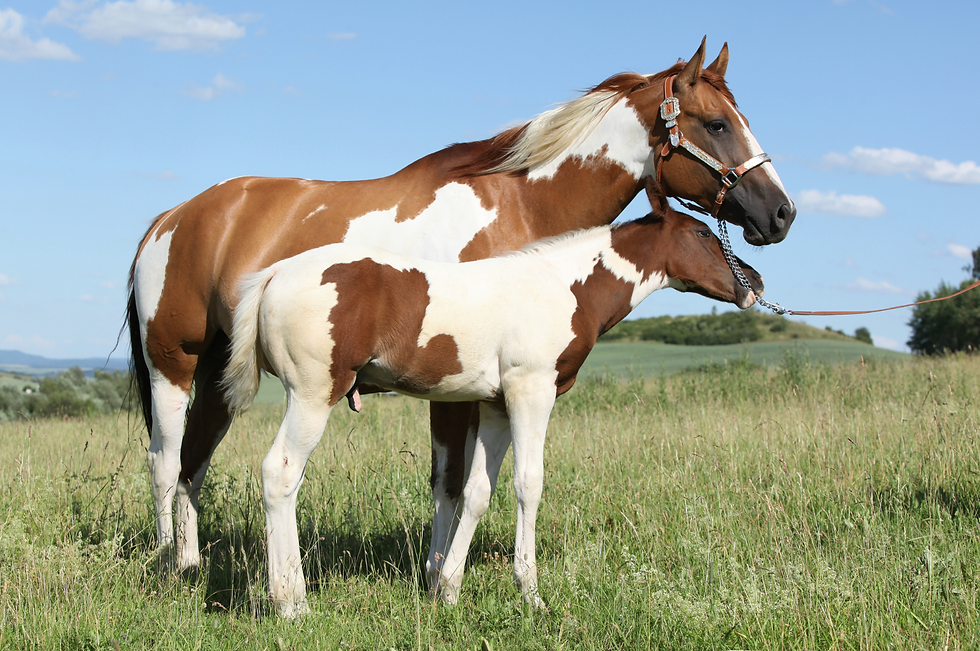
The breed appears in a broad range of colors, including bay, black, chestnut, palomino, buckskin, gray, and roan. White spotting patterns also occur.
Color terminology can be confusing because base colors, dilution genes, and white patterns describe different features. Palomino and buckskin involve dilution of an underlying base color. Roan describes white hairs mixed through much of the coat. Pinto describes white spotting rather than a separate breed identity.
A spotted Tennessee Walking Horse remains a Tennessee Walking Horse when its pedigree meets registration requirements. Appearance alone cannot establish breed.
For further explanation, read Horse Coat Colors and Genetics. The Horse Coat Color Calculator and Horse DNA Test Results Interpreter offer additional ways to explore coat-color inheritance.
Understanding the Tennessee Walking Horse’s Gaits
What Does “Gaited” Mean?
A gait is the pattern in which a horse moves and places its feet. Most riding horses are familiar to owners through the walk, trot, canter, and gallop. Gaited breeds can also perform characteristic intermediate gaits that offer a different rhythm and riding experience.
The Tennessee Walking Horse is best known for the flat walk, running walk, and canter. Individual horses may also trot, pace, rack, or perform other intermediate gait variations.
The Flat Walk
The flat walk is an active, four-beat walk. Each foot contacts the ground separately in a repeating sequence: left hind, left fore, right hind, right fore.
The horse should move forward willingly while maintaining a clear rhythm. It should not need constant driving or strong restraint to remain organized. A useful flat walk allows the rider to cover ground comfortably while retaining control over speed, direction, and stopping.
The Running Walk
The running walk follows the same basic footfall sequence as the walk but covers ground more quickly. Its four separate beats distinguish it from the trot, in which diagonal pairs of legs move together.
Characteristic features include:
A regular four-beat rhythm
A rhythmic head and neck nod
Forward-reaching strides
Hind feet stepping beyond the prints left by the forefeet
Relatively little vertical disturbance for the rider
That hind-foot placement is called overstride or overtracking. The amount varies with the horse and its movement. A longer overstride alone does not establish superior quality or soundness. The useful goal is a comfortable, balanced gait the horse can maintain without strain.
The Canter
Tennessee Walking Horses can also canter. Their canter is often described as having a comfortable, rocking motion, although the quality varies between individuals.
The canter normally has three beats and a period of suspension. Like any riding horse, a Walker needs appropriate conditioning and training to develop balance, transitions, and confidence on both leads.
Natural Ability Still Needs Training
An inherited gait does not mean a young horse automatically knows how to carry a rider well. Riders still need to develop steering, braking, rhythm, balance, and reliable responses to aids.
A horse that changes gait may be responding to speed, rider balance, tension, fatigue, or discomfort. Sudden changes deserve investigation before stronger equipment or additional pressure is used.
Understanding Gait Faults in Horses and the Gait Faults Study Flashcards can help owners distinguish movement terminology from signs requiring professional assessment.
Did you know? A running walk and a pace are different gaits. The running walk has four separate beats; a true pace has two, with the legs on the same side moving together. Calling every smooth gait a “pace” overlooks these differences.
Temperament and Trainability
Tennessee Walking Horses have a reputation for being gentle, willing, and responsive. These qualities contribute to their popularity with recreational riders and families.
However, temperament varies. Breeding, handling, training, health, and previous experiences all influence how an individual behaves. Some Walkers are quiet and forgiving; others are energetic, sensitive, or inexperienced.
A beginner needs a beginner-suitable horse, not simply a breed described as beginner-friendly.
Useful qualities include standing quietly for mounting, responding predictably to basic aids, tolerating ordinary handling, and remaining manageable outside familiar surroundings. A smooth ride does not compensate for poor brakes, separation anxiety, or dangerous ground manners.
The breed also attracts older riders and people who find a trot uncomfortable. Comfort remains individual, however. Horse width, saddle fit, rider balance, and the particular gait all affect the experience.
A rider managing a medical condition should discuss riding suitability with their healthcare professional. Breed reputation cannot establish that riding a particular horse is safe or comfortable for that person.
What the Tennessee Walking Horse Is Good For
Trail Riding
Trail riding is one of the breed’s strongest practical uses. Its comfortable intermediate gait appeals to riders who enjoy covering substantial ground without repeatedly posting or sitting a trot.

Experienced individuals can be excellent companions on woodland trails, open country, and varied terrain. However, sure-footedness and confidence develop through soundness, conditioning, and appropriate exposure. They are not guaranteed by registration papers.
A reliable trail horse should learn to:
Travel quietly at the front, middle, and rear of a group
Stand while other horses move away
Negotiate gates, water, and changes in footing
Maintain a controlled pace downhill
Stop and wait without becoming anxious
A naturally fast walk also requires consideration when riding with slower horses. Constantly holding one horse back or making another hurry can leave both uncomfortable.
Pleasure and Distance Riding
For pleasure riders, the attraction is straightforward: a manageable horse with comfortable movement can make ordinary riding more enjoyable.
Tennessee Walkers can also participate in distance-oriented recreational activities. Their suitability for demanding mileage depends on fitness, recovery, hoof condition, and individual ability. An all-day reputation does not prepare a horse for an all-day ride after weeks of inactivity.
Ranch and Utility Work
The breed’s working background remains relevant. Suitable individuals can help with property checks, light cattle work, and other practical riding tasks.
Success depends on experience and training. A horse accustomed to quiet trails may still need careful preparation before working around cattle, ropes, dogs, or unfamiliar machinery.
Showing and Versatility Activities
Tennessee Walking Horses participate in flat-shod pleasure classes, trail obstacles, and other versatility events. Gaited or adapted dressage opportunities can also provide structured goals for developing accuracy, balance, and responsiveness.
Owners should check the rules of the specific organization. Conventional dressage tests commonly require trot work, while gaited divisions may accommodate an intermediate gait.
Therapeutic and Adaptive Riding
Selected individuals may suit adaptive riding programs. Selection must consider far more than breed: mounting behavior, tolerance of assistants, stride characteristics, soundness, and the participant’s needs all matter.
A gentle reputation is a starting point for evaluation, not a qualification by itself.
Activities That May Be a Less Natural Fit
Tennessee Walking Horses are versatile, but they were not primarily developed for elite jumping, sprint racing, cutting, or reining.
Some individuals jump small fences, work cattle, or enjoy recreational games. That does not make the breed the most predictable choice for a rider pursuing high-level competition in those sports.
Likewise, dressage principles can benefit a Walker, but advanced conventional dressage requires particular gait qualities and movements that may not match an individual gaited horse’s natural abilities.
The practical distinction is between enjoying an activity and being specialized for its highest demands. Match the horse to the actual goal. A rider seeking relaxed trail adventures has different selection priorities from one planning major eventing competitions.
Everyday Care and Management
Feeding and Body Condition
Tennessee Walking Horses need the same basic nutritional foundations as other horses: suitable forage, clean water, salt, and a ration balanced for age, workload, and health.
Feed the individual rather than assuming that all Walkers are easy keepers or require substantial grain. Pasture access and reduced exercise can lead to excess weight, while demanding work may increase nutritional requirements.
Monitor body condition regularly instead of relying on appearance beneath a long coat. The Horse Weight and Body-Condition Calculator can support tracking, although estimates do not replace weighing or professional nutritional assessment.
Hoof Care
A natural running walk does not require painful trimming, excessive hoof length, or devices that force exaggerated movement. Hoof care should support the individual horse’s comfort and intended work. Many Tennessee Walking Horses have naturally "longer" toes due to years of selective breeding that favored long pasterns: long pasterns are associated with long-toe, low-heel hoof conformation, which is considered a desirable trait by many breeders.
Some horses manage well barefoot; others need shoes or hoof boots because of terrain, wear, sensitivity, or therapeutic requirements.
The farrier should evaluate the feet in relation to the limbs and observe movement. There is no single hoof angle or shoeing prescription appropriate for every Tennessee Walking Horse.
Read What Is Hoof Balance? and What Is Breakover? for explanations of these principles.
Conditioning and Observation
Build workload gradually. A ride that feels effortless to the rider can still demand substantial muscular effort from the horse, particularly on hills or difficult footing.
Watch for shortened strides, new resistance, uneven movement, back sensitivity, or changes in willingness. These observations should be discussed with the appropriate professional.
Lameness Prevention: What You Can Do to Keep Your Horse Sound explains how consistent observation helps owners recognize changes early.
Health and Genetic Conditions
Tennessee Walking Horses are often described as hardy, but they remain susceptible to ordinary equine diseases and injuries. Their natural gait does not prevent arthritis, tendon injury, laminitis, or muscle disorders.
Several inherited conditions are also relevant. The existence of a test does not mean a condition is common throughout the breed.
Congenital Stationary Night Blindness
A form of congenital stationary night blindness, commonly called CSNB2, is associated with a variant in the GRM6 gene.
Affected horses have impaired vision in low light from birth. Possible signs include hesitation in dim surroundings, difficulty finding feed or water at night, and increased risk of nighttime injury.
The condition is recessive: affected horses inherit two copies of the variant. Horses carrying one copy generally have normal vision but can transmit it.
Testing can guide breeding decisions. Suspected vision problems also warrant veterinary examination, because not every difficulty in darkness has the same cause.
Did you know? The GRM6-associated form of night blindness identified in Tennessee Walking Horses differs genetically from the TRPM1-associated form linked to leopard-complex spotting in Appaloosas. The correct test matters.
Polysaccharide Storage Myopathy Type 1
PSSM1 is an inherited muscle disorder associated with a variant in the GYS1 gene. It affects glycogen metabolism and can cause muscle pain, stiffness, sweating, weakness, and reluctance to move.
It is inherited dominantly, meaning one copy can be sufficient for disease susceptibility. Tennessee Walking Horses are among the breeds for which testing is available.
Management commonly involves a carefully planned diet and consistent exercise appropriate to the horse’s condition. Suspected tying-up requires veterinary assessment; owners should not force a painful horse to continue exercising. A negative PSSM1 result does not exclude other muscle diseases.
Androgen Insensitivity Syndrome
Androgen insensitivity syndrome, or AIS, is a disorder of sexual development associated with variants in the androgen receptor gene.
Affected horses have XY chromosomes but do not respond normally to androgens and may appear externally female. They are infertile. A Tennessee Walking Horse-associated variant can be tested for, and the inheritance pattern is X-linked recessive.
This condition is particularly relevant when investigating abnormal reproductive development, unexplained infertility, or an affected family line.
Soring and the Importance of Humane Training
Soring is the deliberate infliction of pain to alter a horse’s movement. It has been associated particularly with efforts to produce exaggerated action in parts of the Tennessee Walking Horse performance-show industry.
Methods have included chemical irritation and mechanical pressure affecting the lower limbs or feet. The American Association of Equine Practitioners condemns the practice as a serious welfare problem.
The federal Horse Protection Act of 1970 prohibits specified activities involving sored horses, including showing, exhibiting, selling, auctioning, and related transportation. Enforcement procedures and regulations should be checked against current USDA information rather than assumed from older summaries.
The breed’s natural running walk should be distinguished from the exaggerated movement commonly called the “Big Lick.” Pain is not necessary to produce a comfortable natural gait.
Responsible owners should evaluate welfare directly. Warning signs such as pronounced foot sensitivity, unexplained lesions around the pasterns, or reluctance to stand and move deserve professional investigation.

Choosing flat-shod activities can support enjoyment of the breed’s natural movement, but equipment labels alone do not establish humane care. Handling, training, soundness, turnout, and daily management must also be considered.
The Tennessee Walking Horse’s value as a riding horse rests on its natural abilities. Preserving those abilities requires owners and professionals who put comfort and long-term soundness ahead of exaggerated action.
Is the Tennessee Walking Horse Right for You?
The breed is worth considering if your priorities include comfortable trail riding, pleasure riding, or a willing partner for varied recreational activities.
Start by defining what you actually need. Consider your experience, preferred pace, terrain, riding frequency, and available professional support.
When evaluating a horse:
Observe ordinary handling. Watch catching, grooming, hoof handling, saddling, and mounting.
Assess the ride yourself. A seller’s demonstration cannot establish how the horse feels under your balance and aids.
Discuss its history. Ask about previous work, training, injuries, medications, and shoeing.
Check relevant skills. Trail experience should include the situations you expect to encounter.
Arrange a veterinary prepurchase examination. Explain your intended use so the findings can be considered in context.
A purchase examination provides information about the horse’s condition at that time. It does not guarantee future soundness or replace assessment of temperament and training.
Budget beyond the purchase price. Feed, boarding, hoof care, dentistry, veterinary services, equipment, and emergency expenses continue throughout ownership. The Horse Purchase Budget Planner helps organize those costs.
New owners can also begin with Horse Ownership Foundations, which introduces essential care responsibilities.
Preserving the Breed’s Practical Strengths
The Tennessee Walking Horse earned its place through usefulness: comfortable movement, stamina, and a temperament suited to working alongside people. Those qualities remain relevant to modern riders.
Choosing a suitable individual, maintaining its health, and developing its abilities through humane training allow those strengths to show. For the rider whose goals match the breed, a well-prepared Tennessee Walking Horse can be a capable and enjoyable partner for years.
Tennessee Walking Horse: 10 Frequently Asked Questions
1. What is a Tennessee Walking Horse best known for?
The breed is best known for its natural running walk, a smooth four-beat gait characterized by rhythmic head movement and hind feet stepping beyond the forefoot prints. It is particularly popular for trail and pleasure riding.
2. Are Tennessee Walking Horses good for beginners?
Some are excellent beginner horses, especially mature individuals with reliable training and calm behavior. Others are too energetic, sensitive, or inexperienced. Suitability depends on the individual horse and rider, not breed reputation alone.
3. Is the running walk natural or trained?
The ability is inherited, but training helps a horse maintain rhythm, balance, and responsiveness while carrying a rider. Painful methods or exaggerated shoeing are not necessary to produce a natural running walk.
4. Can Tennessee Walking Horses trot and canter?
Yes. Many can trot, and the canter is one of the breed’s recognized gaits. Some individuals also perform other intermediate gaits. A horse’s preferred movement and training history influence what it readily offers under saddle.
5. Do Tennessee Walking Horses need special shoes?
They do not need special shoes simply because they are gaited. Hoof protection depends on the individual’s feet, workload, terrain, and health. Some work comfortably barefoot; others benefit from shoes or boots selected with professional guidance.
6. Are Tennessee Walking Horses suitable for riders with back problems?
Some riders find the reduced bounce more comfortable than a trot, but experiences vary. Horse width, saddle fit, balance, and the rider’s condition all matter. A smooth gait does not establish medical suitability for riding.
7. Can Tennessee Walking Horses jump or do dressage?
Suitable individuals may enjoy small jumps and dressage-based schooling. They are not generally selected for elite jumping or advanced conventional dressage. Gaited dressage opportunities may better accommodate their natural movement, depending on the organization’s rules.
8. What genetic conditions should owners know about?
Relevant conditions include GRM6-associated congenital stationary night blindness, PSSM1, and androgen insensitivity syndrome. Testing decisions should consider breeding plans, family history, and veterinary findings. A genetic test panel cannot rule out every possible health problem.
9. What is the difference between a natural running walk and the “Big Lick”?
The running walk is the breed’s natural four-beat intermediate gait. “Big Lick” describes exaggerated performance-show movement associated with particular training and equipment practices. Soring deliberately causes pain to alter movement and must not be confused with the horse’s natural gait.
10. What should I look for when buying a Tennessee Walking Horse?
Prioritize soundness, appropriate training, dependable behavior, and a comfortable gait that suits you. Review the horse’s history, observe routine handling, ride it in relevant conditions when safe, and arrange a veterinary prepurchase examination based on your intended use.


Comments